

Description
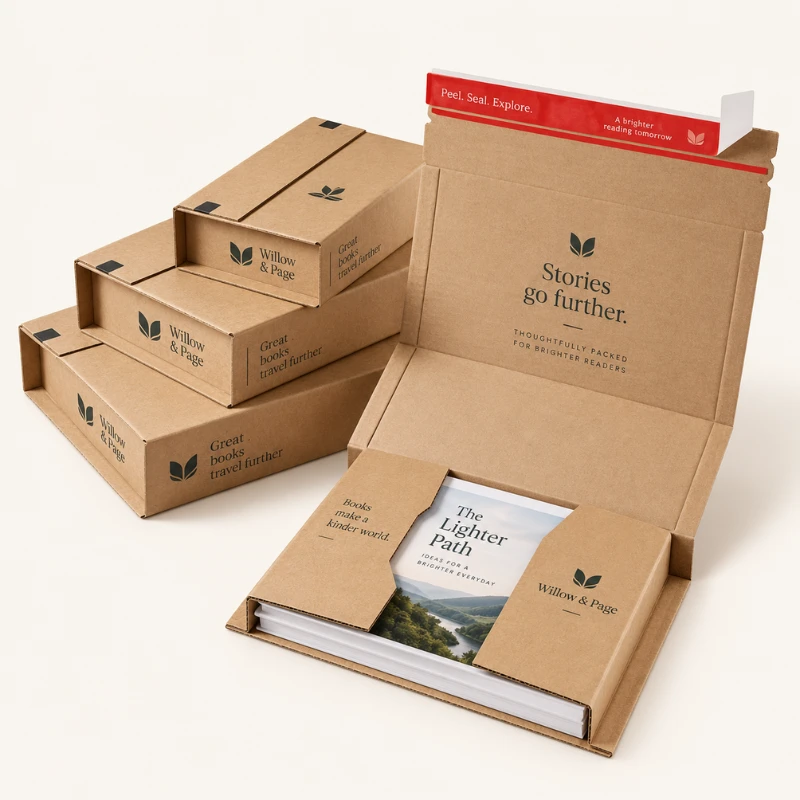
Custom Book Wrap Mailers are wrap-around postal packs made to fit books, catalogues and other flat products more closely than a fixed-depth carton. The corrugated wrap folds around the item, while scored sections form around its depth. For UK booksellers, publishers and ecommerce businesses, that can give a neater fit, controlled movement and useful space for printed branding.
Why a Wrap-Around Format Suits Books
Books create a particular packaging problem. Their faces are broad and flat, yet corners and edges can take knocks during handling. A loose outer box may let a book move, while an envelope may offer limited edge protection. A wrap mailer works differently: the board closes around the item rather than asking the item to fill a pre-formed box.
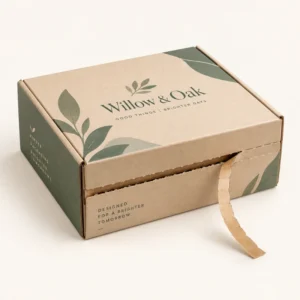
Many commercial book wraps use multiple score lines so one format can accommodate a range of depths. Depending on the final specification, the closure may also incorporate a peel-and-seal strip or an easy-open tear feature. These are established features of book-wrap formats sold within the UK packaging market.
Key specification points include:
- Face size: the main panel should suit the product without excessive movement around the edges.
- Depth range: scoring needs to match the thickness, or realistic thickness range, of the packed item.
- Edge retention: folded side sections can help hold contents in position while the wrap closes.
- Closure: the sealing method should suit packing, transport and opening.
- Print areas: branding should avoid folds, labels and closure zones that could hide important artwork.
How Custom Book Wrap Mailers Use Scoring to Fit the Product
Corrugated board is a common material for book wraps because it combines a relatively light construction with useful resistance to bending and impact. The exact board specification should still follow the size, weight and fragility of the item rather than a generic rule.
The scored layout matters just as much as the board. A useful wrap needs to fold cleanly around the depth of the product. If the scoring is poorly matched, the pack may close with too much slack or place unnecessary pressure on the contents.
This is where Custom Book Wrap Mailers differ from fixed-depth Custom Mailer Boxes. A conventional mailer forms a box with defined walls and depth. A book wrap starts flatter and folds around the item. That can be useful for businesses sending books with similar face dimensions but varying thicknesses.
Kraft or white printable surfaces may be considered depending on appearance and printing requirements. The final material choice should balance presentation with the physical job the packaging needs to do.
Size the Wrap Around the Real Packed Item
Do not specify a book wrap from the book’s nominal format alone. A hardback with a dust jacket, a boxed edition and a paperback can all need different allowances even when their page size looks similar.
Measure the item as it will actually leave the packing bench. Include protective sleeves, tissue, backing cards or other materials that remain inside. If several titles share one wrap, record the thinnest and thickest realistic products as well as the largest face dimensions.
For variable-depth packaging, the scoring range needs particular attention. A wrap that works well for one book thickness may not suit a much thicker boxed set. Multi-book orders may also need a different specification.
The final outside dimensions matter if the parcel must fit a particular carrier format. Check the current Royal Mail size and weight limits against the finished packed dimensions rather than the flat blank or book alone. Royal Mail currently applies different maximum dimensions and weights to formats such as Large Letter, Small Parcel and Medium Parcel.
Print the Panels Customers Actually See
Custom printing can turn a plain postal wrap into recognisable branded packaging, but the dieline should guide the artwork. The outer face, return panel, closure area and folded edges do not all remain equally visible after packing.
Start by deciding where the shipping label will sit. A large label can cover carefully planned artwork, so allow for it before design approval. Then reserve the most visible panel for the main brand element.
Useful approaches can include:
- a logo and short message on the principal outer panel;
- handling or product information in a secondary print area;
- internal print where the selected construction supports it;
- restrained graphics where the board itself forms part of the look;
- broader colour artwork where the chosen surface and process are suitable.
Print method and finishing should be confirmed against the material, order specification and artwork. Free design support can help with panel positioning, print areas and artwork preparation before manufacturing.
Where Book Wraps Make Commercial Sense
The structure can suit more than a single paperback. Suitable applications may include books, catalogues, magazines, printed reports, photo books, diaries, manuals and some media or flat retail products. Current UK book-wrap ranges also commonly position the format for books, printed media and other relatively flat goods.
However, a fragile object with projecting parts or a heavy item that concentrates load in one area may need different packaging.
For businesses comparing Corrugated Boxes, the distinction is useful. A standard corrugated carton creates a fixed cavity. A book wrap forms around the product. Neither is automatically better; the right choice depends on shape, depth variation, weight and how much movement must be controlled.
The same principle applies to Cardboard Boxes more broadly. Packaging should be chosen from the product outward. The board, folds and closure should work together rather than being selected only from appearance.
In-House Manufacturing for a Product-Led Specification
Personalized Mailer Boxes manufactures custom packaging in-house. For a book wrap, that means face dimensions, depth scoring, board, print areas and closure can be considered as parts of the same pack.
A publisher sending one standard hardback has a different requirement from an ecommerce retailer carrying many titles. The first may prioritise a precise repeat fit. The second may need a practical depth range that covers several products without excessive slack.
Free design support can help translate artwork onto the structural layout and keep important graphics away from folds or closure areas. Once the agreed specification moves through production, fast and free UK delivery is available.
What to Send When Requesting a Quote
A useful enquiry should describe the packed product, not just say “book mailer”.
- Give the product dimensions. Include length, width and thickness in the packed condition.
- Explain variation. If several titles use one wrap, provide the realistic size range.
- Confirm quantity. State how many mailers you require.
- Describe the contents. Mention hardbacks, paperbacks, boxed editions, catalogues or other flat products.
- Note internal materials. Include sleeves, tissue or backing cards that affect fit.
- Explain any closure preference. Include sealing or opening features you want discussed.
- Provide artwork or branding requirements. Free design support can help with layout where needed.
- Review the final specification. Check dimensions, board, scoring, print and closure details before approval.
Frequently Asked Questions
What is a book wrap mailer?
A book wrap mailer is a corrugated postal pack that folds around a book or another suitable flat item rather than forming a fixed-depth box first. Scored sections create the depth as the wrap closes, helping the packaging follow the thickness of the contents more closely.
Can Custom Book Wrap Mailers fit different book thicknesses?
They can be designed around a useful depth range where the structure includes appropriate score lines. The workable range depends on the actual specification. If your catalogue contains different titles, provide the thinnest, thickest and most common packed products so the wrap can be planned around realistic orders.
Are book wraps only suitable for books?
No. The same wrap-around structure can suit catalogues, magazines, manuals, photo books and some other flat products. Suitability depends on dimensions, weight and fragility. Items with delicate projections, unusual shapes or concentrated weight may need a different form of protective packaging.
Can the book wrap be printed with my branding?
Yes, custom print can be planned around suitable panels of the wrap. Artwork should take account of folds, closure areas and the shipping-label position. Free design support can help with placement before production so important text or graphics do not end up hidden after the mailer is packed.
Can a peel-and-seal strip or tear strip be added?
These features are common on commercial book wraps, but availability should be confirmed for the chosen custom structure. A peel-and-seal closure can simplify packing, while an opening strip can make access easier for the recipient. Include either requirement when asking for a quotation.
How should I measure a book for a custom wrap?
Measure the product in the condition in which it will be dispatched. Record its length, width and total thickness, including any sleeve or protective material that stays inside. If one wrap needs to cover several titles, provide the largest face dimensions and the relevant range of packed depths.
Can book wrap dimensions be planned around Royal Mail services?
Yes, the intended postal format can be considered during specification, but the finished packed parcel must meet the carrier’s current rules. Compare the external dimensions and weight of the completed pack with Royal Mail’s published limits before treating it as a particular letter or parcel format.
Request Custom Book Wrap Mailers
Send Personalized Mailer Boxes your packed product dimensions, quantity, depth range and branding requirements. We can then discuss a wrap structure, board and print layout that suits the books or flat products you need to dispatch.











Reviews
There are no reviews yet.