
book packaging
Showing the single result
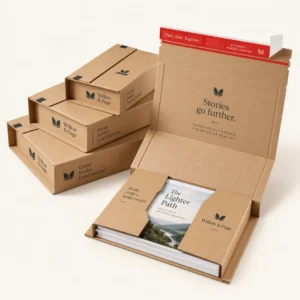
Book packaging is the pack that carries a book safely from a publisher, shop or author to a reader, and it shapes how that book is received. Good book packaging keeps pages flat, corners square and covers unmarked, while also giving the sender space for branding, a message or practical information about returns.
Why book packaging matters beyond protection
A book is not only a product. It may be a gift, a signed keepsake, a textbook needed for study or the next volume in a series a reader has followed for years. Damage to a corner or a creased cover can spoil that experience even when the text inside is perfect. A pack that arrives flat, clean and easy to open tells the reader that the sender cared about the book itself. That impression matters for independent shops competing with large retailers, for publishers sending review copies, and for authors sending books direct to readers.
Protection and presentation need to work together. A pack that is strong but dull can still feel disappointing, while a beautiful pack that lets a book bend in transit fails at its main job. The best book packs balance both aims: board that resists bending, a seal that stays closed, a size that fits the book, and print or colour that reflects the book or the brand. When those elements align, returns fall, complaints fall, and repeat orders become more likely.
Who uses book packaging every day
Independent bookshops use book packaging for online orders and for click and collect orders that travel home in a bag. Publishers use it for review copies, author copies, subscription sends and direct sales. Libraries use it for interlibrary loans and for books sent to readers who cannot visit in person. Schools and universities use it for textbooks and course readers. Authors use it for signed copies, preorders and crowdfunding rewards. Each sender has a different reader in mind, but all share the same basic need: a book that arrives as it left.
Gift and special edition packaging
Gift packaging deserves extra attention because the reader may not be the buyer. A clean outer pack, a gift note inside rather than a price note, and an easy opening method all help. Special editions with slipcases, foil covers or deckled edges need a pack that stops rubbing and keeps the edition flat. A sleeve or tissue layer can protect a delicate finish, and a rigid outer pack can protect a slipcase from corner damage. Test the full gift pack, including any card or ribbon, before sending it to customers.
Materials used for book packaging
Corrugated board is the most common material for book packs because it is light, strong and recyclable. The fluted centre layer cushions against knocks, while the flat outer layers give a smooth surface for print and labels. Single wall board suits most everyday books. Double wall board suits heavy books, boxed sets and books that will be stacked under other parcels. Solid board gives a very flat, rigid surface for presentation packs, but it can be heavier and less forgiving over a long journey.
Paper based void fill, tissue and board dividers can add protection without adding plastic. Tissue protects covers and separates books in a stack. Board dividers keep a set aligned and stop books sliding against each other. Paper tape can seal a rigid box cleanly and can be printed with a brand mark. Plastic should be used only where damp is a real risk and a board solution cannot manage it, and the choice should be explained honestly on the pack where possible.
Choosing board strength by book weight
Light paperbacks and magazines can travel well in single wall board, provided the pack fits snugly. Standard hardbacks benefit from a firmer board, especially when the book is large or the journey is long. Heavy art books, atlases and multi volume sets need the strongest practical board and a pack that supports weight across the whole base, not only at the edges. If a pack sags when lifted, the board is too light or the pack is too large for the contents.
Print finishes that suit books
Print on book packaging can be bold or subtle. A single colour logo on kraft board suits a literary brand. Full colour print suits a children’s publisher, a gift brand or a subscription service that wants a strong shelf presence in the home. Inside print works well for a welcome message, a map of a series or a note from the author. Keep print clear of folds and seals, and choose a finish that will not scuff easily in sorting. A matte finish often looks calm and literary, while a brighter finish can suit a gift or a celebration edition.
Designing book packaging for subscription and series sends
Subscription and series sends reward consistency. Readers learn to recognise the pack, look forward to opening it, and share the moment with others. A consistent size, colour and opening method makes packing faster and makes the brand easier to remember. Inside, a regular element such as a bookmark, a reading note or a preview of the next volume gives each send a familiar rhythm. Change the artwork by season or by title, but keep the pack structure and the opening experience steady.
Planning a subscription send also means planning quantities and timing. Orders placed in good time allow artwork checks, proofing and production without rushing the pack quality. For printed packs, production follows after final artwork is approved. Standard lead times after final artwork approval are 10 to 14 working days, corrugated lead times are 12 to 15 working days, and rigid or specialist lead times are 13 to 16 working days. Those are production lead times, not a guaranteed delivery date, so allow time for approval, production and postal transit when you set a send date.
How to brief a custom book pack
A clear brief saves revisions. Share the closed size and weight of each book, the number of books per pack, whether the book has a dust jacket or a slipcase, and whether the pack will travel alone or with inserts. Share your logo, colours and any message you want inside the pack. Note any recycling or returns information you want printed. With that detail, a quote can reflect the real specification rather than a guess, and the finished pack is more likely to fit first time.
Testing a new pack before a full run
Before a full run, pack a real book, seal the pack as a customer packer would, and send it through the normal postal route to a colleague. Ask the colleague to open it without tools if possible, and to report on corner condition, cover condition, ease of opening and overall impression. Check the pack after a few days in storage as well, because board can settle and seals can relax. A short test like this catches most problems while they are still cheap to fix.
To explore options, visit the Personalized Mailer Boxes home page, browse the full shop, request a custom quote, read delivery information, learn about the team, and view book packaging boxes for related sizes. For postal formats, check the Royal Mail UK parcel and letter services page.
Frequently asked questions about book packaging
What is book packaging used for?
Book packaging is used to protect books during posting, delivery and storage, and to present them well on arrival. It suits booksellers, publishers, libraries, schools and authors sending books to readers.
Which material is best for book packaging?
Corrugated board is best for most books because it is light, strong, printable and recyclable. Choose single wall board for light books and stronger board for heavy books, large formats and boxed sets.
Can book packaging be printed inside and outside?
Yes. Outside print builds brand recognition before opening, while inside print can carry a thank you note, series details or a message from the author. Keep key artwork clear of folds and seals.
How do I keep a gift book looking new in transit?
Use a snug fitting pack, protect a delicate cover with tissue or a sleeve, and avoid loose filling that lets the book move. Place any gift note inside the pack and keep the outer pack clean and unmarked by price notes.
How long does custom book packaging take to produce?
Production follows after final artwork approval. Standard production is 10 to 14 working days, corrugated production is 12 to 15 working days, and rigid or specialist production is 13 to 16 working days. Allow extra time for artwork approval and postal transit.