
gable boxes
Showing the single result
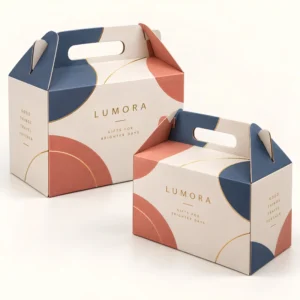
Gable boxes are handled cartons with a peaked top that folds shut, making them easy to carry, easy to present and useful across food, gifts and retail. They combine the protection of a box with the convenience of a bag, so a customer can leave a counter with a finished package in one hand. This guide explains gable boxes and the main types, materials and uses, and how to choose the right version for your products.
What gable boxes are and why they are popular
The gable shape comes from the top of the box, where two panels rise and meet to form a handle. When closed, the box looks like a small house with a pitched roof, which is distinctive on a shelf and easy to recognise in a busy shop. The handle is part of the box itself, so there is no separate bag, ribbon or carrier to add at packing time. That simplicity saves time at the counter and reduces the number of items staff need to keep in stock.
Customers like gable boxes because they are practical. A box can be carried with one hand, set down on a table without tipping easily, and opened without tearing the packaging. Businesses like them because the wide panels offer space for a logo, a product name or a seasonal design, and the finished box can look like a gift even when it holds an everyday product. That combination of practicality and presentation explains why the style appears in bakeries, gift shops, cafes, markets and event venues.
Materials and board choices for gable boxes
Kraft board gives a natural, rustic appearance that suits artisan food, handmade products and eco minded brands. White board gives a bright surface for full colour printing and bold graphics, and it suits modern retail and party products. Corrugated board is stronger and thicker, so it suits heavier contents, longer journeys and boxes that will be stacked. The right choice depends on weight, appearance and how the box will be used.
For food, choose a board that is suitable for contact with food, and consider a coating that is resistant to grease if the contents include pastries, fried food or rich fillings. For gifts, focus on print quality, finish and how the box feels in the hand. For retail, consider how the box will look on a shelf over time, and whether a coated finish will help it resist scuffs. A sample tested with your real products is the best way to judge these choices.
Plain, printed and window gable boxes
Plain gable boxes suit businesses that add their own label, sticker or ribbon, or that change designs often. Printed gable boxes suit brands that want a consistent look, with a logo and artwork on every panel. Window gable boxes add a clear panel, so customers can see bakery treats or gifts without opening the box. Each version uses the same basic shape, so you can mix types across a range while keeping a consistent size and handle style.
Where gable boxes are used
Bakeries use gable boxes for cakes, cupcakes, cookies, doughnuts, bread and pastry selections. Cafes and takeaway outlets use them for lunch sets, sandwiches, snacks and meal deals that customers want to carry away. Caterers use them for individual portions at weddings, parties and corporate events, where each guest receives a neat, portable package. The closed top helps protect food on a short journey, and the handle makes the box easy to carry at an outdoor event.
Gift and retail uses are just as varied. A candle, a soap set, a small toy, a jewellery item, a cosmetics bundle or a collection of samples can all be presented in a gable box. Event planners use them for wedding favours, birthday treats, welcome packs and promotional giveaways. Retailers use them for seasonal sets, product bundles and items that need to look finished as soon as they leave the shop, with no extra wrapping required.
How to choose gable boxes for your business
Start by listing what you will pack most often, including size, weight and fragility. A box for light favours needs different strength from a box for a full meal, and a box for delicate icing needs different packing from a box for sturdy retail items. Measure the products as packed, allow room for tissue or an insert, and test pack a sample. Lift the filled box by its handle, check that the base stays flat, and make sure the top closes without pressing on the contents.
Next, think about branding. If you want a logo on every box, a printed version will give the most consistent result. If you want flexibility for different occasions, a plain box with stickers or labels may suit you better. If visual appeal is the main selling point, a window version can help customers choose. Your choice should reflect how often the design changes, how many boxes you use, and how important brand recognition is at the point of sale.
Size, storage and handling
Size bands run from mini favour boxes to large carriers for meals and hampers, with small and medium sizes covering most everyday needs. Medium boxes are often the best starting point, because they hold a useful range of food and gift sets without feeling bulky. If you stock more than one size, label bundles clearly, so staff can find the right size quickly during a busy service.
Many gable boxes arrive flat, which saves a great deal of storage space compared with made up boxes. Store flat bundles in a dry place, away from heat and damp, and assemble boxes close to the time they are needed. Agree a consistent assembly method for your team, so every box looks the same, and practise with a new size before a busy event or a peak trading period.
Ordering gable boxes with confidence
Prepare a brief that covers size, board, plain or printed finish, window or no window, and quantity. Include product dimensions and weight, so the supplier can advise on strength and handle suitability. Standard lead time after final artwork approval is 10 to 14 working days, while corrugated options are 12 to 15 working days, as guide times for planning, not a guaranteed delivery date. If you sell food, check labelling requirements in the food labelling and packaging guidance before you approve printed wording.
Related gable box options
Explore gable box packaging for material and use advice, gable box sizes to match dimensions to products, and gable box printing for artwork and finishes. For larger runs, see gable boxes bulk, and when you are ready, use get a quote with your brief.
Shipping gable boxes
Gable boxes travel best in shipping when they are treated as presentation boxes inside a protective outer carton, not as postal cartons in their own right. Fill the gable box, close the peaked top securely, and place it inside a slightly larger outer shipping carton with cushioning around the handle and the top, so stacking and sorting do not crush the shape. Label the outer carton clearly and keep the gable box itself clean for the customer, because the retail presentation is lost if the box that reaches the customer is scuffed, dented or covered in delivery labels.
Frequently asked questions about gable boxes
What are gable boxes?
Gable boxes are handled cartons with a peaked top that folds shut to form a handle. They combine a protective box with a carrier, so no separate bag is needed.
What can I pack in gable boxes?
You can pack bakery items, takeaway meals, gifts, retail sets, party favours and event giveaways in gable boxes, provided the size and board strength suit the weight and fragility of the contents.
Do gable boxes come flat packed?
Many gable boxes arrive flat and fold into shape quickly, which saves storage space. Check the format when you order, so your team can plan assembly time.
Are gable boxes suitable for food?
Yes, when the board is suitable for contact with food and labelling is correct. Choose a grease resistant coating for pastries and fried food where needed.
Can gable boxes be printed with a logo?
Yes, gable boxes can be printed with a logo, artwork and product information across the main panels. A proof should be checked carefully before production.