
gable box sizes
Showing the single result
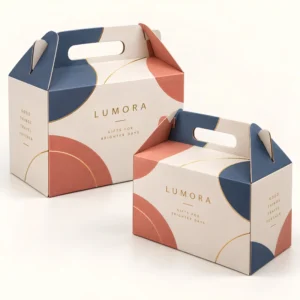
Gable box sizes range from tiny favour boxes that hold a few sweets to large carriers that hold a full meal or a multi item gift set. Choosing the right size starts with measuring your products, allowing room for wrapping or an insert, and thinking about weight and handling. This guide explains gable box sizes in the common size bands, how to measure, and when a custom size is worth considering.
How gable box sizes are measured
Gable box sizes are usually given as length, width and height, in that order. Length is the longest side of the base, width is the shorter side of the base, and height is measured from the base to the top of the main body, before the peaked handle section rises above it. That last point matters, because the handle adds height when the box is closed, and the extra height can affect how boxes stack or fit on a shelf.
Always measure the product as it will actually be packed. If a cupcake sits in a case, measure the case, not just the cake. If a gift includes tissue, a card or a small pouch, measure the bundle once it is wrapped. If a bottle will stand upright, check both its height and its diameter, and make sure the handle panels can close without pressing on the cap. A few millimetres of clearance can make packing faster and reduce damage.
Mini and small gable box sizes
Mini gable boxes suit single items and small favours. They work well for a few sweets, a single macaron, a small candle, a jewellery item in a pouch, or a sample set. Their compact shape makes them ideal for weddings, parties and promotional giveaways, where many boxes are handed out and guests want something easy to carry. Because the box is small, artwork and text must stay simple, so the design remains readable.
Small gable boxes are a step up, and they suit two or three cookies, a small pastry selection, a soap bar with a card, or a modest retail bundle. They are still easy to carry with one hand, yet they give more room for a label or a printed message. If you are unsure between mini and small, test pack both with your real products, and choose the size that lets you pack quickly without forcing the lid shut.
What fits well in a mini box
A mini box is best for light, compact items that will not move much in transit. Sweets, chocolates, a single favour, a small sample or a flat gift card bundle are all good examples. Avoid putting a heavy or tall item in a mini box, because the handle will feel strained and the box may tip. For heavier items, move up a size and choose a stronger board.
Medium and large gable box sizes
Medium gable boxes are the workhorse size for many businesses. They suit four to six cupcakes, a generous pastry selection, a lunch set, a cosmetics bundle or a small gift set with several items. The wider base gives room for an insert or a divider, which can keep items separate and stop them from moving. Medium boxes also offer good space for printing, so a logo and product information can sit comfortably on the front panel.
Large gable boxes suit full meals, hampers, clothing items, multi product gift sets and catering portions. They need a stronger board, especially when the contents are heavy, and the handle must feel secure when the box is lifted. Before choosing a large size, check how the box will be carried, stored and displayed. A very large box can be awkward in a small shop or a crowded event, even if it holds everything you want to include.
Choosing between gable box sizes
Weight is often the deciding factor. A box that looks right can still feel wrong when it is full, if the handle bends or the base sags. Test a packed box by lifting it by the handle, walking a short distance, and setting it down. Check that the base stays flat, the sides stay square, and the handle panels stay locked. If the box feels strained, choose a stronger board, a smaller size, or split the contents across two boxes.
Also consider the customer journey. A takeaway box may be carried for a few minutes, while a gift box may be kept for days and shown to others. A retail box may sit on a shelf for weeks, where a neat, upright shape matters. A party favour box may be handed out in large numbers, where fast assembly and a consistent look matter most. Match the size to that journey, not just to the product dimensions.
Measuring tips for an accurate fit
Measure each item separately, then measure the group as it will be arranged inside the box. Items placed side by side need more base area, while items stacked need more height and a divider for protection. Leave room for tissue paper, shredded paper or a protective wrap, and remember that a tight fit can crush icing, dent soft packaging or crease a printed card. A small amount of breathing room usually gives a better result than a perfect squeeze.
If your products vary in size, choose a size that fits the largest item in the range, and use tissue or an insert to fill the gap for smaller items. That approach keeps your packaging consistent, which looks better on a shelf and simplifies ordering. If the size range is very wide, it may be better to stock two sizes rather than forcing every product into one box.
When a custom size makes sense
A custom size makes sense when your product has an unusual shape, a fixed set of items that must sit in a specific layout, or a height that standard sizes do not accommodate. Custom sizes can reduce movement inside the box, improve presentation, and cut down on extra wrapping. They do require a clear brief, with exact internal dimensions and a sample pack test, so discuss the design and lead time before you commit.
Storage and ordering by size
Flat packed boxes in different sizes can usually be stored together, but keep sizes clearly labelled, so staff do not mix them up during a busy service. Stack bundles by size, with the size written on the outside of the bundle, and keep the most used size closest to the packing area. When ordering, review which sizes sell fastest, and avoid ordering a large quantity of a size that is only used occasionally. Standard lead time after final artwork approval is 10 to 14 working days, while corrugated options are 12 to 15 working days, as guide times for planning.
To compare related options, see gable boxes, gable box packaging and gable boxes bulk. When you know your dimensions, use get a quote and include the measurements for each item.
Shipping gable box sizes
The right gable box size for shipping is the size that fits the contents and the outer shipping carton together, not just the size that looks right on a counter. Measure the products as packed, allow room for tissue or an insert, and then allow room for cushioning inside an outer shipping carton, because a gable box that fits its contents exactly may still need protection around its peaked top and handle. Weigh the filled outer carton as well, since a larger gable box size can push a parcel into a heavier delivery band even when the contents themselves are light.
Frequently asked questions about gable box sizes
What are the common gable box sizes?
Common gable box sizes range from mini favour boxes for single items, through small and medium boxes for food and gift sets, to large boxes for meals and hampers. Exact dimensions vary, so always check length, width and height for the box you are considering.
How do I measure for a gable box?
Measure length, width and height of the product as packed, including any case, tissue or insert. Allow a small amount of clearance, so the box closes easily and the contents are not crushed.
What size gable box holds cupcakes?
A small box may hold two or three cupcakes, while a medium box may hold four to six, depending on cupcake size and whether an insert is used. Test pack with your own cupcakes and cases to be sure.
Does the handle add to the height?
Yes, the peaked handle section rises above the main body, so the closed box is taller than the body height alone. Allow for that extra height when planning shelf space and storage.
Can I order a custom gable box size?
Yes, custom sizes can be made to fit unusual products or fixed gift sets. Provide exact internal dimensions and test pack a sample before a large order.