
gable box packaging
Showing the single result
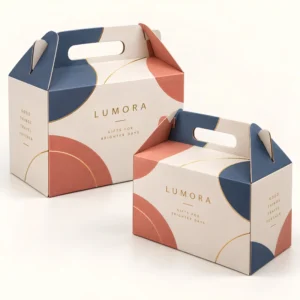
Gable box packaging is a handled carton with a peaked top that folds shut and carries its contents without a separate bag. The shape is familiar from bakeries and takeaway counters, yet it works just as well for gifts, retail sets and event favours. This guide explains how gable box packaging works, which materials suit different contents, and what to check before you order.
What gable box packaging is and how it works
The defining feature of gable box packaging is the top section. Two side panels rise above the main body and meet to form a handle, so the box can be lifted with one hand and carried comfortably. When the box is closed, the handle panels lock together, which helps keep the contents inside during a short journey home, to a table or to a gift recipient. Many versions arrive flat, which saves storage space, and they pop into shape quickly when they are needed at a busy counter.
That combination of a carton and a carrier is the reason this style is so useful. A bakery can fill the box, close the top and hand it over in one movement. A gift shop can present a small set as a finished present, with no extra wrapping or bag required. A market stall can give a customer something sturdy to carry, even when the customer has other bags in hand. The peaked top also gives the box a distinctive outline, so it stands out on a shelf or a display table.
Materials used for gable box packaging
Kraft board is a popular choice when a natural, rustic look is wanted. Its brown tone suits artisan food, farm produce and craft products, and it pairs well with simple printed artwork or a plain finish. White board gives a cleaner, brighter surface for full colour artwork, photographs and bold logos. Corrugated board is thicker and stronger, so it suits heavier contents and longer journeys, and it offers extra protection when boxes are stacked.
For food, the inside of the board matters as much as the outside. Some boards have a coating that is resistant to grease, which helps when the contents include pastries, fried food or items with a rich filling. If you sell food, check that the board you choose is suitable for contact with food, and keep any supplier information with your order records. For non food items, strength, print quality and appearance are usually the main factors.
Choosing board weight and finish
Board weight affects how firm the box feels and how much weight it can carry without bending. A lighter board can be right for a few cookies or a small favour, while a heavier board is better for a full meal, a bottle and a snack, or a gift set with several items. Finishes such as a matt or gloss coating change the look and feel, and they can also help protect printed artwork from scuffs. Ask for a sample if you are unsure, and test it with your real products before you commit to a large run.
Common uses for gable box packaging
Food is the most familiar use. Bakeries use these boxes for cakes, cupcakes, cookies, doughnuts and bread. Cafes use them for lunch sets, sandwiches and snacks that a customer wants to take away. Caterers use them for individual portions at events, where each guest receives a neat, portable meal. The handle makes the box easy to carry at a festival, a market or a party, and the closed top helps protect the food from dust and light rain on a short walk.
Gifts and retail are equally important. A small candle, a soap set, a jewellery item in a pouch, or a collection of samples can all sit well in a gable box. Event planners use the style for wedding favours, birthday treats and welcome packs, because the box itself becomes part of the presentation. Retailers use it for seasonal sets, promotional bundles and products that need to look finished as soon as they leave the shop.
How to choose gable box packaging for your products
Start with the product, not the box. Measure the longest, widest and tallest item, then allow room for tissue, a divider, a card or any protective wrapping you plan to use. A box that is too tight can crush delicate items or make packing slow, while a box that is far too large lets items move around and can look empty. Pack a trial box, close the top, carry it around the room and check that nothing shifts, leaks or presses against the handle panels.
Think about weight next. A box full of baked goods weighs more than a box holding a single favour, and the handle must feel secure in the hand. If your products are heavy, choose a stronger board or a corrugated option, and consider whether an insert will help spread the load. Also think about how the box will be stored before use. Flat packed boxes take up far less room than made up boxes, which matters in a small kitchen, a market stall or a busy stockroom.
Food, gifts and retail considerations
For food, labelling matters. The name of the food, ingredients and allergen information must be clear, and the food labelling and packaging guidance explains what food businesses must show. A printed box can carry some of that information, or you can add a label to a plain box. Either way, check the wording before printing, because reprinting a large run is costly and wasteful.
For gifts, the unboxing experience matters most. Tissue paper, a ribbon tied around the handle, a handwritten card or a small tag can turn a simple carton into a thoughtful present. For retail, the front panel is valuable space. A clear product name, a short description and a logo help a customer understand what is inside at a glance, especially when several boxes are displayed together.
Storage, assembly and handling tips
Store flat boxes in a dry place, away from heat and damp, and keep them in their original bundles until they are needed. When assembling, fold along the scored lines first, then form the base, then fill the box before closing the top. Packing in that order keeps the box square and avoids creasing the printed panels. If staff will assemble many boxes in a shift, practise the sequence once and agree a consistent method, so every box looks the same.
Ordering gable box packaging
When you are ready to order, prepare a short brief. Include the product dimensions, the expected weight, the material you prefer, the artwork or plain finish you want, and the quantity you need. If you need a printed design, share your logo and any text in a clear file, and check the proof carefully for spelling, allergen wording and colour. Standard lead time after final artwork approval is 10 to 14 working days, while corrugated options are 12 to 15 working days. These are guide times for planning, not a guaranteed delivery date.
For related options, explore gable boxes and gable box sizes to compare shapes and dimensions. If you would like a tailored quotation, use get a quote and include your brief, and read delivery information for planning your order.
Shipping gable box packaging
Gable box packaging is made to be carried and presented, not to travel on its own through a courier network. If a gable box needs to reach a customer by shipping, place the filled and closed box inside a slightly larger outer shipping carton, with cushioning around the peaked top and handle so the shape is not crushed and the handle is not pulled loose. Seal the outer carton, put the delivery label on the outer carton rather than on the gable box itself, and check that the total weight and size suit the delivery service you plan to use.
Frequently asked questions about gable box packaging
What is gable box packaging used for?
Gable box packaging is used for food, gifts, retail sets and event favours. Its built in handle and peaked top make it easy to carry and present, with no separate bag needed.
Is gable box packaging suitable for food?
Yes, when the board is suitable for contact with food and any grease resistant coating is chosen for the contents. Always check labelling and allergen information before you sell food in a printed or plain box.
Do gable boxes arrive flat?
Many gable boxes arrive flat and fold into shape quickly, which saves storage space. Check the format when you order, so your team can plan assembly time.
How do I choose the right size?
Measure your longest, widest and tallest item, allow room for wrapping or an insert, and test pack a sample. A snug fit protects the contents and looks more professional than a box that is far too large.
Can gable box packaging be printed?
Yes, gable box packaging can be printed with a logo, product name and artwork across the main panels. Check the proof carefully before production, as printed wording is hard to change later.