
gable box with window
Showing the single result
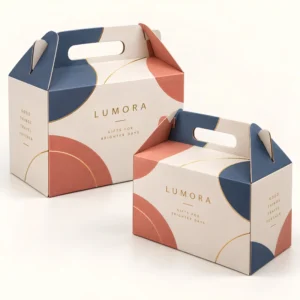
A gable box with window is a handled carton with a clear panel cut into one side, so customers can see the contents without opening the box. That view helps sell bakery treats, gifts and retail products, because colour, texture and presentation become part of the packaging. This guide explains how the window works, what to consider when designing around it, and which products suit this style best.
How a gable box with window works
The window is usually a rectangular or shaped cut out in the front panel, covered on the inside with a clear film. The film keeps dust out, helps keep the contents in place, and still lets light through, so the product remains visible. The rest of the box keeps the familiar gable shape, with a peaked top and a handle, so the box remains easy to carry and present. When the box is closed, the window becomes the focal point, which is why placement and size matter so much.
Window size should match the product, not just the box. A window that is too small can hide the best part of a cake or a gift set, while a window that is too large can weaken the panel or leave the product exposed to handling. As a guide, the window should frame the most attractive part of the contents, with a clear border of board around it to keep the panel strong. If the product will be viewed from a shelf, centre the window at eye level when the box is standing upright.
Window film and panel strength
Clear film is usually made from a transparent plastic that is light, flexible and easy to see through. It is attached inside the box, so the outer surface stays smooth and the edge of the cut out remains neat. For food, check that the film and board are suitable for contact with food, and that the window does not affect any labelling that must remain visible. For non food gifts, the main concerns are clarity, scratch resistance and a clean finish around the cut out.
Strength is a practical concern, because cutting a window removes board from the panel. A well designed box compensates with a suitable board weight, a sensible window size and a clean cut, so the panel does not bend or tear during packing. Test a sample with your real products, lift it by the handle, and check that the window film stays flat and the panel stays square. If the panel flexes too much, a stronger board or a smaller window may be needed.
Choosing window shape and position
A rectangular window suits most bakery items, because it frames cakes, cupcakes and pastries in a natural way. A round or arched window can suit gifts, candles and themed products, where a softer shape matches the occasion. Position the window so the product sits behind it without needing to be rearranged, and leave room for a label or printed message elsewhere on the panel. Avoid placing the window so low that it sits against the base, or so high that it cuts into the handle section.
Best uses for a gable box with window
Bakeries are the most obvious users. Cupcakes with colourful icing, decorated cookies, doughnuts, brownies and small cakes all look appealing through a clear panel, and customers can choose with confidence without opening every box. Cafes and delis use window boxes for lunch sets, pastry selections and gift assortments, where seeing the contents helps a customer decide quickly at a busy counter.
Retail and gifts benefit in a similar way. A candle, a soap set, a jewellery item in a pouch, a craft kit or a small toy can be displayed without removing it from its protective box. That is useful in a shop, where products are handled many times, and at a market, where a customer may browse without asking staff to open each box. The window also helps at events, where a favour box can show a treat or a small gift before it is opened.
Designing around a gable box with window
Design should work with the window, not fight against it. Keep the area around the window calm, so the product remains the focus, and place the logo, product name and any pattern on the remaining board. If the box is printed, make sure printed elements do not run across the window edge, where they can look untidy or be partly hidden. A simple border or a clear margin around the window usually gives the most professional result.
Labelling needs careful planning. Food labelling, allergen information and storage notes must remain legible, and they should not be placed over the film, where text can be hard to read. The food labelling and packaging guidance explains what food businesses must show, and a good design leaves a dedicated panel for that information. If space is tight, an insert card inside the box can carry longer details, while the outside keeps the essentials clear.
Packing and displaying window boxes
Pack window boxes with the product facing the window, and use tissue, an insert or a small tray to keep it in position during transport. If the product can slide, it may end up off centre, which spoils the display and can damage delicate icing or decoration. Check the packed box from the front, from the side and from above, as a customer in a shop might, and adjust the packing until the view through the window looks intentional.
For display, stand window boxes upright with the window facing the customer, and avoid stacking heavy items on top, which can press the film or distort the panel. In a shop window or on a counter, good lighting helps, but direct sunlight for long periods can fade printed colours and affect food, so choose a display position with that in mind. Rotate stock regularly, so the boxes on display always look fresh.
Recycling and disposal notes
Board and film are different materials, so a window box may need to be separated before recycling, depending on local collection rules. In England, workplaces must separate dry recyclable materials, food waste and non recyclable waste, as explained in the workplace recycling guidance in England. Check with your waste collector about window film, and give customers clear guidance if your packaging includes a mixed material panel.
Ordering a gable box with window
When ordering, specify the box size, board choice, window shape and position, and whether the box will be printed. Share a photograph or a sketch of how the product should sit behind the window, so the design team can check the framing before production. Standard lead time after final artwork approval is 10 to 14 working days, while corrugated options are 12 to 15 working days, as guide times for planning, not a guaranteed delivery date.
Compare gable boxes, gable box packaging and gable box sizes before you decide, and use get a quote with your window and product details.
Shipping gable box with window
A gable box with window needs extra care in shipping, because the clear panel is the part most likely to scratch or dent in transit. Place the filled window box inside an outer shipping carton, with cushioning in front of the window so the film does not rub against another box or against tape, and keep the delivery label on the outer carton rather than on the window itself. Check the window on arrival, since a scratched or dented window spoils the retail display value even when the contents inside are undamaged.
Frequently asked questions about gable box with window
What is a gable box with window?
A gable box with window is a handled gable carton with a clear panel in one side, covered with transparent film, so the contents can be seen without opening the box.
What products suit a window gable box?
Bakery treats, gift sets, candles, soap sets, craft kits and small retail products suit window boxes, because seeing the product helps a customer choose with confidence.
Does the window weaken the box?
A window removes board from a panel, so board weight and window size must be chosen carefully. A well designed box with a sensible window size remains strong for normal carrying and display.
Can a window gable box be printed?
Yes, the board around the window can be printed with a logo, product name and artwork. Keep printed elements clear of the window edge for a neat finish.
Is a window box suitable for food?
Yes, when the board and film are suitable for contact with food and labelling remains clear. Check allergen and ingredient information before you sell food in a window box.