
ecommerce packaging inserts
Showing the single result
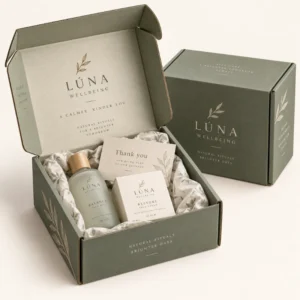
Ecommerce packaging inserts are fitted pieces placed inside a box to hold products in place, protect fragile items and present an order neatly on opening. They can be simple cardboard dividers, shaped trays, foam supports or printed cards, and the right insert reduces movement in transit while making the unboxing experience feel intentional.
ecommerce packaging inserts for protection and presentation
An insert works by controlling movement. If a product can slide, roll or knock against another item, it can scuff, break or leak, even inside a strong outer box. A fitted insert creates a pocket, a divider or a tray that keeps each item in its intended position. That control matters most for glass, ceramics, bottles, electronics and sets of small items that would otherwise collide during sorting and van handling.
Presentation is the second job of an insert. A product that sits upright, centred and visible when the lid lifts looks considered, while a product buried under loose fill looks accidental. A tray with a clear product position, a divider that separates items cleanly, or a card that sits on top of tissue can all guide the eye to the product first. Good inserts therefore serve both logistics and branding, and they should be designed with both jobs in mind from the start.
Cardboard dividers and trays
Cardboard dividers are a practical choice for many online orders. They are light, recyclable with the outer box in most cases, printable and easy to store flat. Dividers suit sets, bottles and multi item orders, because they create separate compartments without adding much weight. Trays suit products that need a defined position, such as a candle, a jar or a small gift set, because the tray cradles the base and stops the item from sliding sideways.
When designing a cardboard insert, measure the product and the internal box dimensions together. An insert that is too tight can crush a product or make packing slow, while an insert that is too loose will not control movement. Include finger notches or a pull tab where a product needs to be lifted out easily, especially for heavier items or for trays that sit deep inside a box. Test the insert with the exact product, wrap and box that will be used in production.
Fitting inserts to the outer box
The insert and the outer box must be designed as a pair. A change in box size, board thickness or closure can change how an insert sits, so check the combination as a complete pack, not as separate parts. Pack the box, seal it, tilt it and stack weight on top, then open it and check whether items have moved. That simple test will reveal a loose insert faster than any drawing.
Foam, paperboard and moulded options
Foam inserts suit fragile, high value or precisely shaped products because foam can be cut to match a product profile closely. That close fit gives excellent protection, but foam adds weight, cost and recycling complexity, so it should be chosen where protection genuinely requires it. Paperboard inserts offer a lighter, more recyclable alternative for many products, and they can be printed to match the brand. Moulded pulp inserts suit some products and offer cushioning with a natural look, but they need careful sizing for each product shape.
Void fill is not a substitute for a fitted insert, although it can complement one. Loose fill can protect a product in a larger box, but it can also hide the product, create mess on opening and increase waste. A fitted insert with a small amount of tissue or paper wrap usually presents better and packs faster than a box filled with loose material. Choose the combination that protects the product with the least material that still does the job well.
Printed insert cards
Printed insert cards are a different kind of insert, focused on communication rather than physical support. A thank you card, a care instruction, a returns note or a brand story card can sit on top of the product or inside the lid. Keep the message short, legible and useful, and make sure the card size suits the box so it does not bend, fold awkwardly or cover the product completely. A card that is easy to find and easy to read will be kept, while a card buried under fill will be missed.
Choosing, ordering and testing inserts
Start by listing the products that need inserts, grouped by fragility and shape. A single insert design may suit a whole product group, while a very fragile or unusually shaped product may need its own design. Avoid creating a different insert for every minor variation, since that increases storage, packing complexity and the chance of picking the wrong insert during a busy dispatch period.
Consider assembly time as well as material choice. An insert that takes several folds to assemble will slow packing, especially for high volume orders. A simple divider that drops into place, or a tray that arrives pre formed where appropriate, can keep packing fast and consistent. Share a short packing guide with staff, showing the correct insert position and the order in which items should be placed, so every parcel looks the same.
For related formats, see the single ecommerce packaging box format and the ecommerce packaging boxes range. For design guidance, see the ecommerce packaging design range. To explore the catalogue, visit the full packaging shop range, or use the request a packaging quote page once dimensions are known.
Lead times and production notes
Inserts are often produced alongside the outer box, so artwork and dimensions should be approved together where possible. After final artwork approval, standard lead times are 10 to 14 working days, corrugated lead times are 12 to 15 working days, and rigid or specialist lead times are 13 to 16 working days. These are guide times for production, not a guaranteed delivery date. For delivery detail, see the delivery information page, and for supplier background, see the about Personalized Mailer Boxes page.
Frequently asked questions
What is the difference between an insert and void fill?
An insert is a fitted piece that holds a product in a defined position, while void fill is loose material used to fill empty space. A fitted insert usually presents better and controls movement more precisely than loose fill alone.
When should I use foam instead of cardboard?
Foam suits fragile, high value or precisely shaped products that need a close fitting support. Cardboard suits many everyday orders, is lighter and is usually easier to recycle with the outer box.
How do I size an insert correctly?
Measure the product and the internal box dimensions together, test the insert with the exact product and wrap, and check that the product lifts out easily with a finger notch or pull tab where needed.
Can inserts be printed?
Yes. Cardboard and paperboard inserts can be printed to match a brand, and printed insert cards can carry thank you messages, care instructions or brand stories. Keep print legible and purposeful.
How long does production take after artwork approval?
After final artwork approval, standard production is 10 to 14 working days, corrugated production is 12 to 15 working days, and rigid or specialist production is 13 to 16 working days. These are guide times, not a guaranteed delivery date.