
ecommerce packaging boxes
Showing the single result
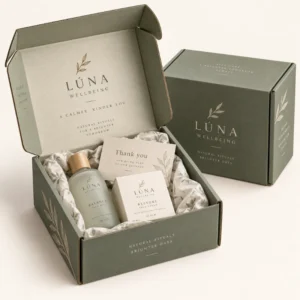
Ecommerce packaging boxes are the cartons online shops use to post orders safely and present a brand well at the doorstep. They range from small mailers for single light items to larger corrugated boxes for multiple products, and the best range matches each product to a snug, sturdy box with clear, readable branding.
ecommerce packaging boxes for a growing online range
A growing online shop rarely needs just one box. A jewellery item, a candle, a set of skincare products and a bundle of clothing all have different weights, shapes and fragility, so a small range of well chosen sizes usually works better than one large box used for everything. Start by grouping products by size and fragility, then choose a box for each group. That approach reduces void fill, improves protection and makes packing faster because staff do not have to improvise with extra padding for every order.
Think about how orders are picked and packed. If several products are often bought together, a box that holds the common bundle will save time and reduce damage. If most orders are single items, a set of single item mailers in two or three sizes may be enough. Keep the range tight at first. Too many sizes create storage problems and increase the chance of picking the wrong box, while too few sizes force staff to overpack small items or squeeze large items into a tight carton.
Building a practical size range
A practical range often starts with a small mailer, a medium mailer and a larger shipping box. The small mailer suits flat or light items, the medium mailer suits a single main product with tissue or an insert, and the larger box suits bundles, sets and heavier goods. Test each size with your most common orders, including the protective wrap you actually use. A range that works on a spreadsheet but fails on a busy packing bench is not a practical range.
Record internal dimensions, board type and the products each box suits, and share that guide with everyone who packs. A simple packing guide reduces training time and keeps presentation consistent when staff change. It also helps when reordering, because you can check which size runs out fastest and whether a size is rarely used and could be dropped.
When to add a new size
Add a new size only when a clear pattern emerges, such as repeated use of excessive void fill for one product group or repeated damage to one type of order. A new size should solve a packing problem, not simply add variety. Before adding it, test whether a fitted insert or a change in wrap could solve the same problem with the boxes you already hold.
Board, strength and sustainability
Corrugated board remains the workhorse for online delivery because it balances strength, light weight and recyclability. Single wall board suits light orders, while double wall board suits heavier or more fragile goods. Kraft board gives a natural look, white board gives a bright print surface, and recycled board can support a sustainability story when the grade is suitable for the product weight and journey. Always check the whole construction, including tape, inserts and any coating, rather than judging sustainability on the outer board alone.
Right sizing is itself a sustainability step. A snug box uses less board, less void fill and less postal volume than an oversized box. It also presents better, since a customer opening a tidy, well filled box gets a very different impression from a customer opening a large box with a small item lost inside. Aim for protection first, then remove any material that does not earn its place.
Recycling and customer guidance
Customers increasingly want to know how to dispose of packaging. Keep the message simple and honest, and avoid claims you cannot support. If a box is widely recyclable in household collections, say so plainly. If tape, labels or inserts change that picture, explain what to remove. Clear guidance builds trust and reduces the chance that a well intentioned claim is challenged later.
Print, branding and the opening moment
Print turns a plain shipping carton into a brand asset, but restraint usually works best. A clear logo, a consistent colour and a legible message will be recognised faster than a busy design that tries to say everything at once. Outside print should survive handling and remain readable when the parcel is seen at an angle or in low light. Inside print can carry a thank you message, a pattern or a simple instruction that rewards the customer for opening the box.
Consider the full opening sequence, from cutting tape to lifting the product out. Tissue, a printed insert and a tidy product presentation can make a standard box feel considered without adding fragile extras. Test the sequence yourself and watch where hands naturally go. If a customer has to fight tape, wrestle an insert or search for a product under loose fill, the design needs simplifying.
For inspiration on related formats, see the single ecommerce packaging box format and the ecommerce packaging inserts range. To browse stock and custom options, visit the full packaging shop range, or start with the request a packaging quote page once sizes and artwork are ready.
Ordering, storage and lead times
Flat packed boxes store efficiently, but they still need dry, flat storage away from heat and damp. Stack by size, label shelves clearly and keep a small number of assembled boxes ready for urgent orders. Track usage by size so reorders arrive before a popular size runs out, and review the range after seasonal peaks when order patterns may have changed.
After final artwork approval, standard lead times are 10 to 14 working days, corrugated lead times are 12 to 15 working days, and rigid or specialist lead times are 13 to 16 working days. These are guide times for production, not a guaranteed delivery date. For delivery detail, see the delivery information page, and for background on the supplier, see the about Personalized Mailer Boxes page.
Frequently asked questions
How many box sizes does an online shop need?
Most shops start well with two or three sizes that cover small, medium and bundle orders. Add a size only when a repeated packing problem shows that the current range cannot protect a product group properly.
What board should I choose for posted orders?
Single wall corrugated board suits light orders, while double wall board suits heavier or fragile orders. Choose board for the product weight and postal journey, not only for appearance.
Can ecommerce boxes be printed inside and outside?
Yes. Outside print carries brand recognition on delivery, while inside print can carry a thank you message, a pattern or care guidance for the moment of opening.
How do I reduce void fill without risking damage?
Right size the box, use a fitted insert where a product moves, and test the packed box by tilting and stacking it. Remove fill that does not stop movement or protect a vulnerable edge.
How long does production take after artwork approval?
After final artwork approval, standard production is 10 to 14 working days, corrugated production is 12 to 15 working days, and rigid or specialist production is 13 to 16 working days. These are guide times, not a guaranteed delivery date.