
branded subscription boxes
Showing the single result
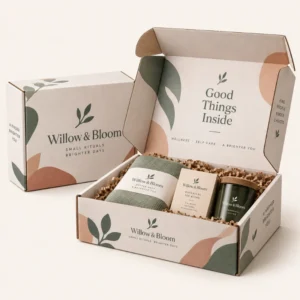
Branded subscription boxes are custom printed boxes made for repeat deliveries, where the same customer receives a new selection every month, every quarter or on another regular cycle. For subscribers, branded subscription boxes turn a routine delivery into a small event, because the box, the reveal and the contents all feel part of one ongoing experience. For brands, the challenge is consistency, because the box must look and feel the same every time, even when the contents change.
What branded subscription boxes need to do
A subscription box is opened repeatedly by the same person, so small flaws become noticeable quickly. A lid that catches, an insert that fits one month but not the next, or a colour that shifts between runs can all weaken trust. The box must also work as a practical parcel. It has to protect varied contents, close securely, carry a label clearly and survive a normal delivery route without arriving crushed or torn.
At the same time, a subscription box should feel personal. Subscribers often film or photograph the opening, share it with friends and compare one month with the next. A consistent outside design helps subscribers recognise their delivery at a glance, while a changing inside message, theme card or product guide keeps each edition fresh. The balance between sameness and surprise is what keeps a subscription feeling both reliable and exciting.
Monthly, quarterly and seasonal cycles
Monthly boxes need a structure that can be packed quickly and repeated without confusion. The same box size may be used every month, with inserts or dividers adjusted for different products. Quarterly boxes may allow more variety, because there is more time to plan a themed design or a special edition. Seasonal boxes, such as festive or summer editions, can use a different print or insert while keeping the same box size and board, so packing and storage remain simple.
Keeping the outside consistent across editions
Keep the main outside design stable across editions, even if the inside changes. A consistent logo position, colour and box size helps subscribers spot their delivery and helps a packing team work faster. If a special edition needs a different outside, make the change deliberate and clear, such as a seasonal colour or a limited edition pattern, rather than a small unintended shift that looks like a printing error.
Beauty, food, lifestyle and hobby subscriptions
Different subscription types place different demands on the box. Beauty boxes often contain bottles, jars and tubes that need individual support to stop leaking or breaking. Food boxes may need dividers, grease resistance or extra protection for jars and packets, and they must keep products separated and clean. Lifestyle boxes may contain clothing, books, stationery or homeware, which need a mix of flat packing and cushioning. Hobby boxes may contain small parts, tools or craft materials that need compartments so nothing is lost at the bottom of the box.
Whatever the sector, measure the largest and smallest likely contents for a typical edition. A box sized only for a small edition will fail when a larger product is included, while a box sized only for the largest edition will leave smaller editions rattling. Adjustable inserts, dividers or a small amount of tissue can bridge that gap without requiring a different box every month.
Designing a box subscribers recognise
Design for a subscription box should start with the moment of delivery. The subscriber sees the box on a doorstep, in a hallway or in a parcel locker, often alongside other parcels. A clear logo and a distinctive colour help it stand out. The opening should then reward that recognition. Inside print, a welcome message, a contents guide or a theme illustration can turn a simple unpacking into a guided experience, especially when several products need explanation.
Think about how the box will look in photographs and video. Subscribers often film the opening in natural light, with a phone camera, so designs need to read clearly without studio lighting. Bold shapes, readable text and a clean reveal order work better than fine detail that disappears on a small screen. Leave the hero product visible as soon as the lid opens, and place supporting products where they can be lifted out one by one.
Print inside and outside
Printing both inside and outside gives a subscription box two chances to make an impression. Outside print creates recognition and excitement before opening. Inside print creates surprise and can carry useful information, such as how to use a product, how to store it or where to find more detail online. A printed inside lid is a good place for a short welcome message, because it is seen immediately and does not add loose paper to the box.
Theme cards and contents guides
A theme card or contents guide is often more useful than loose marketing leaflets. It can list each product, explain why it was chosen and give simple usage notes. It also helps subscribers who receive a product they do not recognise, and it reduces questions to customer service. Keep the guide short, clear and easy to keep with the products. If a QR code is used, test it from a printed proof and make sure it leads to a page that matches the edition.
Colour consistency on repeat orders
Colour consistency is a common concern for subscription brands, because subscribers compare boxes side by side over time. Keep approved artwork, board type and print method the same for repeat orders, and check each new proof against a previous box, not just against a screen image. If a change is unavoidable, such as a new board supplier or a different print process, tell the brand team in advance and check a physical sample before committing to a full run.
Board choice affects colour as well as strength. White coated board usually gives brighter, cleaner colour, while kraft board gives a warmer, more natural result and can soften bright colours. Choose the board that suits both the brand look and the protection needed, then stay with it for repeat editions where possible. Changing board mid subscription can alter colour and feel in ways that subscribers notice, even if the artwork file is unchanged.
Structure, inserts and packing for repeat sends
Structure for a subscription box should be easy to assemble, easy to pack and easy to open. A corrugated mailer with a self locking lid is a popular choice, because it stores flat, folds quickly and opens cleanly. Rigid boxes suit premium subscriptions where the box itself is part of the experience and may be kept, but they need more storage space and care in packing. Whichever structure you choose, test it with real products from several editions, not just the first one.
Inserts deserve special attention for subscriptions, because contents change. A card insert with several compartments can suit a stable product mix, while a flexible divider or a combination of tissue and small card trays can suit a changing mix. The insert should stop items moving, rubbing or leaking onto each other, and it should allow the subscriber to remove items without tearing the box or the insert. If an insert is too tight, products can be damaged on removal. If it is too loose, products can shift in transit.
Planning for changing contents
Plan the box around a range of contents, not a single perfect edition. List the largest, heaviest and most fragile items likely to appear over several months, and design the insert and cushioning around those extremes. Leave a small amount of flexibility for seasonal products, such as a taller bottle or a wider book, without changing the outer box. This planning reduces the need for emergency packaging changes and helps a packing team maintain a consistent standard.
Packing speed and accuracy in a fulfilment run
Packing speed matters when hundreds or thousands of boxes go out in a short window. A clear packing guide, with a photograph of the finished box and the order in which items should be placed, reduces errors and training time. Number the items on the guide if there are many, and check a sample of finished boxes before sealing the full run. A simple final check, such as weighing a sample box or comparing it with a reference box, can catch missing items before they reach subscribers.
Storage, flat packing and warehouse handling
Flat packed corrugated mailers are easier to store than assembled rigid boxes, which matters when a subscription brand holds stock for several editions. Store flat boxes in a dry place, away from damp and direct sunlight, and keep them in their original bundles until needed. For rigid boxes, plan shelf space carefully and protect printed surfaces from scuffing. In both cases, keep artwork and box specifications with the stock, so a new team member can identify the correct box without guessing.
Ordering, lead times and growing a subscription
When ordering branded subscription boxes, share the subscription cycle, the expected number of subscribers and the likely contents range. That information helps a supplier recommend a box size, board and insert approach that will work beyond the first edition. Also share any plans for special editions, because a box that works for a standard month may need a different insert or a stronger board for a festive edition with heavier contents.
Artwork approval is a key stage for repeat orders. Check spelling, product names, edition dates and any codes before approving, because an error repeated across a full subscription run is costly to correct. Once artwork is approved, corrugated boxes from Personalized Mailer Boxes are usually produced in 12 to 15 working days. That timing is a production guide, not a guaranteed delivery date, and it can vary with size, print and quantity. Order early enough to allow for packing, labelling and courier collection, especially before a monthly dispatch date.
Sustainability and packaging duties
Subscribers increasingly notice packaging waste, because they receive it regularly. Right sizing the box, choosing cardboard that can usually be recycled with paper and card collections in the UK, and keeping inserts simple can all reduce waste over a subscription year. Avoid adding loose plastic fillers or extra layers that do not protect or present the product. If a filler is needed, choose one that is easy for the subscriber to separate and recycle or reuse.
Brands that place packaging on the UK market may have duties under extended producer responsibility for packaging. The GOV.UK collection sets out who may be an obligated producer and what large and small producers must do, including registration and reporting. Reviewing that guidance as a subscription grows can help with planning and compliance. See Extended producer responsibility for packaging on GOV.UK for the current official guidance.
Next steps for a new subscription box
Start with a clear brief covering box size, board, print, insert needs, subscriber numbers and dispatch dates. Test a sample with real products from a typical edition, and check the reveal, the fit and the transit performance before committing to a full run. Keep the approved specification on file for repeat orders, so each edition matches the last. For related packaging, see branded mailer boxes, branded PR boxes and subscription box packaging. To discuss your subscription, request a quote for branded subscription boxes.
Frequently asked questions
What are branded subscription boxes?
Branded subscription boxes are custom printed boxes made for repeat deliveries, such as monthly beauty, food, lifestyle or hobby boxes. They combine consistent brand print with a structure and insert that protect changing contents.
Should a subscription box use the same box every month?
Using the same outer box size and design every month usually works best, because it helps subscribers recognise deliveries and helps packing teams work accurately. Inside inserts, theme cards and product guides can change to keep each edition fresh.
What insert works best when contents change?
A flexible divider, a set of card trays or a combination of tissue and compartment inserts often works better than a single rigid cut out when contents change. The insert should stop movement and rubbing while still allowing items to be removed easily.
How long does production take after artwork approval?
Corrugated boxes are usually produced in 12 to 15 working days after final artwork approval. This is a production guide, not a guaranteed delivery date, so allow extra time for packing and dispatch.
Can subscription boxes be recycled?
Cardboard subscription boxes can usually be recycled with paper and card collections in the UK, subject to local rules. Simple board and inserts, without mixed materials, make recycling easier for subscribers.