
branded mailer boxes
Showing all 8 results
-
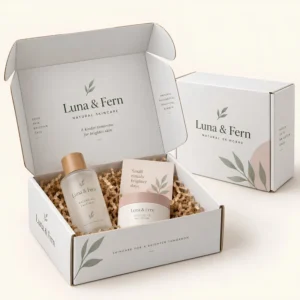
Custom Cardboard Mailer Boxes
Get a Quote -
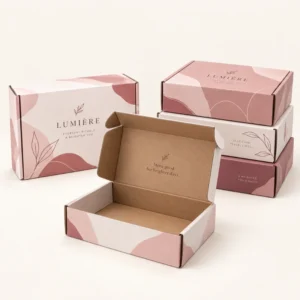
Custom Corrugated Mailer Boxes
Get a Quote -
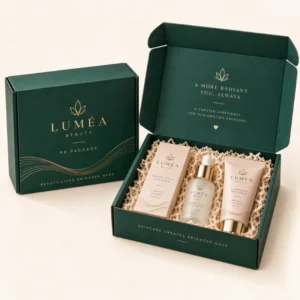
Custom Influencer Boxes
Get a Quote -
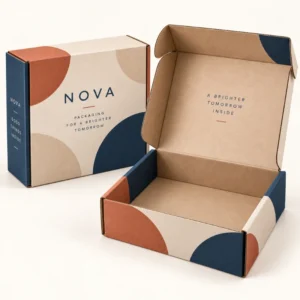
Custom Mailer Boxes UK
Get a Quote -
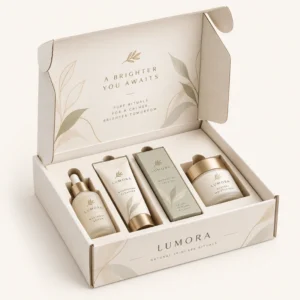
Custom Mailer Boxes With Inserts
Get a Quote -
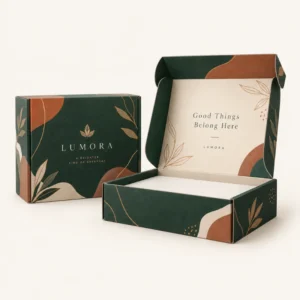
Personalized Mailer Boxes
Get a Quote -
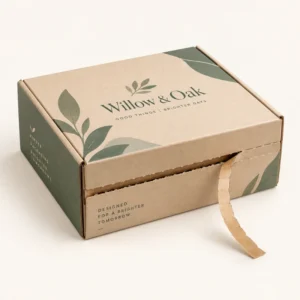
Self Seal Mailer Boxes
Get a Quote -
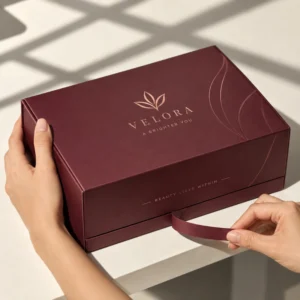
Tear Strip Mailer Boxes
Get a Quote
Branded mailer boxes give a growing brand a consistent, recognisable parcel for every type of order, from a single product to a full gift set. When the same print, the same board and the same opening experience appear across different sizes of branded mailer boxes, customers learn to recognise the brand before they read the label. That consistency also helps the packing team, because a settled range of boxes, with known sizes and known layouts, is faster to pack and easier to reorder than a collection of unrelated boxes bought at different times.
Building a range of branded mailer boxes
A useful range starts with order patterns, not with a catalogue of sizes. Look at the most common baskets over recent months: single item orders, pairs, subscription sets, gift sets and seasonal bundles. Each pattern may deserve its own box size, but only if the volume justifies it. Too many sizes create storage problems and packing confusion, while too few sizes force small items into large boxes with excessive fill. A practical range often includes a small box for single items, a medium box for pairs and small sets, and a larger box for gift and subscription sets, with inserts to adapt the larger boxes when needed.
Consistency across the range comes from shared artwork rules. Use the same logo, the same colour palette and the same message style on every size, even if the layout adapts to a smaller lid or a deeper base. Customers who receive a small box one month and a large gift box the next should still feel they are dealing with the same brand. The branded mailer box tag page explains the single box format in detail, while the online shop helps buyers compare the wider range in one place.
Sizes that work together
Sizes work together when they share a packing logic. For example, a small box that fits one candle, a medium box that fits two candles with a divider, and a large box that fits a candle, a diffuser and a gift card can share the same insert style and the same tissue colour. That shared logic makes packing intuitive: the team knows that the medium box always uses a divider, and the large box always uses a tray. It also makes the customer experience coherent, because the reveal follows a similar pattern even when the contents differ.
Using inserts to adapt a size
Inserts allow one box size to serve several product combinations without looking empty. A card divider can separate two bottles, a tray can hold small jars in place, and a paper nest can protect a fragile item inside a larger box. Inserts should be designed for the products they will hold, with cutouts or folds that match real dimensions. A generic insert that does not fit will move during transit and may cause more damage than no insert at all. Test inserts with the real products, packed as they will be sent, before committing to a large run.
Print consistency across sizes
Print consistency requires artwork that adapts gracefully. A logo that looks strong on a large lid may need a simplified version on a small lid, where fine detail can be lost. Colours should be checked on the same board across all sizes, because a colour that looks rich on a large area can look different on a narrow side panel. Keep the main message identical across sizes, and vary only the layout, not the wording, so customers receive the same brand promise whether they order a single item or a full set. A proof for each size, even when artwork is shared, will catch layout problems early.
Checking proofs for every size
Check each size proof for logo position, text legibility and fold safety. A design that sits safely on a large lid may sit too close to a fold on a small lid, where it can distort when the box is assembled. Check the inside print as well, because a message that fits a large lid interior may need shortening for a small box. Those checks take a little extra time at proof stage, but they prevent a situation where one size in the range looks polished and another looks rushed. Customers notice inconsistency, even if they cannot explain exactly what feels wrong.
Branded mailer boxes for different order types
Different order types place different demands on a mailer box. Single product orders need a snug fit and a clean reveal, so the product is the hero of the opening. Multi product orders need organisation, so each item can be found and appreciated without tangling or rubbing. Gift orders need a presentation that hides packing material and places a message card where it will be seen first. Subscription orders need repeatability, so the same box can be packed month after month with the same care and the same result. Designing the range around those order types, rather than around box sizes alone, leads to packaging that serves customers better.
Seasonal orders deserve special attention. A Christmas gift set, a summer launch bundle or a limited edition collaboration may need a larger box, a different insert or a seasonal interior print, while still keeping the core brand recognisable. Planning seasonal boxes alongside the core range, rather than as a last minute addition, allows artwork, board and inserts to be coordinated. It also allows lead times to be planned, so seasonal boxes arrive in time for packing and dispatch without rushing the proof stage.
Subscription boxes that stay recognisable
Subscription customers develop a relationship with the box itself. They anticipate its arrival, photograph its opening and compare one month with the next. Keeping the exterior consistent, while varying the interior contents and a monthly card, preserves that anticipation without making the packaging feel repetitive. A small variation, such as a seasonal colour inside the lid or a new message, can keep the experience fresh while the core brand remains clear. That balance is what turns a delivery box into a ritual that customers look forward to.
Packing subscription sets efficiently
Efficient subscription packing depends on a settled layout. A packing guide with a photograph of the ideal arrangement, a list of items in order, and a note on tissue and insert placement will keep every month consistent, even when new staff join the team. Flat packed boxes, stored by size and clearly labelled, reduce time spent searching for the right box. A final check before sealing, confirming that the card, the products and any sample are all present, prevents incomplete sets that disappoint loyal subscribers.
Gift sets and multi item orders
Gift sets need extra care, because the recipient may not know the brand and will judge it entirely by the parcel. A tidy interior, a clear message card and products that stay in place during transit all contribute to a good first impression. For multi item orders, dividers and trays prevent items from damaging each other, especially when a set combines soft textiles with rigid bottles or jars. A little extra planning at the design stage, to ensure that each item has a place, will save time at packing and reduce damage in transit.
Reordering and managing a mailer box range
Once a range is proven, reordering should be simple. Keep a record of each size, board, finish, artwork version and insert, so a repeat order matches the original exactly. Note any seasonal variations separately, so they are not confused with the core range. That record also helps when a product changes size or a new product is added, because the team can see which box is closest to fitting the new item and whether a new size or a new insert is needed.
Lead times for planning repeat orders are the same as for first orders: standard boxes take 10 to 14 working days after final artwork approval, corrugated boxes take 12 to 15 working days, and rigid or specialist boxes take 13 to 16 working days. Those timings are planning guidance, not a guaranteed delivery date, so stock levels should be monitored and repeat orders placed before the smallest size runs out. Brands can request a quote for a range, check delivery information, and read the about Personalized Mailer Boxes page for background. The Personalized Mailer Boxes home page is a useful starting point for a first exploration of the range.
Stock checks that prevent gaps
Regular stock checks, by size, prevent the common problem of running out of the most popular box while larger sizes sit unused. Track usage by order type, not only by total boxes used, because a surge in gift sets will deplete large boxes faster than small boxes. A simple reorder point for each size, based on average weekly use and lead time, will keep the range balanced. That discipline may seem administrative, but it protects the customer experience, because an out of stock box often leads to a substitute box that looks inconsistent.
Frequently asked questions
How many mailer box sizes should a brand use?
Most brands do well with a small range based on common order patterns, such as a small box for single items, a medium box for pairs and small sets, and a large box for gift and subscription sets. Too many sizes create storage and packing problems, while too few force small items into oversized boxes.
How can print stay consistent across different sizes?
Use the same logo, colours and message wording on every size, and adapt only the layout to fit each lid. Proof every size separately, because a design that fits a large lid may sit too close to a fold on a small lid.
Can one mailer box size serve several product combinations?
Yes, with a well fitted insert. Dividers, trays and paper nests can adapt a box to different combinations, provided the insert is designed for the real product dimensions and tested with a packed sample.
How long do repeat orders take?
Corrugated mailer boxes take 12 to 15 working days after final artwork approval, standard boxes take 10 to 14 working days, and rigid or specialist boxes take 13 to 16 working days. Monitor stock by size and order before the most popular size runs out.