
branded pr boxes
Showing all 2 results
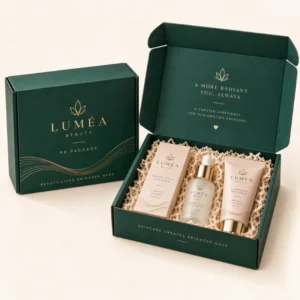
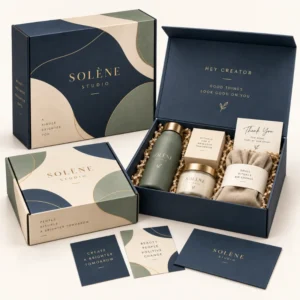
A branded PR box is a presentation box made to carry a launch, a gift set or a media kit in a way that feels considered from the first moment it is opened. For creators, editors and VIP customers, branded pr boxes turn a simple delivery into a story, with the product, the message and the brand revealed in a planned order. The best designs protect every item in transit while still giving the recipient a clear reason to photograph, share and remember what arrived.
What branded pr boxes are for
A PR box is not simply a shipping carton with a logo added. It is a piece of campaign packaging, built around a moment. That moment might be a product launch, a seasonal collection, a press preview or a thank you send to a loyal customer. In each case the box has to do two jobs at once. It must keep fragile or valuable items safe through sorting, stacking and handling, and it must present them in an order that makes sense when the lid comes off.
Many brands use PR boxes when the recipient will see the packaging before they see an advertisement or a shop display. The box may be the first physical contact a creator has with a new range. That is why colour, print quality, insert fit and even the sound and feel of the lid matter. A loose item rattling inside a plain carton sends a very different message from the same item held firmly in a shaped insert, under a printed lid message, beside a short personal note.
Launch kits and media mailers
Launch kits often contain several items that belong together, such as a hero product, a sample, a shade card, a booklet and a small gift. A PR box lets a brand arrange those items so the hero product is seen first and supporting items follow in a logical sequence. Editors and creators can then understand the range without unpacking a jumble of loose pieces. A printed contents card can help here, especially when products look similar or when shades, scents or sizes need to be identified quickly.
Reveal order that photographs well
Think about the reveal as a short sequence rather than a single picture. The outside should create curiosity without giving everything away. The inside lid can carry a headline message, a campaign line or a simple instruction. The first layer should show the main product clearly. Deeper layers can hold samples and printed material. When each layer is easy to lift out and put back, the recipient can photograph the box at several stages, which is useful for social content and for press coverage.
Creator gifting and VIP sends
Creator gifting works best when the box feels personal rather than mass produced, even when many boxes are sent in one campaign. A handwritten style note, a name card or a message that refers to the creator’s work can make a standard structure feel individual. Keep personalisation practical. A printed card with a name and a short message is easier to check and pack accurately than a fully different box for every recipient. It also avoids errors when a packing team is working through a long list under time pressure.
VIP sends follow a similar logic, but the audience may include long standing customers, retail buyers or event guests rather than creators. In those cases the box should feel generous without feeling wasteful. Choose inserts and fillers that protect the product and look intentional. Tissue, a fitted card insert or a simple ribbon can add ceremony, but every extra layer should have a purpose. If an item does not protect, explain or present the product, consider leaving it out.
Choosing a structure that suits the contents
Structure should follow the contents, not the other way round. Start with the size, weight and fragility of each item, then choose a box depth that holds them without forcing the lid shut or leaving large empty spaces. A box that is too deep invites movement. A box that is too shallow risks pressure on lids, caps and delicate finishes. Measure items as packed, including any inner carton, sleeve or protective wrap, and allow a small clearance so items slide in and out without catching.
Also consider how the box will travel. A PR box sent by courier may be stacked, turned and handled several times. A box handed over at an event faces less transit risk but still needs to look sharp after being carried in a bag. The right structure balances presentation, protection and practical handling, and it should be easy for the recipient to open without tools or force.
Rigid presentation boxes
Rigid presentation boxes use stiff board wrapped in printed paper or plain board, and they suit high value launches, fragrance, jewellery, premium skincare and limited editions. They hold their shape well, they feel substantial in the hand, and they are often kept or reused by the recipient. A magnetic lid, a lift off lid or a hinged lid can each work, but the choice should suit the weight of the contents and the way the box will be opened on camera. A lid that snaps shut cleanly is better than a lid that needs careful alignment every time.
Inserts that hold every item still
Inserts are where many PR boxes succeed or fail. A card insert with cut outs shaped to each product keeps items separated and stops them rubbing together. Foam inserts suit heavier or more delicate items, while moulded pulp inserts suit brands that want a natural look and a material that is easy to recycle in many UK collections. Whatever material you choose, test the insert with real products. Shake the closed box gently, turn it on its side and open it again. If an item has moved, the cut out needs to be tighter, deeper or better supported at the base.
Mailer style PR boxes
Mailer style PR boxes are made from corrugated board and fold into a self locking shape. They are lighter than rigid boxes, they usually store flat, and they can still carry full colour print inside and outside. They suit larger campaigns, multi item sets and sends where the box itself must also act as the outer shipping carton. For a mailer style box, print on the inside lid is especially valuable, because that is the surface the recipient sees first when the box opens. A short message, a pattern or a product guide printed there can lift the whole unboxing without adding extra loose material.
When choosing between a rigid box and a mailer style box, ask what happens after delivery. If the box is meant to be kept on a shelf or reused as storage, a rigid box may justify its extra weight and bulk. If the box is meant to travel quickly, pack flat before use and be recycled after opening, a corrugated mailer may be the smarter choice. Both can look premium when the print, insert and reveal order are planned with care.
Print, finish and artwork decisions
Print is the most visible part of a PR box, so artwork needs the same attention as structure. Start with the brand colours and logo, then decide where print will have the greatest effect. Outside print creates recognition in transit and in photographs of the closed box. Inside print creates surprise and guides the eye once the box is open. Printing both sides is often worthwhile for PR work, because creators photograph both the arrival and the opening.
Keep the design readable at a glance. A busy pattern can look exciting in a proof but confusing in a photograph, especially when the box is small or the lighting is poor. Leave clear space around the logo and the main message. Use one strong focal point on the outside and let the inside carry supporting detail. If the campaign has a hashtag, a web address or a call to action, place it where it can be read easily, such as the inside lid or a contents card, rather than squeezing it into a corner of the outer print.
Colour and print placement
Colour accuracy matters for PR boxes because the box will appear in photographs and video alongside the product. Supply artwork in a print ready format and check proofs carefully for colour shifts, especially with deep navy, rich reds and skin tones. If the brand uses a specific colour, mention it clearly when requesting a quote so the production team can advise on the best print method for the chosen board. Kraft board gives a warm, natural result but will soften bright colours, while a white coated board gives cleaner, brighter colour reproduction.
Finishes that suit photography
Finishes such as matt lamination, gloss lamination, foil and embossing can add depth, but they should support the design rather than compete with it. Matt lamination reduces glare in photographs, which can help when creators film under bright lights. Foil draws the eye to a logo or a title, but it works best in small, deliberate areas. Embossing adds texture that can be felt as well as seen. Test finishes under the kind of light the box will be photographed in, if possible, and avoid combining too many effects in one design.
Artwork checks before production
Before approving artwork, check every panel for spelling, product names, shade names, dates and contact details. Check that text does not sit too close to folds, cut lines or closures, where it could be creased or hidden. Check that the barcode or QR code, if used, scans correctly from a printed proof. A final artwork approval is the point at which production can begin with confidence, and catching an error before that stage is far easier than correcting it afterwards.
As a guide, rigid and specialist boxes from Personalized Mailer Boxes are usually produced in 13 to 16 working days after final artwork approval. That timing is a production guide, not a guaranteed delivery date, and it can vary with structure, finish and quantity. Allow extra time for campaign planning, packing and courier collection, especially around a launch date. For a closer look at related presentation packaging, see branded mailer boxes and branded subscription boxes.
Packing, sending and measuring success
A carefully designed PR box can still disappoint if packing is rushed. Create a packing guide for the campaign, with a photograph of the finished box and a list showing the order in which items should be placed. Number the items if there are many, and check each finished box against the guide before sealing. This is especially important when different recipients receive different combinations, because a missing sample is hard to correct after the box has been posted.
Protect the outside of the box as well. If a PR box is also the outer carton, consider whether it needs an outer mailer for transit, or whether the printed box itself is strong enough to travel without extra protection. A scuffed outer surface can spoil the first impression, so test a packed box through your normal courier route before committing to a full send. Add clear handling advice only where it is genuinely needed, and keep labels away from the main printed design where possible.
Packing checklist for a campaign send
1. Confirm the recipient list, the contents for each group and any personal notes before packing begins.
2. Check each product, insert and printed card against a finished sample box.
3. Place the hero product first in the reveal order, then supporting items in a logical sequence.
4. Close and reopen a test box to check that nothing moves, rattles or catches on the lid.
5. Seal the box securely, apply the address label in a clear position and keep a record of what was sent to whom.
What to measure after the send
Success for a PR box is not only about how it looks. Track how many recipients post about the box, how many use the campaign message and how many mention the product by name. Note any damage reports, packing errors or comments about opening difficulty, because those details shape the next run. A short feedback request sent a few days after delivery can reveal practical issues that photographs alone will not show. Use that learning to refine insert fit, print placement and packing guidance for the next campaign, and to brief your packaging supplier with clear evidence rather than general impressions.
If you are planning a launch, a media mailer or a creator send, request a quote for custom PR packaging with your box size, contents, quantity and artwork stage, so the team can advise on structure, print and timing.
Frequently asked questions
What is a branded PR box?
A branded PR box is a custom printed presentation box made for product launches, media mailers, creator gifting and VIP sends. It combines protective structure, fitted inserts and brand print to present several items in a planned reveal order.
What should go inside a PR box?
Include the hero product, any samples that support the launch, a contents card and a short personal note. Add tissue or a fitted insert where needed for protection and presentation, and leave out items that do not help the recipient understand or enjoy the product.
Should a PR box be rigid or corrugated?
A rigid box suits high value and keepsake launches, while a corrugated mailer style box suits larger campaigns and sends where the box must also travel as the outer carton. The choice depends on product value, transit risk, storage space and whether the recipient is likely to keep the box.
How long does production take after artwork approval?
Rigid and specialist boxes are usually produced in 13 to 16 working days after final artwork approval. This is a production guide, not a guaranteed delivery date, so allow extra time for packing and courier collection around a launch.
Can PR boxes be recycled?
Cardboard PR boxes can usually be recycled with paper and card collections in the UK, depending on local rules and on any foil, lamination or mixed materials used. Choosing a simple board and insert material can make recycling easier for the recipient.