
branded shipping boxes
Showing the single result
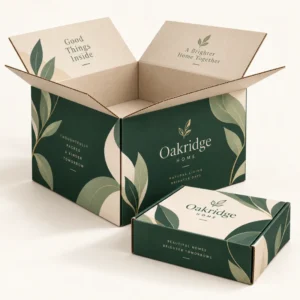
Branded shipping boxes are outer cartons printed with a business logo, colour or design, so an order arrives looking intentional rather than anonymous. For online sellers, branded shipping boxes protect goods through handling and sorting while also turning every delivery into a visible reminder of the shop behind it. The right box balances strength, size, print quality and ease of packing, because a box that looks good but fails in transit helps no one.
What branded shipping boxes are used for
Shipping boxes are the workhorses of ecommerce. They carry single orders, multi item orders, returns and wholesale parcels, and they may pass through several hands before reaching the customer. Unlike a presentation box that is opened once in a calm setting, a shipping box must survive stacking, drops, vibration and changes in temperature and humidity. Print adds brand value, but it must never come at the expense of board strength, closure security or a sensible fit.
Many businesses start with plain cartons and move to branded shipping boxes when order volume, repeat purchases or brand recognition make the change worthwhile. A printed outer box can reduce the need for extra branded tape, stickers or inserts, because the brand message is already on the carton. It can also help customers recognise a delivery quickly, which matters when parcels are left with neighbours, in lockers or in busy reception areas.
Online retail and ecommerce orders
For online retail, the shipping box is often the largest branded surface a customer sees. A clear logo, a simple colour block or a short message on the outside can reinforce the shop name without adding loose marketing material inside. Keep outside print bold and readable from a short distance, because a parcel may be photographed on a doorstep or carried through a workplace. Inside print is a useful second stage, especially for repeat customers, but outside durability and legibility should come first for a shipping carton.
When a shipping box should also be the presentation box
Some brands use one box for both shipping and presentation, often a corrugated mailer with print inside and outside. This works well for clothing, cosmetics, books and gift sets that are not too heavy or fragile. It works less well for very heavy, sharp or easily damaged goods, where a plain outer carton protects a separate presentation box inside. If you choose a single box approach, test it through your normal delivery route and check the corners, edges and print after transit before rolling it out to all orders.
Wholesale, fulfilment and multi item orders
Wholesale and fulfilment orders place different demands on a shipping box. The box may hold many units, it may be opened and resealed in a warehouse, and it may be stacked under heavier cartons. In those cases, board grade and closure matter more than decorative print. A strong regular slotted carton with a clear logo and handling information can be more practical than a highly decorated mailer. Label placement also matters. Leave a flat, unprinted area or a clear panel for the address label and any carrier barcode, so scanning is quick and reliable.
Multi item orders need careful size planning. A box that is far larger than its contents wastes void fill, increases parcel dimensions and can allow items to move and damage each other. A box that is too small risks burst seams and crushed corners. Measure the packed order, including inner packaging, and choose the smallest box that allows a secure close with adequate cushioning around fragile items.
Choosing board, flute and strength
Corrugated board is made from a fluted layer between flat liners, and the flute type affects crush resistance, print quality and weight. E flute is fine and smooth, which suits printing and lighter mailer style boxes. B flute is thicker and offers stronger crush resistance for heavier shipping cartons. C flute offers cushioning and is often used for larger or heavier parcels. Double wall board, with two fluted layers, suits very heavy or stacked goods. The right choice depends on product weight, parcel size, stacking in transit and the finish you want for print.
Board strength is also described by edge crush test values and by the weight a box is expected to carry. Rather than choosing a board by name alone, share product weight, parcel dimensions and stacking details when requesting a quote. A supplier can then recommend a board that protects the goods without adding unnecessary weight or bulk. Over specifying board for every order can increase material use and parcel size, while under specifying board can lead to damage, returns and lost customer trust.
Single wall and double wall options
Single wall corrugated board suits most everyday ecommerce parcels, including clothing, books, cosmetics and small electronics in inner packaging. It is lighter, easier to store flat and usually easier to print. Double wall board suits heavier items, bulk orders and parcels that will be stacked under other freight. It adds weight and cost in material terms, but it can reduce damage for goods that would otherwise need a much larger box or extra inner protection.
Matching board to product weight and fragility
Start with the heaviest item in the range, not the average order. If a box must carry a dense item such as a set of books or a filled gift hamper, choose board and tape that suit that load. For fragile items, board alone is not enough. Add cushioning, dividers or fitted inserts, and consider whether the product needs its own inner box before it goes into the shipping carton. A short drop test with a packed sample can reveal weak corners, loose closures and items that shift in transit.
Print methods and colour on corrugated board
Print on corrugated board can range from a simple one colour logo to full colour artwork covering the outside. One colour print in a dark ink on kraft board gives a clean, natural look and is often the most practical choice for high volume shipping. Full colour print on white coated board gives brighter, more detailed results, but it needs a smoother surface to reproduce fine detail well. Ask for a proof and check it in normal daylight, because colours can look different on screen, on kraft board and under warehouse lighting.
Keep shipping box artwork simple and robust. Fine lines, small text and subtle colour differences may be lost on corrugated board or scuffed in transit. A strong logo, a clear brand name and a simple pattern or colour block will survive handling better than delicate detail. If the box will also be photographed by customers, choose a design that still looks good after a journey, with the main brand mark away from edges, seams and tape lines where possible.
Sizes, closures and packing efficiency
Size is one of the most important decisions for a shipping box, because it affects protection, parcel dimensions, storage and packing speed. Standard sizes suit many businesses, while custom sizes suit products with unusual shapes or consistent order profiles. If you ship the same product repeatedly, a custom size that fits that product closely can reduce void fill and improve presentation. If you ship varied orders, a small range of well chosen sizes may be more practical than a single size that fits nothing perfectly.
Measure internal dimensions, not just external dimensions, when checking fit. Board thickness, flaps and inserts all reduce usable space. Allow clearance for cushioning, especially around corners and lids, and check that the box closes without bulging. A bulging box is more likely to burst, to be rejected by a carrier or to arrive looking damaged, even if the contents are unharmed.
Regular slotted cartons and mailer styles
A regular slotted carton is the familiar shipping box with top and bottom flaps that are taped shut. It is strong, simple to store flat and easy to pack at speed. A mailer style shipping box folds into a self locking shape with a tuck in lid, which can look smarter and open more cleanly for the customer. Mailer styles often suit direct to customer orders, while regular slotted cartons often suit wholesale, fulfilment and heavier parcels. The best choice depends on who opens the box, how quickly it must be packed and whether it will be resealed.
Closures, tape and label placement
Closure choice affects both security and customer experience. Strong packing tape gives a reliable seal for regular slotted cartons, especially for heavier parcels. A self adhesive strip or tear strip can speed packing for mailer style boxes and give a cleaner opening, but it should be tested for strength with the heaviest expected load. Place the address label on a flat surface, away from seams and edges, and keep barcodes clear of tape folds and print that could interfere with scanning.
Reducing waste and improving recycling
Right sizing a shipping box is one of the simplest ways to reduce packaging waste. A closer fit uses less board and less void fill, and it often produces a smaller parcel. Choosing corrugated board also helps at the end of life, because cardboard can usually be recycled with paper and card collections in the UK, subject to local rules. Avoid mixed materials where a single material will do the job, and make it easy for the customer to recycle by keeping inserts and fillers simple and clearly separable.
Businesses that place packaging on the UK market may also have duties under extended producer responsibility for packaging. The GOV.UK collection explains who may be an obligated producer and what large and small producers must do, including registration and reporting. Checking that guidance early can help a growing business plan its packaging choices with compliance in mind. See Extended producer responsibility for packaging on GOV.UK for the current official guidance.
Ordering, artwork and lead times
When ordering branded shipping boxes, prepare a clear brief. Include the products to be shipped, the heaviest and largest packed order, the number of sizes needed, the print design and the quantity per size. If you are unsure about board grade, share a sample product or its weight and dimensions and ask for a recommendation. A good brief reduces revisions and helps the supplier suggest a box that works in your warehouse, not just on a proof.
Artwork should be supplied in a print ready format, with the logo and text checked for spelling and legibility. Check proofs for colour, logo position and label space before final approval. Once artwork is approved, corrugated boxes from Personalized Mailer Boxes are usually produced in 12 to 15 working days. That timing is a production guide, not a guaranteed delivery date, and it can vary with size, print coverage and quantity. Plan reorders before stock runs low, especially ahead of seasonal peaks.
Checking a sample before a full run
A physical sample is worth the time for a shipping box, because it lets you test packing speed, closure strength, label placement and transit performance. Pack it as you would a real order, seal it, drop it from a low height onto a firm surface and open it again. Check for crushed corners, loose items and print scuffing. If the sample fails, it is far easier to adjust board, size or closure before a full production run than to manage damaged orders afterwards.
Working with a UK supplier on repeat orders
Repeat orders benefit from consistent artwork, board and dimensions. Keep a record of the approved proof, board grade and internal dimensions for each size, so reorders match the original box. If a product changes, update the box specification at the same time, rather than forcing a new product into an old box. For related outer packaging, see branded mailer boxes, branded mailing boxes and brown postal boxes. To discuss sizes, board and print for your orders, request a quote for branded shipping boxes.
Frequently asked questions
What are branded shipping boxes?
Branded shipping boxes are corrugated outer cartons printed with a logo, colour or design. They protect orders in transit and make the sender immediately recognisable when the parcel arrives.
What is the difference between a shipping box and a mailer box?
A shipping box is usually a regular slotted carton taped shut, while a mailer box folds into a self locking shape with a tuck in lid. Shipping boxes often suit heavier and wholesale parcels, while mailer boxes often suit direct to customer orders where presentation matters.
What board should I choose for heavier orders?
Heavier orders usually need thicker single wall board or double wall board, plus adequate cushioning and strong tape. Share the heaviest packed order weight and parcel dimensions when requesting a quote, so the board can be matched to the load.
How long does production take after artwork approval?
Corrugated boxes are usually produced in 12 to 15 working days after final artwork approval. This is a production guide, not a guaranteed delivery date, and timing can vary with size, print and quantity.
Can branded shipping boxes be recycled?
Corrugated cardboard boxes can usually be recycled with paper and card collections in the UK, subject to local rules. Keeping inserts simple and avoiding mixed materials where possible can make recycling easier for the customer.