
brown postal boxes
Showing the single result
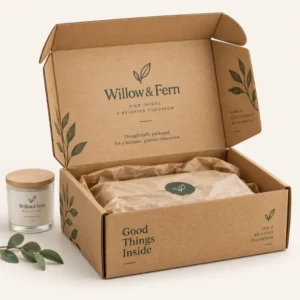
Brown postal boxes are kraft cardboard boxes designed to travel through the UK postal system, from a post office counter or collection point to a home, office or parcel locker. For senders who post regularly, brown postal boxes provide a reliable outer carton that is easy to address, easy to seal and strong enough for sorting, stacking and delivery. Their plain finish keeps the focus on safe transit and clear labelling, rather than on decoration.
What makes a box suitable for posting
A postal box must do more than hold a product. It must keep its shape when other parcels are stacked on top of it, it must stay sealed when handled by machinery and people, and it must present a flat surface for an address label and any barcode. Brown postal boxes meet those needs with corrugated kraft board, which is light for its strength and takes tape and labels well. A box that is too thin may crush, while a box that is far too large for its contents may allow the product to move and suffer damage.
Postal suitability also depends on how the box is packed. A well packed postal box has cushioning around the product, no empty space that allows movement, and flaps that close flat without bulging. A bulging box is harder to seal, harder to stack and more likely to burst. A box with loose flaps or weak tape is more likely to open in transit. Taking a few extra seconds to pack and seal a postal box properly can prevent a damaged delivery, a return and a disappointed customer.
Large letter and small parcel formats
UK postal formats are based on size, thickness and weight, and the format affects how a parcel is priced and handled. Royal Mail describes a large letter as a flat item up to 35.3 cm long, 25 cm wide and 2.5 cm thick, with a maximum weight of 750 g. A small parcel, by contrast, allows greater depth and weight, up to 45 cm long, 35 cm wide and 16 cm deep, with a maximum weight of 2 kg in many services. Those limits show why box depth matters. A thin postal box for a book or a document may stay within large letter limits, while a deeper box for a gift set will usually be classed as a parcel.
Checking a packed box against postal limits
Always check the finished packed box, not just the empty box, against postal limits. Tape, labels, cushioning and a slightly bulging lid can all add thickness. Measure length, width and depth after sealing, and weigh the parcel on accurate scales. If a parcel is close to a limit, consider a slimmer box, thinner cushioning or a different packing method before posting. Services, limits and prices can change, so check the current Royal Mail guidance before setting up a new postal box range. See Royal Mail UK parcel and letter services for the current official size information.
Posting books, documents and flat goods
Flat goods are a natural fit for brown postal boxes, because a snug, low depth box keeps the item flat and protected. Books benefit from a box that matches their size closely, with corner protection if the book is valuable or collectable. Documents, certificates and prints should be kept flat inside a postal box or a book wrap, rather than folded into an envelope that is too small. For prints and photographs, add a stiff backing board inside the box to prevent bending, and keep the surface away from tape and labels.
Flat postal boxes with a tuck in lid are popular for this kind of send, because they open cleanly and do not need a large amount of tape. They also look tidy when the recipient opens them, which matters for gifts and for business documents. For heavier flat goods, such as several books together, a regular slotted carton with strong tape may be more reliable, because it can handle greater weight and stacking pressure.
Board, sizes and styles for brown postal boxes
Brown postal boxes are most often made from single wall corrugated kraft board, which suits everyday parcels up to a moderate weight. Heavier parcels, bulk orders and parcels that will be stacked under other freight may need double wall board. The choice should be based on the heaviest parcel in a range, not on the lightest, because a box that fails under a heavy load can damage every item inside it. If in doubt, pack a sample at the heaviest expected weight and test it through a normal posting route.
Sizes for postal boxes range from small boxes for jewellery, accessories and small gifts to larger boxes for clothing bundles, hampers and multi item orders. Keeping a small range of sizes can simplify packing and storage, while still covering most orders. Too many sizes can slow packing and increase stock holding, while too few sizes can force senders to use oversized boxes with excess void fill. A practical range usually covers a flat letter box, a small cube or gift box, a medium parcel box and a larger box for bulkier orders.
Die cut postal boxes with a tuck in lid
Die cut postal boxes are cut and creased from a single sheet of board, then folded into shape without a separate lid. They often have a tuck in lid and side flaps that lock together, giving a neat, self contained parcel. This style suits books, cosmetics, small gifts and ecommerce orders that benefit from a clean opening experience. Because the box is supplied flat, it stores compactly and can be assembled quickly by hand, which helps in a busy packing area.
Self adhesive strips and tear strips
Some die cut postal boxes include a self adhesive strip for sealing and a tear strip for opening. A self adhesive strip speeds packing and gives a consistent seal, while a tear strip lets the recipient open the box without scissors or a knife. Both features should be tested with the heaviest expected contents, because a weak seal can fail in transit. For very heavy parcels, additional tape across the centre seam can provide extra security without spoiling the opening experience.
Regular slotted cartons for heavier parcels
Regular slotted cartons are the classic postal box, with top and bottom flaps that are taped shut. They are strong, simple and available in a very wide range of sizes. They suit heavier parcels, wholesale orders and items that need extra tape for security. Their plain surfaces are ideal for address labels, returns labels and handling notes, because there is plenty of flat space away from seams. For senders who post a mix of light and heavy parcels, regular slotted cartons often form the backbone of a postal packaging range.
Packing for a safe postal journey
Packing a postal box well starts with wrapping each item separately where items could rub, scratch or break each other. Use tissue, paper or bubble wrap as appropriate, and add dividers for bottles, jars and other rigid items. Fill any remaining space with cushioning that stops movement but does not force the lid shut. The box should feel firm when shaken gently, with no rattling or sliding inside. If an item moves, add cushioning or choose a smaller box.
Consider the journey the parcel will take. A parcel posted locally may face only a short journey, while a parcel posted across the UK may pass through several sorting centres. A parcel sent to a locker or a collection point may be handled and stored differently from a parcel delivered to a home. Packing for the longest and roughest likely journey, rather than the shortest, gives a safety margin that protects against unexpected handling.
Protecting fragile postal items
Fragile items need a layered approach. Wrap the item, place it in an inner box or tray if needed, and then place that inner packaging inside the brown postal box with cushioning around all sides. Keep at least a small gap between the item and the outer box walls, filled with cushioning, so impact on the outer box does not transfer directly to the product. Marking a parcel as fragile can help, but it should never be a substitute for proper cushioning, because handling in a busy postal system cannot be guaranteed to be gentle at every stage.
Weight distribution and stacking strength
Place heavier items at the bottom of a postal box and lighter items on top, with cushioning between layers. This keeps the parcel stable and reduces pressure on fragile items. Avoid placing a heavy item on top of a light, hollow item, such as an empty gift box or a delicate ornament. If a parcel contains items of very different weights, consider separate boxes or a divider that keeps the heavy item from shifting onto the lighter one during transit.
Returns, reuse and labelling
Postal boxes are often used for returns as well as outward sends. A box that can be resealed easily, for example with a second adhesive strip or with tape over a tear strip, makes returns simpler for the customer. Include clear returns instructions inside the parcel, rather than relying on the customer to find them online, especially for gifts where the recipient may not be the original buyer. When a brown postal box is reused, remove old labels and check the board for damage, damp or weakened seams before posting again.
Labelling a postal box clearly is essential. Place the address label on the largest flat surface, keep barcodes flat and uncovered, and avoid placing labels over seams or tape folds. If a parcel is going overseas, keep customs information separate from the main address label and check the destination requirements before posting. A clear label, a well sealed box and accurate weight and size details together reduce the chance of delay or return to sender.
Recycling, ordering and related packaging
Brown postal boxes are made from cardboard, which can usually be recycled with paper and card collections in the UK, subject to local rules. Recipients can flatten the box after use, which saves space in recycling bins and collection vehicles. Senders can help by keeping inserts simple and avoiding mixed materials where a single cardboard insert or paper filler will do the job. A box that is easy to flatten and recycle is more likely to be recycled correctly, rather than left in general waste.
When ordering brown postal boxes, consider the full range of sizes you need, the board strength for your heaviest parcels and whether you need any print, such as a logo or a handling message. Plain brown boxes suit everyday posting and can be used for many different products. Printed brown boxes keep the natural kraft look while adding a simple brand mark. Share your size range, quantities and heaviest parcel details when requesting a quote, so the recommendation matches your actual posting needs.
Production timing for postal boxes
As a guide, standard boxes from Personalized Mailer Boxes are usually produced in 10 to 14 working days after final artwork approval, while corrugated boxes are usually produced in 12 to 15 working days after final artwork approval. Those timings are production guides, not guaranteed delivery dates, and they can vary with size and quantity. Plan reorders before stock runs low, especially ahead of busy posting periods such as festive seasons and sales events.
Related postal and mailing packaging
Brown postal boxes work well alongside other postal packaging, depending on the item. A flat book wrap may suit a single book, while a padded mailer may suit a small, light item that does not need a rigid box. For related options, see brown mailing boxes, branded postal boxes and postal boxes. To discuss sizes, board and quantities for your posting, request a quote for brown postal boxes.
Frequently asked questions
What are brown postal boxes?
Brown postal boxes are kraft corrugated cardboard boxes made for posting goods through the UK postal system. They are strong, easy to label and suitable for books, gifts, clothing and many online orders.
What size is a Royal Mail large letter?
A Royal Mail large letter is up to 35.3 cm long, 25 cm wide and 2.5 cm thick, with a maximum weight of 750 g. Always check the finished packed item, including tape and cushioning, against current Royal Mail limits.
What is the difference between brown postal boxes and brown mailing boxes?
The terms are often used for similar kraft boxes, but postal boxes are usually chosen with postal size, weight and handling in mind, while mailing boxes may cover a wider range of general mailing and ecommerce uses. In practice, the right box depends on size, board strength and how it will be posted.
Can brown postal boxes be used for fragile items?
Yes, when fragile items are wrapped separately, cushioned on all sides and prevented from moving inside the box. Very fragile items may benefit from an inner box with cushioning between the inner and outer boxes.
Are brown postal boxes recyclable?
Corrugated brown postal boxes can usually be recycled with paper and card collections in the UK, subject to local rules. Flattening the box after use and keeping inserts simple helps recycling.