
subscription mailer boxes
Showing all 3 results
-
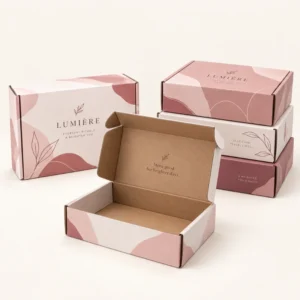
Custom Corrugated Mailer Boxes
Get a Quote -
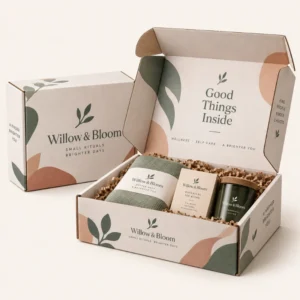
Custom Subscription Boxes
Get a Quote -
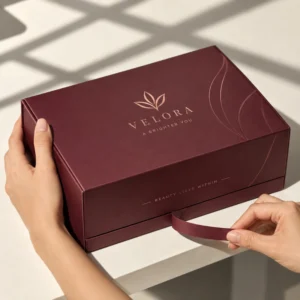
Tear Strip Mailer Boxes
Get a Quote
Subscription mailer boxes are sturdy printed boxes made for products that are sent to the same customer again and again, such as beauty sets, food selections, book clubs, coffee, pet treats and hobby kits. The box must protect the contents in transit, open in a satisfying way, and look consistent from the first delivery to the fiftieth. When those three jobs are done well, the packaging becomes part of the subscription itself, not just a container for it.
Why subscription mailer boxes work for repeat orders
A subscription lives or dies on whether the customer looks forward to the next delivery. A plain outer shipper does the job of protection, but it does nothing for anticipation. A subscription mailer box, printed inside and outside with the brand colours, a welcome message or a simple pattern, changes the moment of opening. The customer recognises the box before reading the label, which builds habit and makes the delivery feel like an event rather than another parcel.
Consistency matters just as much as first impressions. If the box changes size, colour or strength from month to month, packing becomes slower and customers notice the difference. A fixed specification, agreed once and repeated on every run, keeps packing simple, keeps the unboxing familiar, and makes it easier to spot damage or a packing error. That stability is especially valuable for small teams, where the same people pack, post and answer customer messages.
What makes a good repeat delivery box
A good repeat delivery box is easy to assemble, easy to fill and easy to close without wrestling with tape. A locking lid, a tuck flap or a seal strip can all work, depending on the product weight and how the box is handled by the courier. The closure should stay shut in transit but open cleanly at home, without tearing the print or needing a knife. If returns or exchanges are common, a second seal or a returns friendly closure is worth discussing at the specification stage.
Balancing protection with presentation
Protection and presentation can pull in opposite directions. A very thick board protects well but adds weight and bulk, while a light board prints beautifully but may dent. The answer is usually a board matched to the contents: a lighter corrugated board for soft goods and paper items, a stronger board for glass jars, bottles or heavier kits. Inserts help bridge the gap, holding items apart so they do not rub or knock together, and filling empty space so nothing slides during transit.
Planning for changing contents
Most subscriptions change their contents each month, even when the box stays the same. One month may hold three small jars, the next may hold a jar, a sachet and a card. A box sized for the largest likely combination, with flexible inserts, dividers or paper void fill, copes with that variation better than a box fitted tightly to one month only. It is also worth leaving a little room for a printed card, a leaflet or a small sample, because those extras are often added late in the packing process.
Materials, sizes and print for subscription mailer boxes
Corrugated board is the usual choice for subscription mailer boxes because it combines strength, light weight and a good print surface. Kraft board gives a natural, uncoated look that suits food, botanical and handmade brands. White board gives brighter colour and crisper detail, which suits beauty, stationery and gift brands. The board grade, often described by flute type, affects both strength and print quality, so it should be chosen with the product weight and the artwork in mind, not by habit alone.
Sizes should be worked out from the real products, measured together as they will be packed, rather than from a single item. Stack jars, lay bottles on their sides if that is how they travel, and include any insert thickness. A box that is a few millimetres too shallow will not close over a lid, while a box that is far too deep will need extra fill and will look empty when opened. Measure the packed set, then add a small clearance for easy packing.
Print inside and outside the box
Outside print is what the customer sees first, and inside print is what they see at the moment of opening. Many subscription brands use a bold outside design for recognition and a quieter inside design for a message, a how to use guide or a pattern. Inside print photographs well, which matters because subscribers often share the unboxing online. Keep inside text short and legible, and keep essential product information on the outside or on an insert, where it can be found without opening the box.
Finishes that suit repeated handling
A matt finish reduces glare and fingerprints and suits a calm, premium look. A gloss finish deepens colour and suits bold artwork. Foil or embossing can highlight a logo or a monthly theme, but it is best used sparingly so that every month still feels part of the same brand. Whichever finish is chosen, it should resist scuffing during courier handling, because a box that arrives marked undermines the care put into the contents.
Inserts, dividers and extras
Inserts turn a generic box into a subscription box. A card insert with cut outs for jars, a corrugated divider for bottles, or a simple paper tray for flat items all stop movement and create a tidy reveal. Dividers are especially useful when a set contains items of different heights, because they stop a tall item from falling onto a smaller one. Tissue paper or shredded paper can soften the reveal, but it should not hide the products or make unpacking feel like a search.
Ordering subscription mailer boxes and planning ahead
Ordering a subscription box starts with the packed dimensions, the product weights, the quantity per run and the artwork. Corrugated lead time after final artwork approval is 12 to 15 working days, so plan reorders around that window and keep a buffer for seasonal peaks. If the subscription grows, the same specification can usually be reordered in larger quantities, which keeps the unboxing consistent as the audience grows.
Before approving a full run, test the box with a real packed set. Pack it as the team will pack it, seal it, turn it gently, and open it as a customer would. Check for movement, rubbing, crushed corners and any print damage at the closure. That short test often reveals a small change, such as a deeper insert or a stronger board, that saves a much larger problem across hundreds of deliveries.
Related packaging to consider
For a broader subscription range, see the subscription boxes collection, and for a fully bespoke version, see the bespoke subscription boxes collection. For candle subscriptions, the candle subscription boxes collection is a useful comparison. You can request a quote with your packed dimensions, browse the shop for the wider range, and read the delivery information page for planning.
Frequently asked questions
What is the difference between subscription mailer boxes and ordinary postal boxes?
An ordinary postal box is mainly a protective shipper. Subscription mailer boxes are designed for both protection and presentation, with print, a clean opening and a consistent look that repeats every month.
How do I choose the right size for a subscription box?
Measure the products packed together as they will travel, including inserts and any card. Choose a box that closes comfortably over the tallest item and leaves only a small amount of empty space.
Can the same box work when contents change each month?
Yes, if the box is sized for the largest likely set and flexible inserts or dividers are used. That approach keeps the brand consistent while allowing monthly variation.
How long does a corrugated subscription box take after artwork approval?
Corrugated lead time after final artwork approval is 12 to 15 working days. Allow extra time for delivery to your packing area and for seasonal peaks.