
bespoke subscription boxes
Showing the single result
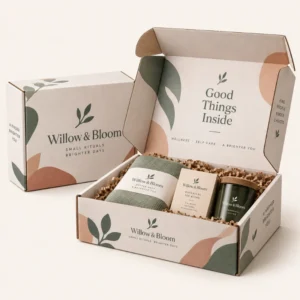
bespoke subscription boxes are boxes designed for a repeat delivery service, where the same box format must work month after month for different contents. They protect a changing mix of products, open in a satisfying way, and give subscribers a familiar but fresh experience with each delivery. For subscription brands, the box is not just packaging, it is a regular part of the product itself.
Why bespoke subscription boxes need a different approach
A subscription box must cope with variation. One month may contain a candle and a small gift, the next may contain skincare, stationery or food items of different shapes. A rigid, single product box would fail quickly, so subscription designs usually use a flexible structure with inserts, dividers or compartments that can be adapted to each month’s contents without changing the outer box.
Consistency is equally important. Subscribers recognise the box on arrival, and that recognition builds anticipation. Keeping the outer size, colour and opening style consistent, while varying the interior arrangement and print details, gives each delivery a sense of continuity and surprise at the same time.
Designing for changing contents
Start with the largest and most fragile items you are likely to include, then design an interior that can hold smaller items securely as well. A base insert with adjustable dividers, a simple tray, or a set of compartments can accommodate many combinations. Test the box with several realistic monthly mixes, not just one ideal set, to check that nothing rattles, tips or presses against the lid.
Monthly mixes, inserts and compartments
For a beauty box, small bottles and jars may need individual slots or a padded divider. For a food box, items may need separation to avoid flavour transfer and to keep labels visible. For a craft or stationery box, flat items need protection against bending, while small parts need a contained section. A well planned insert system lets your packing team adapt quickly each month without redesigning the box.
Unboxing and the subscriber experience
Unboxing is a key moment for subscription brands, because many subscribers share photographs and videos of their delivery. The opening should be easy and tidy, with contents revealed in a planned order rather than spilling out. A printed inside lid, a short welcome card and a clear arrangement of items all help the delivery feel curated, rather than simply packed.
Think about the order in which items are seen. Place a hero item where it is visible first, and arrange smaller items around it in a way that feels intentional. Avoid loose filler that obscures the contents or makes the box look messy on opening. A clean reveal encourages subscribers to keep the box, photograph it and look forward to the next delivery.
Print, colour and seasonal variation
Many subscription brands keep a core outer design and vary a seasonal print element, an interior pattern or a welcome card. That approach keeps production simpler while giving each month its own character. If you plan seasonal editions, decide early which elements will change and which will stay constant, so artwork and proofing remain manageable.
Practical considerations for repeat deliveries
Repeat deliveries place demands on packing speed and storage. Boxes that arrive flat store efficiently and can be assembled quickly, which matters when hundreds of boxes must be packed in a short window. A simple, reliable closure also helps, as packing teams need to seal boxes consistently without slowing down.
Returns and damaged parcels need a plan as well. A clear contact route inside the box, plus a packing specification that your team can follow each month, reduces errors and makes it easier to resolve problems. Keep a record of each month’s insert arrangement, so a popular combination can be repeated accurately.
Materials for subscription boxes
Corrugated board is a popular choice for subscription boxes because it is strong enough for postal delivery, light enough to keep parcels manageable, and easy to print. Kraft board gives a natural, warm look, while white card gives a bright surface for detailed artwork. Rigid board suits premium subscription tiers, where the box itself is intended to be kept and reused.
Choose a material that suits both the contents and the delivery route. A box that looks beautiful in the studio but dents easily in transit will disappoint subscribers, however good the contents are. Test a fully packed box through a realistic delivery journey, including stacking and handling, before committing to a large run.
Lead times after artwork approval
For standard boxes, allow 10 to 14 working days after final artwork approval. Corrugated boxes usually take 12 to 15 working days, and rigid or specialist boxes usually take 13 to 16 working days. These are production lead times, not a guaranteed delivery date. Plan artwork and proofing well ahead of each subscription cycle, and keep buffer stock for your core box size.
Ordering bespoke subscription boxes from Personalized Mailer Boxes
Share examples of your typical monthly contents, your subscriber numbers in broad terms and the unboxing experience you want, and request a quote for boxes built around that service. You can explore related options through bespoke ecommerce packaging and bespoke postal boxes, browse the range in the shop, and check delivery details on the delivery information page. When you are ready, send your brief through the get a quote page.
Frequently asked questions about bespoke subscription boxes
What makes a subscription box different from a normal mailer?
A subscription box is designed for repeat deliveries with changing contents, so it needs a flexible interior, a consistent outer design and an opening experience that stays enjoyable month after month.
How can one box fit different monthly contents?
Use a core outer box with adaptable inserts, dividers or compartments. Test the box with several realistic monthly mixes to check that different combinations pack securely and present well.
Which material suits subscription boxes?
Corrugated board suits most postal subscription boxes, kraft board gives a natural look, white card suits detailed artwork, and rigid board suits premium tiers where the box may be kept.
Can subscription boxes be printed inside and outside?
Yes. Outer print carries branding and recognition, while inner print can carry a welcome message, a seasonal pattern or simple guidance for the subscriber.
How long do bespoke subscription boxes take after artwork approval?
Standard boxes usually take 10 to 14 working days after final artwork approval, corrugated boxes 12 to 15 working days, and rigid or specialist boxes 13 to 16 working days.