
press boxes
Showing the single result
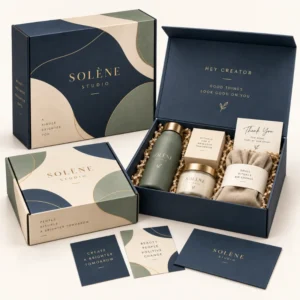
press boxes are boxes prepared for journalists, editors and broadcasters, containing a product sample and the information needed to cover it. They turn a press release into something tangible, so the recipient can handle the product, see its scale and photograph it in context. A good press box is organised, factual and easy to open, because busy newsrooms and freelance writers have little time for packaging that hides the story.
What makes press boxes effective
Effectiveness in press boxes comes from clarity. The product should be visible as soon as the lid opens, and the press material should answer the main questions without a long search: what is this, why does it matter now, who is it for, and when is it available. A short press sheet, a product card and a clear contact route cover those points. If the launch has an embargo date, state it plainly on the press sheet and on the covering note, so there is no confusion about timing.
Layout for a newsroom or a home studio
Many recipients now open press boxes at home or in a small studio, so the layout should work on a desk and on camera. Keep the product in the centre, keep papers flat underneath or beside it, and avoid loose items that roll or spill when the box is opened. A fitted insert helps here, especially for bottles, jars or small devices. If the product needs assembly or a short demonstration, include a simple instruction card with numbered steps, written in plain language.
Photography and video friendly details
A press box that photographs well will be used more often. A clean interior, a restrained colour palette and a clear logo help a photo look professional without extra styling. Avoid reflective finishes across a large area if the product will be photographed under bright lights, because glare can hide detail. A small branded card that can be placed beside the product in a photo is useful, and a short message inside the lid can appear naturally in an opening shot.
Formats, materials and sizes for press boxes
Press boxes range from a printed mailer that can be posted in quantity, to a rigid presentation box for a small list of key contacts. Corrugated board is a practical choice for postal press boxes, because it protects the product and prints well. Rigid board suits a premium launch where the box will be kept and shown again. Card presentation boxes suit flat samples, documents and light products. The format should match the value of the product and the number of recipients, not the other way round.
Sizing press boxes around samples and documents
Measure the product and any documents together. A press sheet in A4 or A5 size needs a flat area, so a shallow, wide box may suit a document led set better than a tall, narrow one. For a product set, measure each item and plan the insert layout before choosing the box size. Leave a little room for tissue, but not so much that items move in transit. A snug fit looks more professional and protects the product better.
Protection for samples sent by post
Postal press boxes need to survive sorting, stacking and handling. A fitted insert, a secure lid and a board grade matched to the product weight all help. For glass or ceramic samples, add cushioning around the item and check that the lid closes without pressure on a cap or pump. Test a packed box by turning it gently and by placing a similar weight on top, to see whether the layout holds. A sample that arrives damaged cannot be covered, so protection is part of the story.
Ordering press boxes for a launch or event
Start with the recipient list, the launch date and the product dimensions, then choose a format that fits all three. Compare pr packaging for broader campaign packaging and press kit boxes for document led kits, and browse the shop page for the wider range. Request a tailored quote through get a quote. As a guide, standard production after final artwork approval is 10 to 14 working days, corrugated formats are 12 to 15 working days, and rigid or specialist formats are 13 to 16 working days. These are guides, not guaranteed dates, so plan packing and posting time separately.
Getting press material right
Press material inside the box should be accurate, dated and easy to quote. Include the product name, key facts, launch date, availability and a contact name for follow up questions. Avoid claims you cannot support, and keep superlatives to a minimum, because journalists will check them. If the product has sizes, colours or variants, list them clearly. A short fact sheet is often more useful than a long brochure, because it can be read in a minute and filed for reference.
Timing, embargoes and event use
For an event, press boxes may be handed out in person, which allows a more elaborate format and a larger size. For a postal launch, allow time for delivery and for the recipient to test the product before the embargo lifts. Build a timetable that works backwards from the embargo date, with production, packing, posting and a buffer for delays. Keep a small number of spare boxes for late additions to the list and for replacements.
Frequently asked questions
What should a press box contain?
A press box usually contains the product sample, a fitted insert, a short press sheet and a contact route. Add only supporting material that helps the recipient understand or cover the product.
Are press boxes the same as pr mailer boxes?
They overlap. A press box is defined by its audience and purpose, while a pr mailer box describes a postal format. Many press boxes are sent as printed mailer boxes.
Can press boxes be printed inside and out?
Yes. Outside print carries the brand in transit, and inside print can carry a short message or a pattern that photographs well when the box is opened.
How early should press boxes be ordered?
Allow time for artwork approval, production, packing and posting. As a guide, standard production after final artwork approval is 10 to 14 working days.