
PR packaging
Showing the single result
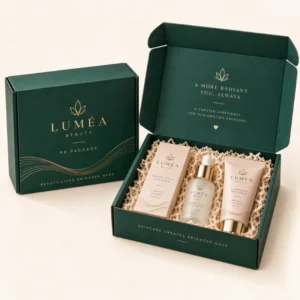
pr packaging is packaging created for media, creators and industry contacts, so a product arrives as a complete story rather than as a loose sample in a plain parcel. It combines a printed box, a considered layout and clear supporting material, so the recipient can understand the product, its use and its launch message in minutes. Good pr packaging respects the recipient time and makes it easy to photograph, write about or share the product.
What pr packaging includes
pr packaging can be as simple as a printed mailer box with a product card, or as complete as a rigid presentation box with several items, a lookbook and a note. The right level depends on the audience, the product value and the purpose of the mailing. A press launch for a new skincare range may need space for several products and a shade card, while a single book launch may need only a protective sleeve and a press sheet. In every case, the packaging should feel intentional, with each item placed for a reason.
Building a pr packaging set that reads clearly
Start with one hero product and build around it. Place the hero item first, then add supporting items in order of importance, so the eye moves naturally across the layout. Use a card insert to hold items in place and to create visual order. Add a short press sheet that covers what the product is, who it is for, when it launches and where to find more information. Keep the tone factual and helpful, because journalists need facts they can check, not only praise.
Tone, colour and brand consistency in pr packaging
The packaging should look like it belongs to the same brand as the product inside. Use the same colours, type style and logo treatment that appear on the product label and on your website, so the recipient recognises the brand at once. Avoid mixing too many finishes in one box, because a restrained palette often looks more assured. If the product is playful, the packaging can be playful too, but keep the layout tidy so the playfulness feels designed rather than accidental.
Materials and formats for pr packaging
Card, corrugated board and rigid board each suit a different kind of pr packaging. Card is light and good for flat or small items. Corrugated board protects heavier or fragile products in the post. Rigid board gives a firm, gift like structure for a premium launch or a keepsake set, and it holds its shape when opened for photography. The choice should follow the product, the postal journey and the impression you want to leave, not the most elaborate option available.
Choosing between a mailer, a presentation box and a kit box
A mailer format suits a postal campaign where many boxes go out at once and the outer box is also the presentation box. A presentation box suits a hand delivered set or a small, high value list where the box itself becomes part of the gift. A kit box suits a launch with documents and samples together, because compartments keep papers flat and products secure. Think about how the recipient will open the box, where they will photograph it and whether they will keep it, because those moments shape the format.
Sustainable choices for pr packaging
Many brands now want pr packaging that can be recycled and that does not rely on excess plastic or filler. Corrugated board and card are widely recyclable, and a fitted card insert can replace foam for many products. If you claim a material is recyclable or made from recycled content, check the claim with your supplier and keep the wording accurate. A simple note inside the box about recycling the packaging is often more credible than a bold claim on the outside.
Ordering pr packaging without surprises
Begin with product dimensions, a draft recipient list and a clear launch date, then discuss board, print and insert options against that brief. Related formats such as pr mailer boxes and press boxes can help you compare a postal mailer with a presentation format. The about us page gives background on the business, and the get a quote page is the route to a tailored quote. As a guide, standard production after final artwork approval is 10 to 14 working days, corrugated formats are 12 to 15 working days, and rigid or specialist formats are 13 to 16 working days. These are guides, not guaranteed dates.
Artwork and proofing for pr packaging
Supply artwork at high resolution and check every line of text, because a press sheet inside the box will be read closely. Pay attention to product names, spelling of personal names, launch dates and web addresses. A proof check should cover the outside, the inside lid and any insert, since an error inside the lid will appear in unboxing photos. If the box will be photographed, test the design in a photo before approving it, and view it at a small size as well as full size.
Packing and posting a pr campaign
Allow a realistic packing window. Each box may need an insert fitted, tissue folded, a card added and a seal applied, and that work adds up across a large list. Keep a packing checklist and a spare set of cards and inserts for replacements. Use a postal service that suits the value and fragility of the contents, and keep tracking information where your team can find it. A calm packing plan helps every recipient receive a box that looks as intended.
Frequently asked questions
What is pr packaging?
pr packaging is printed packaging made for media, creators and industry contacts. It presents a product with supporting material so the recipient can understand and share it easily.
How is pr packaging different from retail packaging?
Retail packaging is made for a shelf and a shopper. pr packaging is made for a recipient who may write about or photograph the product, so layout, supporting notes and photography matter more.
What materials are used for pr packaging?
Card, corrugated board and rigid board are common choices. The best choice depends on product weight, fragility, postal journey and the impression you want to create.
When should I order pr packaging for a launch?
Order early enough to allow artwork approval, production and packing. As a guide, allow 10 to 14 working days for standard production after final artwork approval, plus packing and posting time.