
postage box sizes
Showing the single result
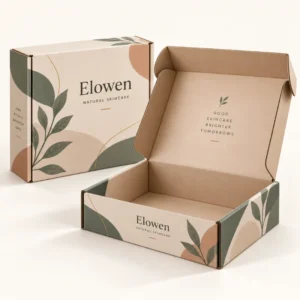
Postage box sizes decide whether a parcel fits the posting band you intend to use, whether the contents are protected, and whether the parcel is easy to handle and label. A box that is too large wastes filler, allows contents to move and can push a parcel into a larger band, while a box that is too small leaves no room for cushioning and risks splitting at the seams. The best size is the smallest box that still allows cushioning on every side of the wrapped item.
Postage box sizes and Royal Mail bands
Royal Mail bands are based on the finished parcel, including box, filler, contents, tape and label, not on the empty box alone. A letter has a maximum length of 24cm, a maximum width of 16.5cm, a maximum thickness of 0.5cm and a maximum weight of 100g, which suits cards and single sheets only. A large letter has a maximum length of 35.3cm, a maximum width of 25cm, a maximum thickness of 2.5cm and a maximum weight of 750g, which suits A4 documents, magazines, slim books and flat gifts. A small parcel has a maximum length of 45cm, a maximum width of 35cm, a maximum thickness of 16cm and a maximum weight of 2kg. A medium parcel has a maximum length of 61cm, a maximum width of 46cm, a maximum depth of 46cm and a maximum weight of 20kg.
These bands explain why depth is often the critical measurement. A flat item that fits a large letter easily can become a small parcel once it is placed in a box with cushioning, because the box depth quickly exceeds 2.5cm. Similarly, a small parcel that is only a little deeper than 16cm moves into the medium parcel band, even if it is light. When a box size is close to a band limit, measure the packed parcel rather than trusting the nominal box size, and allow a small margin for tape and filler.
Common postage box sizes by use
Small boxes, around the size of a paperback or a mug box, suit jewellery, cosmetics, phone accessories, small candles and single items that need a snug fit. Medium boxes suit books, folded garments, small toys, gift sets and multi item orders that need cushioning around each item. Larger boxes suit shoes, larger toys, multiple garments and hampers, where the contents need space as well as protection. Flat boxes suit books, prints, documents and artwork, where edge protection matters more than depth. Long boxes suit bottles, rolled prints and tall items, provided the contents are held firmly and cannot slide lengthways.
Matching a box to a product type
Start with the product, not with the box catalogue. Measure the product with its wrapping, add cushioning, and then look for a box with internal dimensions a little larger than that total. For a book, the box should be close to the book size with a thin cushioning layer. For a mug, the box should allow wrapping and filler on all sides without forcing the lid shut. For folded clothing, the box should allow the garment to lie flat without hard creases, while still closing easily. Recording the chosen box for each product makes repeat packing faster and more consistent.
How to measure postage box sizes correctly
Box sizes are usually given as length by width by depth, in that order. Length is the longest side of the base, width is the shorter side of the base, and depth is the height from the base to the top of the closed box. Internal dimensions tell you how much usable space is inside, while external dimensions tell you how large the finished parcel will be. The difference between the two is the thickness of the card and the folds, which can matter when a parcel is close to a band limit.
Measure the packed parcel at its widest points, including any bulge from filler, tape or a label pouch. Weigh the packed parcel on scales suitable for its weight, and record both figures for repeat orders. If you measure in inches for some suppliers and in centimetres for posting, convert carefully and double check the result, because a small conversion error can move a parcel into the wrong band. When in doubt, pack a sample, measure it, and use that sample as the reference for the whole order.
Internal size, external size and board thickness
Thicker board gives more protection but takes up a little more internal space and adds a little to external size and weight. Single wall board is thinner and lighter, while double wall board is thicker and stronger. For most small parcels, the difference is only a few millimetres, but those millimetres can matter near a band limit. If a parcel is very close to a limit, choose the thinner board that still protects the contents, or choose a slightly smaller box with a little less filler, provided the contents remain safe.
Avoiding the most common size mistakes
The most common mistake is choosing a box by the product name rather than by its packed measurements, such as assuming a shoe box size will suit every pair of shoes. Another mistake is forgetting the wrapping, so a box that fits the bare product becomes too tight once tissue, bubble wrap or a gift box is added. A third mistake is measuring the empty box and forgetting that filler and tape add depth. Avoid all three by measuring the final packed parcel, not the product alone and not the empty box alone.
Ordering the right postage box sizes
When you request a quote, share the packed sizes and weights of the products you send most often, the number of boxes you need in each size, and any print you want. A small range of well chosen sizes usually works better than a large range of rarely used sizes, because it simplifies packing, storage and ordering. After final artwork approval, corrugated lead times are 12 to 15 working days. Treat that as a production guide rather than a guaranteed delivery date, and order early before a seasonal peak.
For Royal Mail size guidance, see the Royal Mail guide to sending small parcels. For related packaging on this site, see postage boxes for everyday dispatch and post office postage boxes for branch posting. Browse the shop for packaging options and use the get a quote form for postage boxes to discuss sizes and quantity.
Frequently asked questions
What are postage box sizes measured as?
Postage box sizes are usually given as length by width by depth. Length is the longest base side, width is the shorter base side, and depth is the height of the closed box.
Should I use internal or external dimensions?
Use internal dimensions to check whether the product fits inside, and external dimensions to check whether the finished parcel fits the posting band. Both matter, for different reasons.
What size fits a Royal Mail small parcel?
The finished parcel must be no larger than 45cm by 35cm by 16cm and no heavier than 2kg. Choose a box that keeps the packed parcel within those limits with room for cushioning.
How much spare room should a box have?
Allow enough room for cushioning on every side, but not so much room that contents can move freely. Fill gaps with paper or other suitable void fill.
Can one box size suit every product?
Rarely. A small range of sizes, matched to your most sent products, usually protects items better and keeps posting bands predictable than a single large box for everything.