
mailer packaging box
Showing the single result
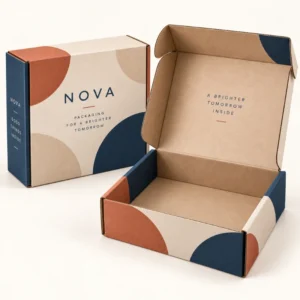
A mailer packaging box is a folding postal box made to protect a single order in transit and to present it well when it is opened. It is usually made from corrugated board or sturdy kraft board, it closes securely without a separate lid, and it offers a clean surface for printing inside and outside. For a shop that sends one product at a time, this format keeps packing simple while giving the customer a clear sense of the brand behind the parcel.
Why a mailer packaging box works for a single order
The strength of this box comes from its structure. A tuck in lid and dust flaps hold the box closed, while the board absorbs knocks and pressure during sorting and delivery. Because the box is made to fold flat before use, it stores neatly and it can be assembled quickly at the packing bench, which matters when orders need to leave on the same day. A snug internal size also limits movement, so the product is less likely to scuff, dent or shift against the walls of the box.
Print adds a second job to the same box. A logo on the outside helps the customer recognise the parcel at a glance, and a message or pattern inside turns opening into a small moment of delight. That interior space is often underused, yet it is the first thing a customer sees after lifting the lid. A short thank you note, care instructions or a simple pattern can make a plain delivery feel considered, without adding a separate insert or leaflet.
Choosing the right board and finish
Board choice should follow the weight and fragility of the product. Light items such as cosmetics, stationery or apparel can travel well in a lighter corrugated board, while heavier or more delicate items benefit from a stronger board grade and a well fitted insert. Kraft board gives a natural, understated look that suits handmade and sustainable brands, while a white board gives brighter colour reproduction for bold artwork and photography led designs. Ask for samples in the board you are considering, because colour and texture can look quite different on screen and in print.
Finishes that suit everyday posting
A matt finish gives a soft, premium feel and it reduces glare in photographs, which helps if customers share unboxings online. A gloss finish makes colours appear deeper and it can help the box resist scuffs during handling. Foil or embossing can lift a logo on a special edition, but these finishes work best when used sparingly, so the main message stays clear. For most everyday orders, clean full colour print on a good board will carry the brand further than a complex finish.
What to check before you order a mailer packaging box
Start with the product, not the box. Measure length, width and height with any protective wrap included, then add a small allowance so the item can be placed inside without forcing the flaps. If the product is fragile, plan the insert at the same time as the box, because a cardboard divider, a paper cushion or a foam fitment can change the internal size you need. Ordering the box and the insert together also helps the printer check that both parts work as one pack.
Think about how the box will travel. A box that fits through a letterbox suits flat, light products, while a deeper box suits bulkier items that will be handled as a parcel. Consider the journey as well as the destination, because a box may be stacked, sorted and carried several times before it reaches the customer. A box that looks smart on the packing bench but crushes under a stack will undo good work elsewhere, so strength should never be traded away purely for appearance.
Artwork and proofing made simple
Good artwork starts with the dieline, which shows the exact panels, folds and bleed areas for the box. Place the logo where it will be seen first, keep essential text away from folds and edges, and check that small text remains legible at the printed size. Supply artwork at high resolution and in the file format requested by the printer, and ask for a proof before production begins. A proof is the chance to spot a spelling error, a colour shift or a logo placed too close to a fold, when it is still easy to correct.
Common artwork mistakes to avoid
One common mistake is designing only for the outside and forgetting the inside, which can leave the opening moment feeling unfinished. Another is using very thin lines or very small text that disappear in print on corrugated board. A third is placing a barcode, address label or handling mark over printed artwork, which can make the parcel look untidy and can obscure important information. Leave a clear area for the delivery label in your design, and the finished parcel will look intentional from every angle.
Uses for a mailer packaging box beyond online orders
Although online orders are the most common use, this box also suits sample packs, welcome packs and small gift sets. A sample box can hold several small items in separate compartments, while a welcome pack can combine a product with a card and a small gift in one tidy parcel. Because the box is light and easy to post, it also works for returns or exchanges where the customer needs a sturdy box to send an item back in good condition.
For seasonal campaigns, a printed mailer can carry a theme without changing the product inside. A change of colour, pattern or interior message can mark a launch, a holiday or a collaboration, and it can be produced as a limited run alongside the regular box. Keeping the size and structure the same for a seasonal version helps packing stay fast, because staff do not need to learn a new assembly method during a busy period.
Storage, assembly and packing tips
Store flat boxes in a dry place, stacked neatly and away from damp walls, so the board stays flat and the print stays clean. Assemble a test box before a full packing run, check the lid closes smoothly, and check that tape, if used, sits neatly along the closure. Pack the heaviest item at the base where possible, fill any empty space with paper void fill so the contents cannot move, and close the box without bulging the sides. A box that closes flat is easier to label, easier to stack and less likely to be damaged in transit.
Ordering a mailer packaging box on a quote basis
Because sizes, board grades, print coverage and quantities vary so widely, this box is supplied on a quote basis rather than at a fixed list price. Share the product size, the quantity you need, the board you prefer and a note about your artwork, and the team can advise on the most practical specification. Standard lead times after final artwork approval are 10 to 14 working days, while corrugated options are 12 to 15 working days. These times describe production after approval, not a guaranteed delivery date, and they help you plan a launch or a restock with confidence. You can request a quote for a mailer packaging box, read the delivery information for planning, or browse related options such as mailer packaging boxes and mailing boxes on Personalized Mailer Boxes.
Frequently asked questions about a mailer packaging box
What is a mailer packaging box used for
It is used to post a single order, a sample or a small gift set safely and attractively. The folding structure protects the contents, the printed surface presents the brand, and the flat supply format keeps storage and packing simple.
What size mailer packaging box should I choose
Choose a size based on the product plus its protective wrap, with a small allowance for easy packing. Measure carefully, test with a sample if possible, and avoid a box that is much larger than the contents, because excess space allows movement and can increase damage.
Can a mailer packaging box be printed inside and outside
Yes, print can be applied to the outside for brand recognition and to the inside for a message, pattern or care note. Interior print is a popular choice for unboxing, because it is revealed at the moment of opening.
How long does production take after artwork approval
Standard lead times after final artwork approval are 10 to 14 working days, while corrugated options are 12 to 15 working days. These are production times after approval, not a guaranteed delivery date, so allow time for proofing and for posting after production.