
mailer packaging boxes
Showing the single result
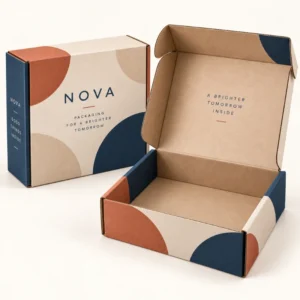
Mailer packaging boxes are folding postal boxes made for brands that send orders again and again, with the same size, board and print on every run. They protect products in transit, they present a brand consistently at the door, and they pack quickly because the structure is familiar to packing staff. For a growing shop, moving to a consistent mailer range is often the point where packaging stops being an afterthought and starts working as part of the customer experience.
Why mailer packaging boxes suit repeat posting
Consistency is the main advantage when orders repeat. Customers learn to recognise the box, packing staff learn the fold in one training session, and stock control becomes simpler because one size can serve a whole product range. A consistent box also makes it easier to spot a problem, because a change in board, print colour or closure will stand out against the usual run. Over many orders, that reliability builds trust in a way that a different plain box each week cannot match.
Repeat posting also rewards a box that is light yet strong. Corrugated board, especially in a fine flute, gives good crush resistance without adding unnecessary weight, which helps when parcels are stacked in cages and vans. A well chosen board grade keeps the box rigid enough to protect corners and edges, while remaining easy to fold and close. When the same box is used for subscription orders, the customer also gets a familiar opening ritual, which can encourage repeat purchases and social sharing.
Planning a range rather than a single size
Most brands do not need dozens of sizes. A small range, often two or three sizes, can cover single items, pairs and small bundles, while keeping stock manageable. Start by grouping products by size and weight, then choose a box for each group with room for protective wrap and, where needed, an insert. A range that is too broad creates storage problems and packing errors, while a range that is too narrow forces staff to use oversized boxes for small items, which wastes board and void fill.
How to test a range before a larger run
Order samples, pack real products in them, and run a trial through your normal packing and labelling process. Check that the lid closes flat, that the label sits clearly, and that the packed box stacks neatly with others. Ask a colleague to open the box as a customer would, and note whether the reveal feels tidy or cluttered. A short trial at this stage can prevent a costly mismatch later, when a large quantity is already printed.
Materials and print choices for mailer packaging boxes
Material choice should reflect both the product and the brand story. Kraft board has a warm, natural appearance and it suits brands that emphasise simplicity, craft or sustainability. White board gives a cleaner canvas for photography and for bright, detailed artwork, and it can make a small logo stand out more clearly. Recycled board options are available in many grades, and they can support a brand message about responsible packaging, provided the claim is accurate for the exact board supplied.
Print coverage is another decision that shapes cost and impact. Full colour print across the outside gives the strongest brand presence, while a single colour logo can look refined and can work well for a minimal brand. Interior print is worth considering for subscription and gift orders, because the inside is seen at the moment of greatest attention. A simple interior pattern, a welcome message or usage instructions can add value without adding a separate printed leaflet.
Finishes, closures and inserts
Finishes should be chosen for durability as well as appearance. A matt lamination gives a soft feel and reduces shine, while a gloss finish can deepen colours and help resist scuffing. Foil and embossing are best reserved for logos or limited editions, so they retain their impact. Closures matter too: a tuck in lid is quick and clean, a tear strip can make opening easier for the customer, and a tamper evident seal can reassure buyers of high value items. Inserts, from simple dividers to shaped fitments, keep products in place and can turn a multi item order into a tidy presentation.
When an insert is worth the extra planning
An insert is worth planning when products can move, scratch each other or look untidy loose in the box. It is also worth planning when the order includes items of different sizes, because a divider can stop a small item from disappearing under a larger one. Design the insert alongside the box, not after it, so the combined pack can be tested as a whole and so the internal dimensions remain correct.
Managing stock, storage and packing at scale
Flat supply is a major practical benefit at scale. Boxes arrive flat, they stack in a small footprint, and they can be stored by size in clearly labelled bays. This helps smaller premises as well as larger fulfilment rooms, because floor space is often the limiting factor during busy periods. Keep printed boxes away from damp and direct sunlight, rotate stock so older runs are used first, and keep a small buffer for unexpected peaks rather than running a single size to zero.
Packing speed also improves with familiarity. A standard fold, a standard void fill and a standard label position reduce errors and training time, especially when temporary staff join during a peak. Write a short packing guide with photographs for each box size, showing the fold, the insert position and the label area. That guide, kept at the bench, can do more for consistency than a long manual that no one opens.
Sustainability and customer expectations
Customers increasingly notice packaging, and they judge it by how much material is used, whether it can be recycled, and whether it feels wasteful. Right sizing is the most effective step, because a box that fits the product needs less void fill and takes less space in transit. Paper based void fill, cardboard inserts and board that can be recycled through normal household streams all support a clear recycling message, provided the message matches the actual materials. Avoid claiming a box is fully recyclable if a finish or tape changes that picture, and keep the recycling instruction simple and visible.
Ordering mailer packaging boxes on a quote basis
Because board, print, finish, size and quantity all affect the specification, these boxes are supplied on a quote basis. Share your product sizes, your expected quantities, your artwork position and any insert needs, and the team can recommend a practical range. Corrugated lead times after final artwork approval are 12 to 15 working days, while standard options are 10 to 14 working days. These times are production times after approval, not a guaranteed delivery date. You can request a quote for mailer packaging boxes, check the delivery information page, explore mailer packaging box for a single order format, or browse shop range via Personalized Mailer Boxes.
Frequently asked questions about mailer packaging boxes
What are mailer packaging boxes best for
They are best for repeat online orders, subscription boxes and small gift sets where consistency, protection and brand presentation all matter. The folding structure packs quickly and the printed surface turns each delivery into a branded arrival.
How many sizes should a brand start with
Most brands start well with two or three sizes covering single items, pairs and small bundles. Group products by size and weight first, then choose a box for each group with room for wrap and any insert.
Can mailer packaging boxes be recycled
Many board options can be recycled through household paper recycling, depending on the exact board and finish used. Right sizing, paper void fill and a simple recycling note help customers dispose of the box correctly.
How long does production take after artwork approval
Corrugated lead times after final artwork approval are 12 to 15 working days, while standard options are 10 to 14 working days. Allow additional time for proofing and for posting after production.