
ecommerce packaging companies
Showing the single result
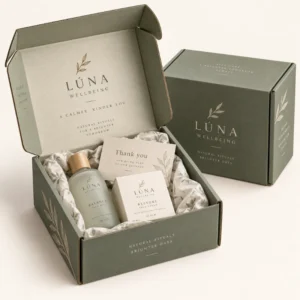
Ecommerce packaging companies are suppliers that design, print and produce boxes for online shops, ranging from stock box merchants to custom packaging manufacturers. The right partner for your brand depends on order size, print needs, product fragility and how much design support you want, not simply on who appears first in a search result.
ecommerce packaging companies compared by service type
Stock suppliers sell ready made boxes in standard sizes, which suits shops that need plain boxes quickly and do not yet need printed branding. Custom manufacturers produce boxes to your size and artwork, which suits brands that want a distinctive unboxing experience or a precise fit for an unusual product. Some companies combine both, offering stock sizes with a printed sleeve or label as a stepping stone to full custom print. Understanding which model a company follows will save time, because a stock merchant and a custom manufacturer answer very different questions about artwork, tooling and minimum quantities.
Design support is another key difference. Some suppliers expect print ready artwork and focus on production, while others offer structural design, artwork guidance and proofing support. If your team has no packaging designer, a supplier who can advise on dielines, print areas and board choice will be more useful than a supplier who only takes an artwork file. If your team already has a designer, production quality, consistency and lead time reliability may matter more than creative input.
Questions that reveal real capability
Ask how a company handles sampling. A printed sample or a plain structural sample tells you far more than a photograph, especially for fit, closure and print quality. Ask what board grades are offered for your product weight, how print is proofed, and what happens if a proof reveals a colour or alignment problem. A clear, calm answer to those questions is a good sign, while vague reassurance without a process behind it is a warning sign.
Ask about consistency across repeat orders. Colour, board and print quality should stay stable when you reorder months later, so ask how artwork and specifications are stored and whether a repeat order is checked against the previous run. Also ask about lead times in plain terms, including what counts as the start date. At Personalized Mailer Boxes, for example, guide times run from final artwork approval, with standard production at 10 to 14 working days, corrugated production at 12 to 15 working days, and rigid or specialist production at 13 to 16 working days. Those are guide times, not a guaranteed delivery date, and any supplier should be equally clear about the basis of its own times.
Red flags when comparing suppliers
Be cautious if a supplier cannot explain board strength, cannot provide a sample, avoids questions about proofing or promises an exact delivery date before artwork is approved. Also be cautious about claims that sound too broad, such as a claim that every box is fully sustainable without explaining board, tape, inserts and coatings. Good suppliers give specific answers and admit limits, because packaging always involves trade offs between strength, appearance, sustainability and cost.
Minimum orders, storage and growth
Minimum order quantities vary widely. A low minimum suits a new brand testing a design, while a larger run suits an established shop with steady sales and storage space. Do not order a huge quantity simply to secure a lower unit cost if you lack dry, flat storage or if your branding may change soon. Boxes stored badly can warp, fade or absorb damp, which wastes the saving.
Growth planning matters too. A supplier who can grow with you, from a first small run to regular repeat orders, will save you the disruption of switching suppliers later. Ask whether the supplier can handle seasonal peaks, whether repeat artwork is retained, and whether a small change in size or print can be handled without starting from scratch. A partner who understands your product range is more valuable than a supplier who treats every order as a one off transaction.
Working with a UK based supplier
A UK based supplier can offer easier communication in your time zone, samples that arrive without long international transit, and a better understanding of UK postal sizes and recycling expectations. That does not automatically make every UK supplier the right choice, but it is a practical advantage when artwork queries, proof changes or urgent reorders arise. Check delivery information early, including the delivery information page, so expectations are clear before you approve artwork.
Choosing a partner for your brand
Start with a shortlist of three suppliers and compare them on the same specification, not on different box types or different print levels. Send the same product dimensions, the same quantity range and the same artwork idea to each one, then compare samples side by side for fit, closure, print legibility and overall finish. A structured comparison prevents a decision based only on a friendly sales conversation or an attractive website photograph.
Also consider sustainability in a grounded way. Ask about recycled content, board sourcing, right sizing and the recyclability of the finished box, including tape and inserts. If you sell in the UK and place packaging on the market, check whether extended producer responsibility duties apply to your business. Official guidance is available from the GOV.UK packaging producer responsibility guidance, and it is worth reading before you scale up packaging volumes.
To see the kind of custom formats a specialist supplier offers, browse the full packaging shop range, compare the ecommerce packaging boxes range and the ecommerce packaging design range. When you are ready to discuss a specification, use the request a packaging quote page, or learn more on the about Personalized Mailer Boxes page.
Frequently asked questions
What is the difference between a stock supplier and a custom manufacturer?
A stock supplier sells ready made boxes in standard sizes, while a custom manufacturer produces boxes to your size, board and artwork. Custom manufacture suits brands that need a precise fit or distinctive printed branding.
How many suppliers should I compare?
Compare three suppliers on the same specification and samples where possible. That gives a fair view of fit, print quality and service without turning the choice into a long research project.
Why is sampling important?
A sample reveals fit, closure strength, tape adhesion and print quality in a way a photograph cannot. It also lets you test the packed box with real products before a full run.
What should I ask about repeat orders?
Ask how artwork and specifications are stored, how colour consistency is checked, and what lead time applies after artwork approval. Clear answers here protect your brand on every reorder.
Do I need to consider UK packaging regulations?
Some UK businesses that place packaging on the market have duties under extended producer responsibility for packaging. Check the GOV.UK guidance for your circumstances and seek professional advice if you are unsure.