
custom shipping boxes uk
Showing the single result
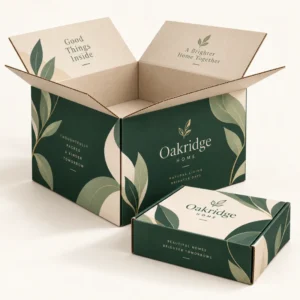
For UK sellers who post to customers across England, Scotland, Wales and Northern Ireland, custom shipping boxes uk provide a practical way to match the box to UK parcel formats, UK delivery handling and the expectations of UK shoppers. A box designed with UK sizes, UK weather and UK sorting in mind is easier to pack, easier to label and more likely to arrive looking as intended. It also helps a seller avoid the common problem of a parcel that is just over a size limit, with all the delay and rework that can follow.
How custom shipping boxes uk suit UK delivery
UK parcel delivery involves collection, sorting, vehicle loading and final delivery, often with parcels stacked and handled by several people. A shipping box for this network needs a firm closure, a flat label panel and board that holds its shape when stacked. Corrugated board is a common choice, because it combines strength with light weight and can be printed clearly. The board grade should reflect the product weight and fragility, and the box should be tested with its usual cushioning, not on its own. A box that looks strong empty may behave differently once packed and taped.
UK shoppers also judge a parcel quickly. A clean, well fitted box with clear branding suggests a professional business, while a box that is far too large, heavily taped or damaged in transit can undermine confidence, even if the product inside is perfect. A custom size reduces filler, gives a neater parcel and makes the opening experience better. It also helps the seller, because a consistent box size makes packing faster and makes it easier to spot an error before the parcel leaves.
Matching box size to UK parcel formats
Parcel formats in the UK are defined by size and weight limits, and those limits should be checked before a box size is finalised. The Royal Mail size and weight guide sets out current UK formats, including small parcel and medium parcel limits, which are useful reference points for many online sellers. A packed parcel should be measured after sealing, because tape, cushioning and any bulge can add to the external size. Allowing a small margin is wise, especially for products that vary slightly in size or for boxes that may be packed by different people.
Measuring a packed parcel correctly
Measure length, width and depth on the outside of the sealed parcel, and weigh the complete parcel including the box, cushioning and product. Compare both size and weight with the intended format, because exceeding either limit can change the service needed. Record the packed size for each product and box combination, so the packing team can check a new product against a known example rather than guessing. If a product sits close to a limit, consider a smaller box, a thinner insert or a different cushioning material that still protects the product.
Materials and print for custom shipping boxes uk
Kraft corrugated board suits many UK sellers, because it looks practical, prints a simple logo well and is widely recognised as recyclable. White board gives a brighter surface for full colour artwork and can help a brand stand out in photographs. Single wall board suits light to medium products, while double wall board adds crush resistance for heavier or fragile goods and for parcels that will be stacked. The choice should be based on the journey, not only on appearance, and a test pack remains the best check.
Print for UK boxes should be legible in UK conditions, including rain, handling and low light in a sorting depot. A logo, a brand name and handling marks should remain clear, and small text should be tested at real size. Inside print can carry a welcome message, care instructions or a return note, which is useful when a customer needs to contact the seller. Keep the delivery label area clear during design, and avoid placing essential text where tape or a label is likely to cover it. Colour should be checked on a proof on the actual board, because kraft and white board affect ink appearance differently.
Recycling and packaging responsibilities in the UK
UK sellers should think about recycling from the design stage. A box made from corrugated board is widely recyclable, but the finished parcel also includes tape, labels and any inner packaging, all of which affect how easily a customer can recycle it. A simple recycling note on the box can help, provided it describes the finished box accurately. For larger businesses, packaging responsibilities may apply, and the GOV.UK packaging producer responsibilities page explains who may be classed as an obligated packaging producer and what that involves. Smaller sellers may not meet those thresholds, but keeping basic records of packaging used is still good practice as a business grows.
Design choices that support recycling
Choose a board and a print approach that do not make recycling harder than necessary, and avoid unnecessary coatings or mixed materials where a simpler option would protect the product just as well. Use inserts that can be recycled with the box where possible, and keep any plastic cushioning to a minimum unless the product genuinely needs it. Tell the customer, in plain words, how to recycle the box, rather than using a vague claim. Honest, specific wording builds trust and avoids confusion at the recycling bin.
Packing and ordering for custom shipping boxes uk
A consistent packing routine helps UK sellers meet delivery expectations. Pack the product centrally, add cushioning only where needed, seal firmly and place the delivery label flat on one panel. If a parcel may be left in a safe place or with a neighbour, a clear instruction inside the box can help the customer on return. Keep flat boxes dry and flat in storage, away from damp floors and direct heat, so board strength is preserved until packing. A damaged or damp box should be set aside, not used for a valuable or fragile product.
Planning quantities for UK orders should consider storage, seasonal peaks and lead time. A small range of sizes for bestselling products is often more efficient than a separate size for every item, and inserts can adapt a box to a smaller product. Keep a sample of each approved box, with its internal size, board and print noted, so reorders are accurate. If a product changes, check the fit again before reordering, because a small change can affect cushioning, closure and parcel format.
Quote process for UK sellers
Custom shipping boxes uk are supplied on a quote basis, because size, board, print and quantity all affect the work involved. A quote request should include product size, packed size, weight, print coverage, quantity and delivery location for the boxes. It helps to mention the usual parcel service used, because that context can inform size advice. A photograph of the product and its current packaging can clarify shape and fragility. Once artwork is approved, standard lead time after final artwork approval is 10 to 14 working days, while corrugated boxes are 12 to 15 working days. These are planning guides, not a guaranteed delivery date.
Checking a quote before approval
Check the internal size, board, print coverage, quantity and lead time against the brief. Confirm that the packed parcel fits the intended UK parcel format and that the label area remains clear. Ask about artwork format and proofing before approval, so any correction can be made without delaying production. Keep the approved proof with the quote for future reorders, and update the record if the specification changes.
Choosing a supplier for custom shipping boxes uk
A good supplier for UK boxes should ask about the product, the journey and the packing routine, not only about the logo. That conversation helps avoid a box that looks good but fails in transit, or a box that protects well but is awkward to pack. Look for clear communication about board, size, print and lead time, and for a proofing step that allows artwork to be checked at real size. A supplier who explains a practical alternative when the first idea would not work well is often more useful than one who simply accepts the brief without question.
For UK sellers, it also helps to understand the full journey from quote to delivery of the boxes themselves. Ask when artwork approval closes the specification, how production time is counted and what happens if a proof needs correction. Plan backwards from the date boxes are needed for packing, allowing time for delivery of the boxes, packing and posting. For related options, see custom shipping boxes and custom shipping boxes for small business. To start, use the request a quote page and read about Personalized Mailer Boxes.
Questions worth asking before ordering
Ask how the board will perform when stacked, whether the print will stay legible after handling and whether the box suits the intended parcel format. Ask what artwork format is needed, whether a proof is included and how corrections are handled. Ask about storage of flat boxes and about repeat ordering, so a second order matches the first. Clear answers at this stage reduce the chance of a specification problem later.
Keeping the specification steady over time
Record the approved size, board, print and artwork reference, and check each delivery against a sample. Note any change in board colour, print quality or fold strength, and raise it promptly with a clear description. A steady specification helps the packing team, helps customers recognise repeat parcels and makes it easier to plan quantities for busy periods.
Frequently asked questions
What makes a shipping box suitable for UK delivery?
A suitable box fits the product, uses board strong enough for stacking and handling, seals firmly and leaves a flat, clear area for the delivery label. Its packed size and weight should also fit the intended UK parcel format.
How do I check a Royal Mail parcel format?
Measure and weigh the sealed, packed parcel, then compare it with the current Royal Mail size and weight guide for the service you plan to use. Allow a small margin so normal packing variation does not push the parcel over a limit.
Are kraft or white boxes better for UK sellers?
Kraft suits a practical look and a simple logo, while white board gives a brighter base for full colour artwork. The best choice depends on the brand, the print coverage and the product, not on the board alone.
Do I need to think about packaging producer responsibilities?
It depends on the size and nature of the business and on how much packaging it handles. The GOV.UK guidance explains the thresholds and obligations, and keeping basic packaging records is good practice as a business grows.
How long do UK custom shipping boxes take after artwork approval?
Standard boxes take 10 to 14 working days after final artwork approval, while corrugated boxes take 12 to 15 working days. These are planning guides, not a guaranteed delivery date.