
custom shipping boxes for small business
Showing the single result
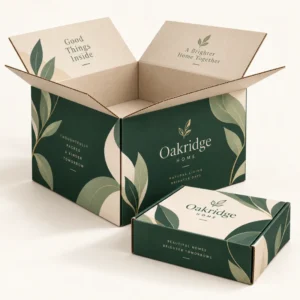
For a small business that is building its reputation one parcel at a time, custom shipping boxes for small business offer a way to look professional, protect products and keep packing simple, without needing a warehouse full of packaging. A box that fits the product, carries the logo clearly and seals reliably helps a customer trust the brand, even if the business behind it is still small. The right specification also saves time at the packing table, because staff do not have to improvise with filler or with a box that is the wrong shape.
How custom shipping boxes for small business help a growing brand
Small businesses often start with plain stock boxes and add a sticker or a stamp. That approach can work at first, but it becomes harder to keep consistent as orders grow. A printed box carries the brand on every parcel, including parcels sent as gifts, parcels opened on camera and parcels photographed by customers. Consistency builds recognition, and recognition helps repeat orders, because a customer who remembers the parcel is more likely to remember the shop. A custom box also signals care, which matters when a customer cannot visit a shop in person and judges the business largely by what arrives at the door.
A small business also needs packaging that fits its space and its workflow. Boxes supplied flat take up less room than ready made boxes, which matters in a spare room, a studio or a small unit. A small range of sizes, chosen for the bestselling products, keeps packing quick and reduces the chance of picking the wrong box. If a business sells a mix of products, a fitted insert can adapt one box to several items, which is often more practical than holding a different box for every variation. The goal is a system that a single person can run reliably on a busy day.
Starting with a practical specification
Start with the bestselling product and measure it with its inner packaging in place. Note the weight, the fragility and any part that needs extra protection, such as a lid, a handle or a delicate corner. Choose a board that protects that product without making the parcel unnecessarily heavy or bulky. Kraft board gives a natural, honest look and suits a simple logo, while white board gives a brighter base for colour. Discuss recycled content and recyclability at the quote stage, and choose a message about recycling only if it accurately describes the finished box.
Keeping the first design simple and clear
A first design should be easy to read at a glance. A logo, a brand name and perhaps a short message are often enough, with handling marks kept clear and legible. Small text, thin lines and complex patterns can lose detail in print or after handling, so test the design at real size before approval. Keep the delivery label area clear, so the label does not cover the logo or an important message. A simple design is also easier to repeat, which helps when the business grows and needs the same box again.
Sizes, storage and packing for custom shipping boxes for small business
Size choice has a direct effect on packing time, filler use and parcel handling. A box that fits well needs less filler, seals more neatly and is easier to stack. A box that is too large wastes filler and space, while a box that is too small risks damage or a strained closure. Measure internal length, width and depth, and test pack the product exactly as it will be posted. Check for movement, check the closure and check that the label sits flat. A photograph of a correctly packed box can serve as a guide for anyone who helps with packing.
Storage should be planned alongside size. Flat boxes should be stored dry, flat and off damp floors, with the most used size easiest to reach. Keep a sample of each approved box and a note of its internal size, board and print, so reorders match the original. For UK sellers, the Royal Mail size and weight guide can help when checking whether a packed parcel fits an intended parcel format. Checking size early avoids a surprise at posting, when a parcel that is slightly too large may need a different service.
Building a packing routine that scales
A reliable routine has a few clear steps: pick the right box, place the product centrally, add cushioning where needed, seal firmly and label flat. Write those steps down, even for a one person business, because a written routine is easier to follow on a busy day and easier to hand over when help arrives. Keep packing materials in one place, with filler, tape and labels close to the packing table. A tidy routine reduces errors, such as sending the wrong product or using a box that is too weak for a heavy item.
Common packing mistakes to avoid
Common mistakes include using too much filler to compensate for a box that is too large, taping over a label area, and sealing a box that bulges at the sides. Another mistake is reusing a box that has lost strength after a previous journey, especially for a fragile or valuable product. Check each box before packing, and set aside any box that is damp, crushed or torn. A short check before sealing is faster than dealing with a damaged delivery afterwards.
Branding on a small budget for custom shipping boxes for small business
Branding does not have to mean full artwork on every panel. A single colour logo on one or two panels can look sharp and professional, and it keeps artwork simpler to approve and to repeat. Inside print can add a personal touch, such as a thank you message or a care note, without adding complexity to the outside of the parcel. The key is to choose a design that reflects the brand honestly, whether that brand is playful, calm, premium or practical. A design that tries to say everything at once often says nothing clearly.
Colour and legibility deserve attention. A logo that looks good on screen may need adjustment for print on kraft or white board, because board colour affects how ink appears. Ask for a proof and view it in daylight at real size, checking the logo, the text and any colour blocks. If the brand uses a specific colour, note its reference so repeat orders match. Keep handling text separate from brand artwork where possible, so a handling mark remains clear even if the brand design changes later.
Using the box to encourage repeat orders
A parcel can do useful work after delivery if it includes a clear next step. Inside print can point a customer to a web address, a care guide or a way to contact the business, without turning the box into an advert. A short, friendly message feels more genuine than a list of messages. If the business includes a card or a leaflet, make sure it fits the box without bending and that it does not add unnecessary bulk. The box itself should remain the main impression, with any insert supporting it rather than competing with it.
What customers notice when they open a parcel
Customers notice whether the product is clean, secure and easy to remove, whether the box opens neatly and whether the packaging feels considered rather than improvised. They notice a box that is the right size, a closure that opens without tearing and a product that has not moved in transit. Those details build trust, and trust is especially valuable for a small business that relies on reviews and word of mouth. A well planned box supports that trust without needing elaborate extras.
Ordering custom shipping boxes for small business on a quote basis
Custom shipping boxes for small business are supplied on a quote basis, because size, board, print and quantity all affect the work involved. A quote request should include the product size, the packed size, the weight, the print idea and the quantity needed. It helps to say how the business packs now, how many parcels are sent in a typical week and how much storage space is available. That context helps the supplier suggest a practical size range and a specification that suits a small operation rather than a large fulfilment centre.
Allow time for artwork approval and production in planning, especially before a launch, a market or a seasonal peak. Standard lead time after final artwork approval is 10 to 14 working days, while corrugated boxes are 12 to 15 working days. These are planning guides, not a guaranteed delivery date. For packaging responsibilities as the business grows, the GOV.UK packaging producer responsibilities page explains when a business may have obligations. For related options, see custom shipping boxes and custom shipping boxes wholesale. To begin, use the request a quote page.
What to include in a quote request
Include the product, its packed dimensions and weight, the board preference, the print coverage and the quantity. State whether print is needed outside only or inside as well, and whether a logo file is ready or still in progress. Note any insert or special closure, and note the date by which the boxes are needed for planning, without treating that date as a promise until it is confirmed. A clear brief helps keep the quote accurate and the artwork stage short.
Checking the quote before approval
Check the internal size, board, print coverage and quantity against the brief, and confirm the lead time after final artwork approval. Check that the delivery label area remains clear and that the box suits the usual carrier format. If anything is unclear, ask before approving artwork, because changes after approval can add time. Keep the approved proof and the quote together for future reorders.
Frequently asked questions
Are custom boxes suitable for a very small business?
Yes, a simple printed box can suit a small business, because it improves presentation and packing consistency without needing a complex design. Start with a bestselling product and a small, practical size range.
How many sizes should a small business hold?
Many small businesses manage well with two or three sizes that cover most orders, with inserts adapting a box to smaller products where needed. A small range is easier to store, pack and reorder accurately.
Should I print inside the box as well as outside?
Inside print can add a welcome message or care instructions, but it is optional. Outside print alone is often enough at first, and inside print can be added later when the design is settled.
What if my product changes size?
Check the fit again before reordering the same box, because even a small change can affect cushioning and closure. Update the recorded specification if a new size or insert is needed.
How long do boxes take after artwork approval?
Standard boxes take 10 to 14 working days after final artwork approval, while corrugated boxes take 12 to 15 working days. These are planning guides, not a guaranteed delivery date.