
bulk postage boxes
Showing the single result
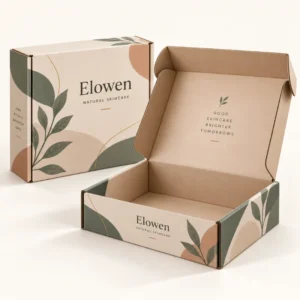
bulk postage boxes are corrugated postal boxes ordered in large quantities for businesses that post many parcels each week and need a reliable box that fits postal size bands. They protect books, gifts, clothing, cosmetics and small household goods through sorting and delivery, while keeping the finished parcel within the size and weight limits of the chosen postal service. A consistent bulk supply means packing staff use the same box every time, labels sit in the same place, and customers receive parcels that look professional and arrive intact.
Why Choose Bulk Postage Boxes
Postal work rewards repetition. When the same box is used for the same product range, packing becomes faster and more predictable. Staff do not need to guess which carton will fit, and the finished parcel can be weighed and measured with confidence. That predictability also helps with stock planning, because usage per week can be tracked against a single box type rather than a mixture of cartons in different sizes.
Bulk postage boxes are also practical for storage. Supplied flat, they stack neatly and take far less space than assembled cartons. A business can hold enough stock for several weeks in a modest area, provided the boxes are kept dry and are not crushed under heavier items. Keeping a reserve for busy weeks avoids a change of box at short notice, which can disrupt packing routines and change the appearance of parcels sent to regular customers.
Matching Boxes to Postal Size Bands
The most important decision for a postage box is whether the finished parcel will sit inside the intended size band. Royal Mail large letter limits are commonly quoted as a maximum length of 35.3cm, a maximum width of 25cm and a maximum depth of 2.5cm, with a maximum weight of 750g. Royal Mail small parcel limits are commonly quoted as a maximum length of 45cm, a maximum width of 35cm and a maximum depth of 16cm, with a maximum weight of 2kg. Always check the current guidance from the carrier before ordering, because size bands and service rules can change.
For guidance on current small parcel sizes, see the Royal Mail guide to sending small parcels. That guide explains how letter and small parcel sizes are applied and why a parcel that exceeds a limit must use a parcel service instead. Use it as a starting point, then confirm the service, destination and contents rules that apply to your own parcels.
Measuring the Finished Parcel
Measure after packing, not before. Place the product inside with its tissue, sleeve or protective wrapping, close the box, seal it and then measure length, width and depth at the widest points. Weigh the sealed parcel as well, because a box that fits by size can still exceed a weight limit if the product is dense. A small number of test parcels packed in the usual way will show whether a chosen size stays comfortably inside a band or sits so close to a limit that normal variation in packing could push it over.
Who Uses Bulk Postage Boxes
Online sellers with daily dispatch, bookshops, gift shops, craft sellers, subscription businesses and small fulfilment operations all use bulk postage boxes. Each has a different product mix, but all share the same need for a box that can be packed quickly, sealed securely and handled without damage. A book seller needs a snug box that stops corners bending. A gift seller needs a clean interior that presents well on opening. A clothing seller needs a box that holds folded garments without creasing them badly.
Businesses that post internationally should also think about extra handling. Parcels that travel further may be stacked, sorted and transferred more often, so a stronger board or extra protective material may be wise even if the product is light. The box itself does not need to change for every destination, but the packing inside it may need to adapt to the journey.
Board Strength and Box Styles for Bulk Postage Boxes
Single wall corrugated board is a common choice for light and medium weight postal boxes. It is light, easy to fold and strong enough for many everyday parcels. Double wall board adds a second fluted layer and suits heavier items, multi item parcels and boxes that will be stacked under other parcels. The right board is a balance between protection and parcel weight, because an unnecessarily heavy box can add to postage weight without improving protection in a meaningful way.
Postal boxes come in several useful styles. A simple tuck style box folds quickly and suits light items. A crash lock base assembles with a push and holds a flat base firmly, which suits faster packing lines. A full overlap or tape sealed style suits heavier parcels that need a stronger closure. Choose a style that packing staff can assemble reliably at speed, and test it with the heaviest product it will carry.
Plain, Printed and Branded Options
Plain postage boxes are practical for high volume dispatch where the box is mainly a protective container. Printed postage boxes add a logo, a return message or simple brand colour, which can make a parcel recognisable and improve the opening experience. Print does not need to be elaborate to be effective. A clear logo on the outside and a short thank you message inside the lid can make a bulk postal box feel considered without slowing packing.
Labels, Tape and Sealing
Labels need a flat, clean surface. White board gives a smooth surface for labels, while kraft board also accepts labels well if the surface is not dusty or damp. Place the address label where it will not be folded over an edge or covered by tape, and keep handling marks away from the label area where possible. Use strong packing tape on seams, especially for heavier parcels, and seal all openings fully. A box that opens in transit is a far larger problem than a few extra centimetres of tape.
Protecting Contents in Transit
Protection starts with fit. A product that moves freely inside a box will hit the walls during handling, while a product packed too tightly may be damaged by pressure on the lid. Use tissue, paper void fill, a card divider or a fitted insert to hold items still. For fragile items, wrap each item separately and keep items apart so they cannot knock together. For books and printed matter, protect corners first, because corners show damage most clearly.
Consider the whole journey, not just the first mile. A parcel may be placed on a conveyor, stacked in a cage, loaded into a van and delivered in rain. A box with good board strength, a secure closure and sensible internal protection will cope with those stages far better than a thin box that relies on outer wrapping alone. Test a packed parcel by shaking it gently and turning it on its side. If contents move loudly or shift position, add protection or choose a smaller box.
Ordering and Storing Bulk Postage Boxes
When planning a bulk order, record the internal size, board type, box style, print needs and expected weekly usage. That record makes repeat orders simple and helps a supplier advise if a size is close to a postal limit. If you post several product types, consider whether one or two box sizes can cover most orders, rather than holding many sizes that each move slowly. Fewer sizes usually mean faster packing and simpler stock control.
After final artwork approval, corrugated boxes are usually produced in 12 to 15 working days. That timing is a production guide, not a guaranteed delivery date, so build in time for delivery to your premises, unpacking and packing tests before the boxes are needed for live orders. If artwork includes print, check proofs for spelling, logo position and colour before approval, because a printed bulk run is difficult to correct afterwards.
Storage and Stock Control
Store flat packed boxes in a dry, clean area, stacked on pallets or shelving rather than directly on a concrete floor. Keep different sizes clearly labelled, because similar looking flat boxes are easy to confuse at speed. Count stock regularly and set a reorder point based on weekly usage plus a buffer for a busy week. A simple reorder point prevents the common problem of discovering a shortage on a Monday morning when orders are already waiting.
Reducing Waste and Returns
The right bulk postage box can reduce waste in two ways. First, a box that fits well uses less void fill and less tape. Second, a box that protects properly reduces damaged parcels, returns and resends. Both outcomes save time and material. Cardboard postage boxes can usually be recycled with paper and card collections in the UK, depending on local rules and on any tape, lamination or mixed materials used. Encouraging customers to recycle the box after delivery is a simple message that can be printed inside the lid. For related options, see bulk mailer boxes, buy postage boxes and request a quote for bulk postage boxes.
Frequently asked questions
What are bulk postage boxes?
bulk postage boxes are corrugated postal boxes bought in large quantities for regular dispatch, designed to protect parcels and fit postal size bands for letters and small parcels.
What size should a postage box be for a small parcel?
For Royal Mail small parcels, the finished parcel commonly must not exceed 45cm in length, 35cm in width, 16cm in depth and 2kg in weight. Always measure the sealed parcel and check current carrier guidance.
Can bulk postage boxes be printed?
Yes, bulk postage boxes can carry a logo or simple brand print outside, and a short message inside the lid, which improves recognition without slowing packing.
What board should I choose for heavier items?
Single wall board suits light and medium parcels, while double wall board suits heavier items and parcels that will be stacked. Choose board strength based on product weight and handling, not size alone.
How long does production take after artwork approval?
Corrugated boxes are usually produced in 12 to 15 working days after final artwork approval. This is a production guide, not a guaranteed delivery date.
How should I store flat packed postage boxes?
Store them flat in a dry place, stacked on pallets or shelving, clearly labelled by size, with a reorder point set before stock runs low.