
bulk mailer boxes
Showing the single result
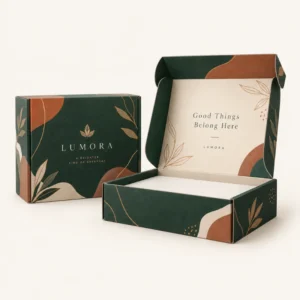
bulk mailer boxes are sturdy corrugated boxes ordered in large quantities for ecommerce, subscription and retail fulfilment, where the same box must protect products, present a brand and pack quickly day after day. They are usually supplied flat packed for storage, then folded into a secure mailer shape at the packing bench. A well chosen bulk order keeps size, board strength and print consistent across every parcel, so customers receive the same quality whether their order ships in January or in a busy peak period.
Why Choose Bulk Mailer Boxes
Ordering in bulk suits any business that posts the same products repeatedly. Instead of adapting a different carton for each order, a packing team learns one box, one fold and one tape or locking pattern. That familiarity reduces packing time, reduces errors and makes it easier to train new staff. It also helps stock control, because one reliable box can serve a whole product range if the internal size has been planned around the largest item and its protective wrapping.
Consistency matters for brand presentation too. When a customer orders twice, the second box should look and feel like the first. Colour, print position and board quality should not drift between batches. A bulk specification agreed at the start, with artwork, board grade and internal dimensions recorded, makes repeat orders straightforward and avoids the need to reapprove details for every delivery.
Businesses That Benefit Most
Online shops with steady daily orders benefit because a bulk supply removes the risk of running out midweek. Subscription businesses benefit because each monthly box must match the previous one in size and appearance, even when the contents change slightly. Retailers sending gift sets, clothing, cosmetics, candles, books and small home goods also benefit, because a mailer box presents the product better than a plain shipping carton and can carry print on the inside lid for a stronger opening moment.
Planning Stock Around Peaks
Peak periods often arrive faster than expected, especially around seasonal gifts, product launches and sale events. A bulk order placed with a clear view of weekly dispatch numbers gives a buffer for a surge without forcing a last minute change of box. Store flat packed boxes in a dry place, stacked neatly and away from damp floors, and keep a simple count so reordering happens before stock falls to a critical level. Flat storage also means a large quantity can fit in a modest stockroom, which is a practical advantage for smaller warehouses.
Mailer Shape and Packing Speed
Most mailer boxes use a crash lock or tuck style base that folds quickly and holds its shape without complex assembly. Some use a tab lock front that closes firmly and opens cleanly for the customer. The right choice depends on product weight, packing speed and whether the box will also need tape for extra security. Test a sample with real products and real packing staff before committing to a large run, and time the assembly. A saving of a few seconds per box becomes significant across thousands of orders.
Inside the box, space should be planned, not left to chance. Measure the product as packed, including tissue, a sleeve or a protective insert, then allow a small clearance so the product slides in without catching and does not rattle in transit. Too much empty space invites movement and can make a parcel look careless on opening. Too little space puts pressure on lids and corners. A sample test with a shake and a drop from bench height can reveal problems before a bulk order is produced.
Materials and Strength for Bulk Mailer Boxes
Corrugated board is the usual material for bulk mailer boxes because it combines lightness with strength. A single wall board suits light and medium weight items such as clothing, printed matter and soft goods. A stronger board suits heavier items, multi item orders and parcels that will be stacked in a courier network. The flute, which is the wavy layer inside the board, also affects crush resistance and print quality, so board choice should follow the journey the parcel will actually take, not just the weight of the product alone.
Kraft board gives a natural brown appearance that many brands leave unprinted or print with a single colour logo for a simple, honest look. White board gives brighter colour reproduction and a cleaner surface for full colour artwork. Both can be recycled in many UK paper and card collections, depending on local rules and on any lamination or mixed materials used. Choosing a board and finish that suit both protection and recycling helps a brand present its values without adding unnecessary complexity to the box.
Print Options in Large Quantities
Bulk orders are well suited to printed branding because the artwork cost is spread across many boxes. Outside print creates recognition before the box is opened. Inside print creates a surprise on opening and can carry a message, a pattern, a usage guide or a thank you note. Full colour print suits photographic designs and detailed artwork, while one or two colour print suits bold logos and simple messages with a clean, confident result.
Finishes That Survive Handling
Finishes should be chosen for durability as well as appearance. A matt finish reduces glare and fingerprints, which can help when customers photograph their delivery. A gloss finish can lift bright colours and give a polished feel. Foil and embossing draw attention to a logo or title but work best in small, deliberate areas rather than across the whole box. Whatever finish is chosen, check a printed sample under normal warehouse light and after a test journey, so scuffs and wear are understood before the full run.
Sizes and Internal Dimensions
Size is the most common source of trouble in a bulk order, so it deserves careful attention. Always work from internal dimensions, which are the space available inside the finished box, rather than external dimensions alone. List length, width and depth for the product, then add protective material and a small working clearance. If several products will share one box, design around the largest combination that will travel together, and use an insert or divider where smaller items need to be held apart.
Consider courier and postal size bands at the same time. A box that is slightly too deep or too wide can move a parcel into a different size category and change handling. Measure the finished, sealed parcel, not just the empty box, because tissue, inserts and a slightly proud lid can add depth. A sample that has been packed, sealed, weighed and measured gives a far more reliable guide than a dimension on a drawing alone.
Ordering Bulk Mailer Boxes With Confidence
A clear brief makes a bulk order easier for everyone. Share product dimensions, product weight, expected quantity, print artwork or logo files, board preference and any insert needs. Mention how the box will be used, whether it travels by courier or postal service, and whether it will be stored flat for a long period. That context allows the production team to advise on board grade, closure style and print method, rather than guessing from a size alone.
Artwork approval is a key stage. Check spelling, logo placement, colour and text position on every panel, including the inside lid, before giving final approval. Text placed too close to a fold or closure can crease or disappear. After final artwork approval, corrugated boxes are usually produced in 12 to 15 working days. That timing is a production guide, not a guaranteed delivery date, so allow extra time for packing and courier collection, especially for a launch or a seasonal peak.
Working Through a Quote
When requesting a quote, include the box size, board type if known, print coverage, quantity and artwork stage. If artwork is not yet ready, say so, because the team can still advise on structure and size while design work continues. If the quantity may grow later, mention the likely repeat volume, because a specification that works for a first bulk run should also work for a repeat run without redesign. Keep a record of the agreed specification for future orders.
Checks Before the Full Run
Ask for a proof or sample where possible and pack it with real products. Check the fold, the lock, the print alignment and the way the box opens. Check that labels sit clearly on a flat panel and do not cover important print. Check that the box stacks neatly without bowing. These simple checks cost little time at sample stage and can prevent a large quantity of boxes that pack slowly or present poorly. For related packaging, see bulk postage boxes, buy mailer boxes and buy shipping boxes.
Frequently asked questions
What are bulk mailer boxes used for?
bulk mailer boxes are used for repeated ecommerce, subscription and retail posting, where a strong printed box must protect products and present a brand consistently across many orders.
How do I choose the right size?
Measure the product as packed, including tissue or an insert, then choose internal dimensions with a small clearance so the item fits without rattling and without pressure on the lid.
Can bulk mailer boxes be printed inside and outside?
Yes, many mailer boxes carry print on both sides. Outside print creates recognition, while inside lid print creates a stronger opening moment and can carry a message or guide.
How long does production take after artwork approval?
Corrugated boxes are usually produced in 12 to 15 working days after final artwork approval. This is a production guide, not a guaranteed delivery date.
Are bulk mailer boxes recyclable?
Cardboard mailer boxes can usually be recycled with paper and card collections in the UK, depending on local rules and on any lamination or mixed materials used.
How should bulk mailer boxes be stored?
Store them flat packed in a dry place, stacked neatly and away from damp floors, and keep a simple stock count so reordering happens before supply runs low.