
branded postal boxes
Showing all 3 results
-
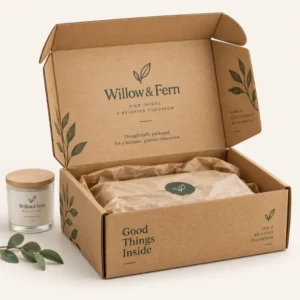
Custom Kraft Postal Boxes
Get a Quote -
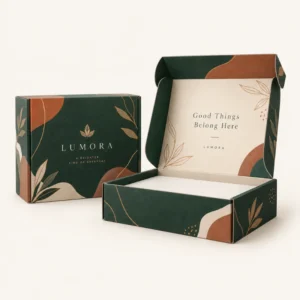
Personalized Mailer Boxes
Get a Quote -
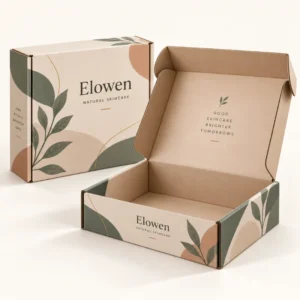
Printed Postal Boxes
Get a Quote
Branded postal boxes are the workhorse of UK posting for many small businesses: strong, printed boxes that carry retail orders, gifts and samples through the postal system while keeping the brand visible. A postal box must be practical above all else, because it will be labelled, sorted, stacked and delivered, often without the gentle handling a retail box receives in a shop. When print, board and closure are chosen for that journey in branded postal boxes, the parcel arrives looking professional, opens easily, and leaves the customer with a good impression of the business behind it.
Formats of branded postal boxes
Postal boxes come in several formats, each suited to a different kind of product. Slim postal boxes, sometimes called book wraps or letter boxes, suit flat items such as books, prints, documents, slim apparel and small accessories. Standard postal boxes, with a tuck or tape closure and a deeper base, suit typical retail orders, gift sets and multi item parcels. Crash lock boxes, which assemble quickly with a locking base, suit businesses that pack in volume and need a box that pops into shape without complex folding. Rigid postal boxes suit premium products that need a firm structure and a luxurious feel, even though they take more storage space.
Choosing a format starts with the product shape. A flat product in a deep box will move, crease or require excessive fill, while a bulky product in a slim box will strain the closure and may not close at all. Measure the product as packed, including tissue and any insert, and choose the shallowest box that still allows the lid to close without pressure. That discipline keeps parcels tidy, reduces fill and helps the box survive stacking, because a box that is not overfilled is less likely to burst or distort. The branded postage boxes tag page covers a closely related posting format, and the online shop allows postal formats to be compared.
Large letter, small parcel and medium parcel formats
UK posting commonly uses size categories that help sellers predict how a parcel will be handled and priced. Large letter parcels are slim and flat, and they suit items that can travel through letterbox style handling. Small parcel formats suit the majority of online retail orders, from cosmetics and stationery to apparel and gift sets. Medium parcel formats suit larger, heavier or bulkier goods that need more depth and stronger board. A postal box designed with those categories in mind, measured as a finished parcel, will be easier to post and less likely to be reclassified at a higher band.
Matching a product to a postal format
Match slim, flat products to a large letter style box, provided the packed depth stays within the relevant limit. Match typical retail orders to a small parcel style box with a snug fit and a reliable closure. Match larger or heavier orders to a medium parcel style box with stronger board and, where needed, tape across the base. Keep a record of which product uses which format, so the packing team can select the right box without measuring every order. That record also helps when a product changes, because the team can see immediately whether a new format is needed.
Board strength for postal handling
Postal handling includes automated sorting, conveyor movement, manual carrying and stacking in vans and cages. A postal box needs board that resists crushing at the corners, tearing at the folds and softening if it is stacked under heavier parcels. E flute corrugated board suits many light to medium parcels, because it is light and prints well, while a thicker flute or double wall board suits heavier parcels and fragile contents. Kraft board gives a natural, robust appearance, while white board gives a brighter surface for full colour print. The board should be chosen for the heaviest product in the box, not for the lightest, because the box must protect the worst case order as well as the typical order.
Testing a postal box before regular use
Test a postal box by packing it as it will be sent, sealing it, and handling it as a courier might: stack another parcel on top, carry it by its sides, and tilt it to check for movement inside. Open it afterwards and check whether the presentation still looks tidy and whether any product has shifted or scuffed. Repeat the test with the heaviest product the box will carry, because a box that works for a light order may fail for a heavy one. That practical test, done with real products, is more reliable than judging a box by its appearance alone.
Branding branded postal boxes without complicating posting
Branding a postal box should enhance posting, not complicate it. A clear logo on the lid or side, a consistent colour, and a short message will make the parcel recognisable without interfering with the label, the barcode or the closure. Keep a flat, unobstructed area for the address label, and avoid placing essential branding where the label will cover it. If a returns label will also be used, plan space for it in advance, so the customer does not need to cover branding or the original label to return an item.
Inside print offers a second branding opportunity that does not interfere with posting at all. A thank you message, care instructions, or a short note about the product can be printed inside the lid, where it will be seen only when the parcel is opened. That interior message can be more detailed than the exterior, because it is protected from handling and read at a moment of attention. Combining a simple, durable exterior with a thoughtful interior is often the most effective approach for postal boxes, because it balances visibility in transit with a personal touch on opening.
Colour and finish for postal use
Colour on a postal box should be bold enough to remain clear after handling. Strong, simple graphics survive scuffing better than fine patterns or small text, which can wear or become hard to read. Kraft board suits brands that want a natural, honest look, and it hides minor scuffs well. White board suits brands that rely on bright, clean colour, but it may show marks more readily, so a slightly bolder design can help. Test print on the actual board after handling, not only on a fresh sample, to see how the design will look when it reaches the customer.
Keeping print legible after sorting
Keep essential text large, bold and away from folds, tape lines and the label area. Avoid placing a website address or a key message where tape will cross it, because tape can obscure letters and make the message hard to read. Use a clear typeface and strong contrast, especially for any text that must be read outdoors at the doorstep. Those simple choices will keep branding legible even after a parcel has travelled through sorting and delivery.
Sustainability for everyday postal boxes
Postal boxes are used in high volume, so sustainability choices have a real impact. Corrugated board that is recyclable, with paper fill and card inserts rather than plastic, allows customers to recycle the whole parcel easily. A short disposal note inside the lid can guide customers without adding a separate leaflet. Avoid overpacking with fill, and avoid using a box that is much larger than the product, because both create waste and suggest carelessness. A postal box that is well fitted, recyclable and easy to flatten after opening will be appreciated by customers and will reflect well on the brand.
Ordering branded postal boxes and managing stock
Before ordering, confirm the main postal formats needed, the products for each format, and the label positions for the services used most often. Check artwork on the chosen board, confirm that logos stay clear of folds and label areas, and test samples with real products and real labels. A sample that has been packed, labelled, handled and opened will reveal more than a flat proof alone, because it tests the whole posting journey, not only the print.
Lead times after final artwork approval are 10 to 14 working days for standard boxes, 12 to 15 working days for corrugated boxes, and 13 to 16 working days for rigid or specialist boxes. Those timings are planning guidance, not a guaranteed delivery date, so allow time for packing and posting, and order before peak periods. For heavier parcels, the Royal Mail guidance on packaging heavy parcels provides useful checks on board strength, taping and weight limits, including the 20kg limit for an individual Royal Mail parcel. Sellers can request a quote, check delivery information, and read the about Personalized Mailer Boxes page for further background.
Stocking postal boxes by format
Stock postal boxes by format and size, clearly labelled, so the packing team can select the correct box quickly. Track usage by format, because a rise in flat products will deplete slim boxes faster than standard boxes, and a rise in gift orders will deplete deeper boxes. A reorder point for each format, based on weekly use and lead time, will prevent gaps that force a substitute box. Consistent stock, like consistent print, helps customers receive a parcel that looks and feels like the brand every time.
Frequently asked questions
What is a branded postal box?
A branded postal box is a strong, printed box designed for UK posting, with a logo or message that remains visible through sorting and delivery. It protects retail orders, gifts and samples, provides space for a postage label, and opens cleanly for the customer.
Which postal format should I choose?
Choose a slim format for flat items such as books and prints, a standard format for typical retail orders and gift sets, and a larger, stronger format for heavier or bulkier goods. Measure the finished parcel to confirm the format suits the product and the postal service.
Can postal boxes be recycled?
Yes, corrugated postal boxes are widely recyclable, especially when paired with paper fill and card inserts. A short note inside the lid can help customers recycle the box and inserts together after opening.
How long do corrugated branded postal boxes take?
Corrugated boxes take 12 to 15 working days after final artwork approval. Allow additional time for packing and posting, and monitor stock by format so repeat orders arrive before a size runs out.