
brown mailing boxes
Showing the single result
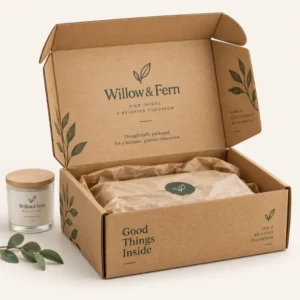
Brown mailing boxes are plain kraft cardboard boxes made for posting goods safely, without extra branding or decoration. For many sellers and senders, brown mailing boxes offer a practical balance of strength, simplicity and value, because the natural kraft finish is sturdy, easy to label and suitable for a wide range of items. They are a good starting point when protection and clear addressing matter more than presentation.
What brown mailing boxes are
A brown mailing box is usually made from corrugated kraft board, with a natural brown outer surface and a lighter inner liner. The colour comes from unbleached kraft paper, which gives the box its familiar warm brown tone. That finish is not just a look. Kraft board is strong for its weight, it takes tape and labels well, and it can be written on by hand when a label printer is not available. For businesses that post daily, those practical details matter as much as board strength.
Brown mailing boxes are available in many styles, including regular slotted cartons that are taped shut and die cut mailer boxes that fold into a tuck in shape. Regular slotted cartons suit heavier and bulkier parcels, while die cut mailers suit flatter and lighter items that benefit from a neat, self locking close. Both styles are usually supplied flat, which saves storage space and makes it easy to keep several sizes in a packing area.
Everyday posting for homes and small businesses
For home senders, brown mailing boxes suit gifts, returned items, books, clothing and household goods that need more protection than an envelope can provide. A box that fits the item closely, with a small amount of cushioning, will usually travel better than a large box filled with loose void fill. For small businesses, the same boxes can handle daily orders, samples and spare parts, and they can be used alongside branded tape or a printed label if a simple brand mark is wanted without full box printing.
Why plain brown suits high volume packing
Plain brown boxes suit high volume packing because they are quick to identify, quick to assemble and easy to label in a consistent position. A packing team does not need to check print orientation or protect a decorative surface in the same way as with a fully printed box. That speed matters when orders must be packed, labelled and collected within a tight daily window. Plain boxes also make it easier to spot damage, tape failure or a misapplied label before a parcel leaves the building.
Online orders, books and gifts
Online sellers use brown mailing boxes for a wide range of products, from books and stationery to candles, cosmetics in inner packaging and small homeware items. Books benefit from a snug box with corner protection, because corners are the first part to suffer in transit. Candles and jars need cushioning and dividers so they do not knock together. Clothing can travel in a brown mailing box when it needs more structure than a mailer bag, or when several garments are sent together and must arrive without creasing.
Gift senders often choose brown mailing boxes as an outer carton, with a presentation box or wrapping inside. That approach protects the gift presentation while keeping the outer parcel practical and easy to address. If the gift box itself is the item being posted, a brown outer carton also protects its surface from scuffs, tape and labels, so the recipient receives a clean presentation box when the outer carton is opened.
Choosing the right size and board
Size is the most important choice for a brown mailing box. Measure the item as packed, including any inner box, sleeve or protective wrap, and choose internal dimensions that allow a secure close with a small clearance for cushioning. A box that is too large allows movement, increases parcel size and wastes void fill. A box that is too small can burst at the seams, crush the contents or prevent the flaps from closing flat, which makes taping and labelling harder.
Board strength should match the weight and fragility of the contents. Single wall corrugated board suits most everyday parcels, including books, clothing and light homeware. Double wall board suits heavier items, bulk orders and parcels that will be stacked under other freight. If you are unsure, test a packed sample through your normal posting route and check the corners, edges and seams on arrival. A sample test is a simple way to avoid damage across many orders.
Single wall board for everyday parcels
Single wall board is made from one fluted layer between two liners, and it offers a good balance of strength, weight and storage efficiency. It is light enough to keep parcel weight down, yet strong enough for most small business and home posting needs. Single wall brown mailing boxes are also easy to fold, tape and break down for recycling after use, which suits both senders and recipients who want simple packaging.
Flute types and what they mean in practice
Flute type affects how a board handles crushing and cushioning. E flute is fine and smooth, and it suits flatter mailer boxes and lighter items. B flute is thicker and offers stronger crush resistance for everyday shipping cartons. C flute offers more cushioning and is often used for larger parcels. In practice, most senders do not need to memorise flute codes. Sharing product weight, parcel size and stacking details with a supplier is enough to get a sensible board recommendation for the job.
Double wall board for heavier goods
Double wall board uses two fluted layers and is noticeably stronger and stiffer than single wall board. It suits dense items such as books in bulk, tools, hardware, filled hampers and multi item orders that will be stacked. It also suits parcels that travel long distances or pass through several sorting stages. The trade off is extra weight and bulk, so double wall board should be chosen for a clear protection need, rather than used for every parcel by default.
Styles, closures and packing tips
Brown mailing boxes come in several styles, and the best style depends on how the box will be packed, sealed and opened. Regular slotted cartons are the most common style. They have top and bottom flaps that meet in the middle and are sealed with tape. They are strong, simple and fast to pack, especially for heavier parcels. Die cut mailer boxes fold from a single sheet into a self locking shape, with a lid that tucks into the front. They look neater on opening and often need less tape, which suits direct to customer orders.
Other styles include book wraps, which fold around a flat item and adjust to its thickness, and crash lock boxes, which pop into shape quickly and suit high speed packing. Book wraps are useful for books, documents and flat gifts, because they reduce empty space and keep the item flat. Crash lock boxes suit retail and fulfilment work where assembly speed matters and contents are consistent in size.
Taping, sealing and labelling
Sealing a brown mailing box properly is as important as choosing the right board. Use strong packing tape across the centre seam and, for heavier parcels, across the edges as well. Press tape firmly onto the board, especially in cold or damp conditions, and avoid leaving tape over a label or barcode. For die cut mailers with a self adhesive strip, remove the backing carefully and press the lid down evenly so the seal holds across its full width.
Label placement that avoids delivery delays
Place the address label on the largest flat surface, away from seams, edges and tape folds. Keep barcodes flat and clear, and avoid covering them with additional tape that could cause glare or creasing. If a parcel needs a returns label or a customs form, place it where it will not be confused with the main address label. A clear, well placed label helps carriers scan and sort a parcel quickly, which reduces the chance of delay.
Packing fragile and awkward items
Fragile items need more than a strong outer box. Wrap each item separately, use dividers or compartments where items could knock together, and fill remaining space with cushioning that stops movement without overfilling the box. Place heavier items at the bottom and lighter, more fragile items on top, with cushioning between layers. For very fragile goods, consider an inner box inside the brown mailing box, with cushioning between the two boxes, so impact is absorbed before it reaches the product.
Awkward shapes, such as long, round or irregular items, need a box that supports their shape rather than forcing them into a standard carton. A long item may suit a book wrap or a custom size box, while a round item may need a fitted insert or a divider to stop it rolling. If an item is unusually heavy on one side, balance it in the box and add cushioning around the heavy end, so the parcel does not tilt or burst during handling.
Postal sizes, recycling and ordering
Postal size matters for brown mailing boxes, because parcel dimensions and weight affect which service a parcel can use and how it is handled. Royal Mail publishes maximum sizes for letters, large letters and parcels, and those limits are useful when choosing a box for UK posting. A flat box that stays within large letter limits may suit thin books and documents, while a deeper box will usually fall into a parcel category. Check the current Royal Mail size guidance before finalising a box range, because services and limits can change. See Royal Mail UK parcel and letter services for the current official size information.
Recycling is another practical advantage of brown mailing boxes. Corrugated cardboard can usually be recycled with paper and card collections in the UK, subject to local rules. Removing tape and labels is not always required, but keeping the box free of mixed plastic fillers makes recycling easier for the recipient. Reusing a clean, undamaged brown box for a return or a second send can also reduce waste, provided the old labels are removed and the box is still strong enough for transit.
Ordering plain and printed brown boxes
Brown mailing boxes can be ordered plain for everyday posting, or with print added when a business wants a logo or handling message on the carton. Plain boxes are ideal when speed, simplicity and flexibility matter, because the same box can be used for many different products and customers. Printed brown boxes keep the natural kraft look while adding a brand mark, and they can reduce the need for branded tape or stickers. When requesting a quote, share the sizes, board strength and quantities you need, along with whether print is required.
As a guide, standard boxes from Personalized Mailer Boxes are usually produced in 10 to 14 working days after final artwork approval, while corrugated boxes are usually produced in 12 to 15 working days after final artwork approval. Those timings are production guides, not guaranteed delivery dates, and they can vary with size and quantity. For related packaging, see brown postal boxes, branded mailing boxes and kraft mailer boxes. To discuss sizes and board for your posting needs, request a quote for brown mailing boxes.
Frequently asked questions
What are brown mailing boxes made from?
Brown mailing boxes are usually made from corrugated kraft board, with a natural brown outer surface. Single wall board suits most everyday parcels, while double wall board suits heavier and stacked goods.
What size brown mailing box should I choose?
Choose the smallest box that allows the packed item to fit with a small clearance for cushioning and a secure close. Measure internal dimensions, including any inner packaging, and avoid a box that bulges or leaves large empty spaces.
Can brown mailing boxes be used for fragile items?
Yes, provided each fragile item is wrapped separately, cushioned and prevented from moving inside the box. Very fragile goods may also benefit from an inner box with cushioning between the inner and outer boxes.
Are brown mailing boxes recyclable?
Corrugated brown boxes can usually be recycled with paper and card collections in the UK, subject to local rules. Keeping fillers simple and avoiding mixed materials makes recycling easier for the recipient.
Can brown mailing boxes be printed with a logo?
Yes, brown kraft boxes can be printed with a logo or simple design while keeping their natural look. Print on kraft board tends to give a warm, understated result, so bold, simple artwork usually works best.