
Mailer Boxes vs Postal Boxes: What’s the Difference and Which Should You Choose?
Mailer boxes vs postal boxes is not as simple a comparison as many packaging guides suggest. In the UK, suppliers sometimes use the two names for almost the same corrugated box, while…
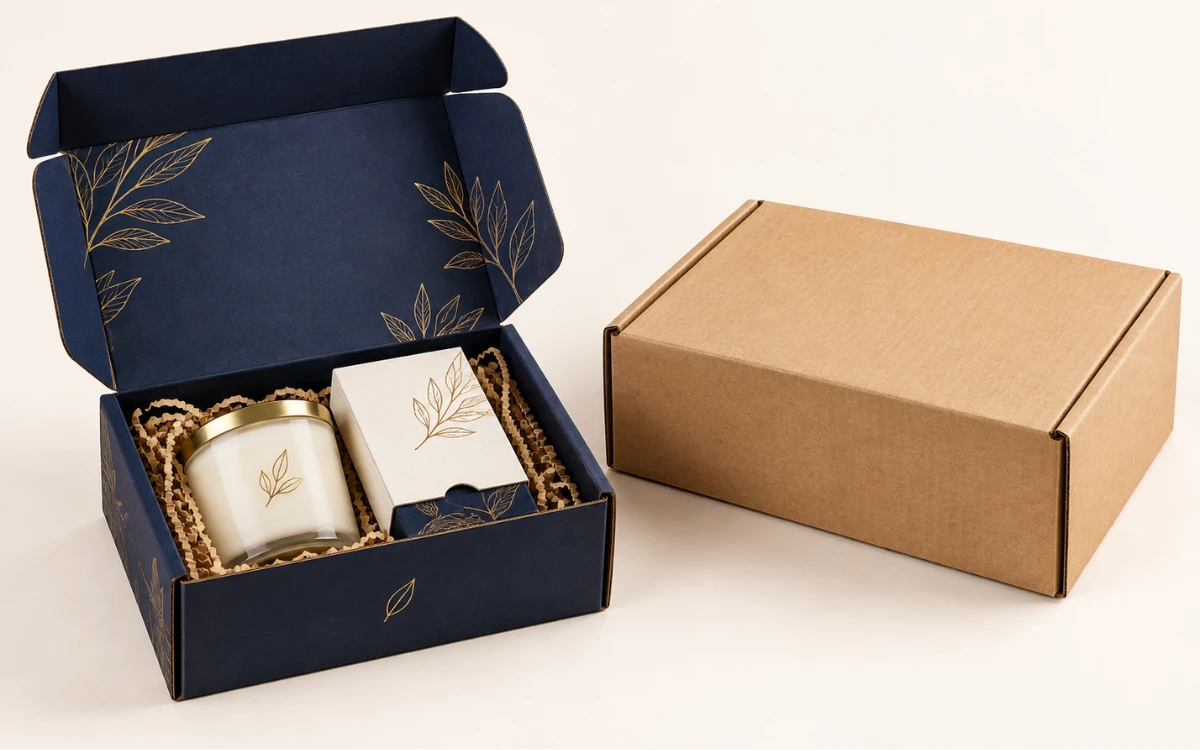
Mailer boxes vs postal boxes is not as simple a comparison as many packaging guides suggest. In the UK, suppliers sometimes use the two names for almost the same corrugated box, while others use “postal box” for a more shipping-led format and “mailer box” for packaging designed around presentation as well as transit. The safest way to choose is therefore to compare the actual structure, board, fit, closure, print and finished parcel dimensions.
The short answer: the names overlap
There is no useful rule saying that every mailer box has one construction and every postal box has another.
UK packaging terminology varies between suppliers. A one-piece corrugated box with an attached lid and tuck-front closure may be sold as a mailer box, postal box, postal mailer or ecommerce box. Other suppliers reserve “postal box” for simpler transit packaging while using “mailer box” for a more presentation-led version of a similar structure.
The practical rule: do not choose packaging from the product name alone. Check the actual construction, internal dimensions, board specification, closure method, print requirements and finished parcel size.
What does “mailer box” usually mean?
In UK ecommerce packaging, a mailer box commonly refers to a die-cut corrugated box with an attached hinged lid. Many versions have side walls that fold into position and a front panel or tabs that tuck into the base.
This type of construction can combine the outer shipping box and customer-facing packaging in one format.
Where mailer boxes are commonly used
Mailer-style structures can work particularly well for clothing, skincare, cosmetics, accessories, subscription products, gifts and other direct-to-consumer orders where the customer opens the transit packaging itself.
Custom printing can use the lid, base and external panels and, depending on the specification, internal surfaces as well. An insert may also be added when products need controlled positioning instead of sitting loose inside the box.
Do all mailer boxes use the same structure?
No. The term describes a broad packaging category rather than one guaranteed construction. If structure matters to the product, ask for the dieline, sample or structural specification before approving production.
What does “postal box” usually mean?
“Postal box” is broader and even less consistent.
Some UK suppliers use the name for essentially the same self-locking corrugated construction used for mailer boxes. Others apply it to plain kraft or white shipping boxes designed primarily around compact dispatch, practical protection and economical postage.
A postal box is not a Royal Mail classification
The term can cover structures that differ from the familiar hinged-lid mailer. Therefore, “postal box” should not be interpreted as a technical guarantee about the box structure, strength or postage classification.
Royal Mail, for example, publishes delivery formats such as Letter, Large Letter, Small Parcel and Medium Parcel. A product called a postal box does not automatically fall into one of those formats. The assembled external dimensions and packed weight still need to meet the requirements of the service being used.
Mailer boxes vs postal boxes at a glance
| Factor | Mailer-style box | Postal-style box |
|---|---|---|
| Typical priority | Product presentation plus transit | Straightforward dispatch and transit |
| Common construction | Often one-piece die-cut corrugated with attached lid | Varies considerably by supplier |
| Custom printing | Often central to the specification | Available, although plain versions are common |
| Interior print | Frequently considered for branded mailers | Depends on structure and supplier |
| Inserts | Common for presentation or restraint | Can also be used where the structure allows |
| Postal use | Suitable when correctly specified | Suitable when correctly specified |
| Protection | Depends on board, structure and fit | Depends on board, structure and fit |
| Cost | Depends on specification | Depends on specification |
| Best buying approach | Check structure and packed performance | Check structure and packed performance |
The differences in the table describe common market positioning rather than universal engineering rules. The actual specification should make the final decision.
Structure matters more than the product name
If a particular box construction is required, identify that structure rather than relying entirely on the words “mailer” or “postal”.
FEFCO maintains an internationally recognised coding system for corrugated packaging designs. The system provides structural codes and drawings that help reduce ambiguity when specifying corrugated packaging.
Questions to ask about the structure
- Is the lid attached to the base?
- How do the side walls lock?
- Does the front panel tuck into the box?
- Is tape required for dispatch?
- Is the structure supplied flat?
- What board and flute specification will be used?
- Are the quoted dimensions internal or external?
These details reveal much more about how the packaging will perform than the marketing name alone.
Which gives better product protection?
Neither term automatically guarantees better protection.
A well-specified postal box can outperform a poorly specified mailer. Equally, correctly designed custom mailer boxes can provide effective ecommerce transit protection while also supporting presentation and branding.
Protection depends on the complete packed system
Product weight, board specification, internal dimensions, unsupported empty space, corner construction, closure security and any additional packaging materials all influence transit performance.
Oversized boxes
A box that is much larger than the product can allow movement during handling. Cushioning or paper may control that movement, but simply filling an oversized box does not automatically make the packaging efficient.
Boxes that are too tight
Packaging that fits too closely creates a different problem. Retail cartons can scuff against the walls, soft goods may become compressed, and fragile pumps, closures or projecting components can sit under pressure.
For fragile products, compare the complete packed system rather than asking whether “mailer” or “postal” is the stronger word.
Which is better for branding and presentation?
Mailer boxes are often associated more strongly with branding because the hinged opening creates useful visible surfaces and a deliberate reveal when the customer opens the box.
That format can work well when the shipping package is also part of the product presentation.
When interior presentation matters
A cosmetics set, subscription order or premium clothing purchase may benefit from a printed lid, interior artwork or fitted insert that keeps the products arranged during opening.
Postal boxes are not automatically unbrandable, however. A postal-style structure can also carry logos, colours, instructions and other print when the material and production method support it.
Think about what the outer box actually needs to do
If the box’s main role ends when the parcel arrives safely, elaborate interior printing may add cost without solving an operational problem.
If the customer opens the transport box as part of the brand experience, the extra printable surfaces of a mailer-style structure may be more useful.
Does a postal box automatically cost less?
No. A plain stock postal box may cost less than a bespoke, fully printed mailer, but that comparison changes when the specifications change.
What can affect the box price?
- Dimensions
- Board grade
- Order quantity
- Structural complexity
- Print coverage
- Colour requirements
- Inserts
- Finishing requirements
The cost per packed order can also differ from the box price alone.
Consider fulfilment costs as well as unit price
A slightly more expensive custom-sized box could require less void fill. Another structure might take longer to assemble. An oversized pack may consume more storage space or affect delivery economics.
Compare the complete packing system rather than assuming the word “postal” means economical and the word “mailer” means premium.
Which works better with Royal Mail?
Either format can work with Royal Mail when the finished parcel meets the requirements of the selected service.
For Royal Mail 1st and 2nd Class, current published limits include the following:
| Royal Mail format | Maximum dimensions | Maximum weight |
|---|---|---|
| Large Letter | 353 × 250 × 25 mm | 750 g |
| Small Parcel | 450 × 350 × 160 mm | 2 kg |
| Medium Parcel | 610 × 460 × 460 mm | 20 kg |
Royal Mail also offers other services and formats, so the current requirements should always be checked for the specific service being used.
External packed dimensions matter
The significant postal measurement is the finished external parcel rather than only the usable internal space.
For example, a product may appear to fit within a target postal depth before packaging. Once corrugated board, an insert, tissue and the closed lid are included, the final parcel may sit outside that format.
Do not assume “postal box” means postage-efficient
A packaging supplier’s product name does not determine Royal Mail classification. Start with the packed product and chosen delivery service, then select or customise the structure around those requirements.
Packing speed and fulfilment matter too
A box can perform well in product photography and still create unnecessary work at the packing bench.
Test assembly before ordering volume
Check how the structure arrives, how many folds are required, whether tabs are easy to locate and whether staff can close the box consistently.
Integrated locking constructions can remove the need for tape in some applications. Other formats may require adhesive tape or another security measure for the intended journey.
Neither closure method is automatically better
The relevant question is whether the packing process suits the expected order volume, staff workflow, product weight and security requirement.
Storage matters as well. Flat-packed structures generally occupy less pre-assembly storage space than erected boxes, although the exact benefit depends on the design and quantity held.
When a mailer-style box makes more sense
A mailer-style structure is worth considering when the customer sees and opens the shipping box directly.
It can be particularly appropriate when:
- exterior and interior branding both matter;
- the opening sequence forms part of the presentation;
- products need a fitted insert;
- one package needs to handle transit and presentation;
- the product suits a compact corrugated structure;
- repeatable direct-to-consumer presentation matters.
One structure can perform two jobs
For these applications, custom mailer boxes allow dimensions, structural design and artwork to be considered together instead of treating shipping and presentation as completely separate decisions.
When a postal-style box makes more sense
A simpler postal-style specification may make more sense when dispatch practicality carries more weight than interior presentation.
Examples can include replacement parts, documents, straightforward marketplace orders, trade samples, accessories or products that already arrive in finished retail packaging.
Spend material and budget on useful functions
In those cases, the packaging may need to provide protection and efficient dispatch without becoming a second presentation box.
That does not mean the box has to be plain or low quality. It means the specification should focus on the functions the order genuinely needs.
Simple packaging can still be properly specified
For some products, pairing an appropriately sized box with suitable packaging materials is more useful than adding decorative features that have little effect on transit performance.
Some businesses should use both
The comparison does not always need one winner.
A business with several sales channels may benefit from different packaging specifications for different order types.
Different channels can justify different packaging
Direct website orders could use printed mailers because the customer receives and opens the outer box. Wholesale orders may use simpler cardboard boxes where the main priority is efficient transport to another business. Replacement parts or returns may need another specification again.
Using more than one structure is reasonable when each format solves a genuinely different packing problem.
Avoid forcing every order into one box
Trying to use one box for every product, order size and sales channel can create excessive void space, unnecessary packaging or awkward fulfilment. The right balance depends on order patterns, product dimensions and packing complexity.
What to specify before ordering either box
Before requesting a quotation, define the actual requirements rather than sending only the words “mailer box” or “postal box”.
- Product dimensions and packed arrangement: include any retail packaging.
- Required internal dimensions: allow for protection and inserts where necessary.
- Product weight: include common multi-item orders where relevant.
- Protection requirement: consider inserts, dividers, tissue or cushioning.
- Preferred structure: confirm it with a dieline or structural sample where practical.
- Board requirement: choose it around the product and expected transit conditions.
- Closure method: establish whether integrated tabs, tape or another closure is needed.
- Print coverage: decide whether print is required externally, internally or on both surfaces where supported.
- Finished external size: check it carefully when carrier thresholds matter.
- Order quantity and packing workflow: consider storage, assembly and packing practicality.
Once those details are known, the difference between a mailer and postal product name becomes much less important.
FAQs about mailer boxes vs postal boxes
Are mailer boxes and postal boxes the same thing?
Sometimes they can describe essentially the same type of corrugated ecommerce box. UK suppliers do not use the terms consistently, so the names alone are not enough to identify the structure. Compare the dieline, board, closure, dimensions and intended use before ordering.
Can mailer boxes go through the post?
Yes. A correctly specified mailer box can be used as outer ecommerce packaging. However, the finished parcel still needs to meet the requirements of the postal or courier service being used.
What should be checked before posting one?
Check the assembled external dimensions, packed weight, product protection and closure rather than assuming that every mailer automatically meets a particular postal format.
Are postal boxes always cheaper than mailer boxes?
No. A plain stock postal box may cost less than a bespoke printed mailer, but the actual price depends on size, board, order quantity, printing, structure, inserts and finishing.
Compare like-for-like specifications
A meaningful comparison should consider both the box price and the wider packing cost, including assembly, void fill, storage and potential delivery implications.
Are mailer boxes stronger than postal boxes?
Not inherently. Strength depends on the board specification, structural design, dimensions, closure and relationship between the product and the box. Either label can cover packaging with very different performance characteristics.
Which is better for ecommerce?
A mailer-style box often suits direct-to-consumer orders when transit packaging also needs to present the product. A simpler postal-style structure may make more sense when compact and practical dispatch is the main priority.
Match the format to the customer journey
Consider whether the customer sees the shipping box as part of the presentation, whether products need inserts and whether the structure needs to support returns or repeat packing.
Which is better for Royal Mail?
The better option is the one whose finished dimensions, packed weight, protection and closure suit the Royal Mail service being used. Royal Mail classifies parcels by dimensions and weight rather than by whether a packaging supplier calls the box a mailer or postal box.
Choose the specification, not just the label
The useful distinction in mailer boxes vs postal boxes is not simply the name displayed on the product listing. It is what the packaging actually needs to do.
Check the structure, board, internal fit, closure, print requirements and finished external parcel before deciding. If a standard structure cannot balance those requirements, Personalized Mailer Boxes can help specify custom mailer packaging around the product, presentation and delivery requirements, with free design support and low-MOQ options where appropriate.
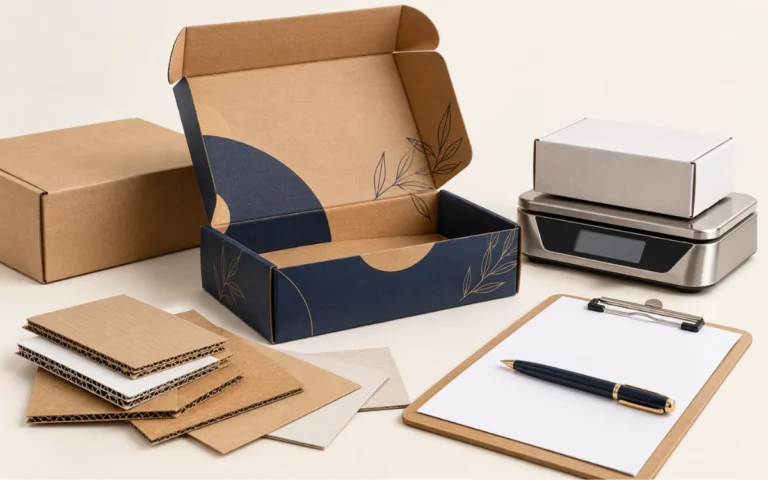
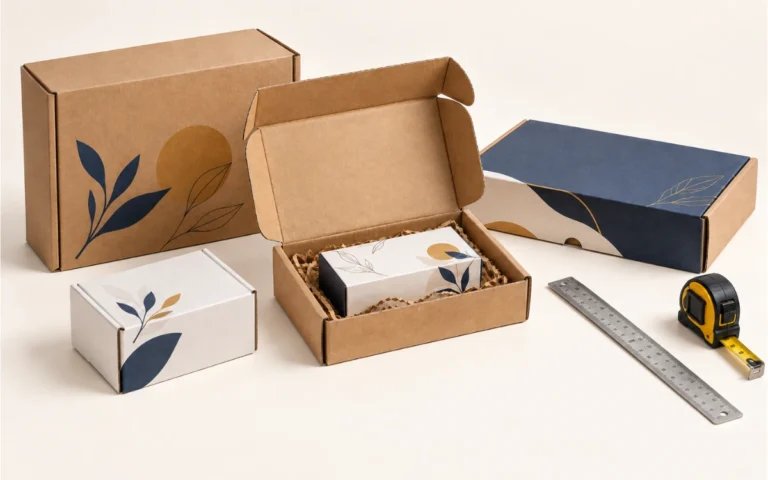
Planning Your Next Custom Mailer Packaging Project?
Personalized Mailer Boxes is a specialist Vertex Packaging project. Get practical support with box structure, dimensions, board, print, inserts and finishing for your next UK packaging order.