
Packaging Materials
Showing all 4 results
-

Custom Cardboard Mailer Boxes
Get a Quote -
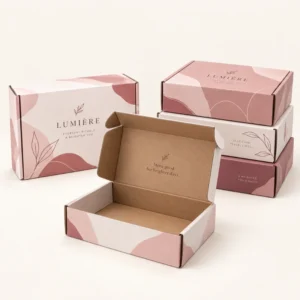
Custom Corrugated Mailer Boxes
Get a Quote -
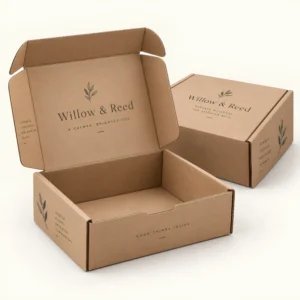
Custom Kraft Mailer Boxes
Get a Quote -
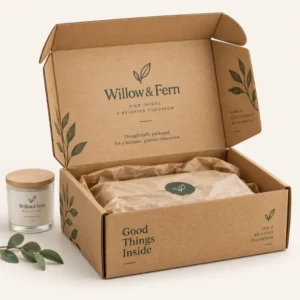
Custom Kraft Postal Boxes
Get a Quote
Packaging materials influence how a product is protected, packed, presented and handled throughout its journey. This category brings together cardboard, corrugated and kraft box options for UK businesses choosing packaging around their products rather than relying on a single material for every application. The right choice depends on product weight, fragility, dimensions, delivery conditions and the required appearance. Personalized Mailer Boxes provides free design support, in-house manufacturing and fast, free UK delivery, helping businesses compare suitable box materials and structures before moving forward with production.
Choosing packaging materials for the job they need to do
Packaging material should be chosen around the product and the journey ahead of it. A lightweight retail item, a fragile candle and a multi-product ecommerce order place very different demands on a box.
Start with the packed product rather than the appearance of the packaging. Weight, dimensions, vulnerable areas and the amount of movement inside the box all matter. Then consider how the pack will be handled. Packaging used mainly for presentation does not face the same conditions as a parcel moving through a delivery network.
That distinction helps narrow the choice between cardboard, corrugated and kraft-based packaging.
These terms are often used loosely in everyday buying language, although they do not all describe the same thing. Corrugated refers to a particular board construction. Kraft relates to the paper-making process and is also commonly associated with a natural brown surface. “Cardboard” is a broad commercial term that buyers may use for several paper-based board types.
Understanding that difference makes specifications easier to compare.
Cardboard boxes: consider the structure as well as the name
Cardboard boxes cover a broad area of paper-based packaging. Depending on the required format, board can be converted into cartons and other folding structures for products that need a defined outer pack without the deeper fluted construction found in corrugated board.
They can make sense where compact presentation, print area and an efficient folded structure are important.
However, the word “cardboard” alone does not tell you how a finished box will perform. Two boxes described that way may use different board constructions, weights and structural designs.
For that reason, buyers should look beyond the material label. Consider the complete specification: the product weight, box dimensions, fold pattern, closure and how the finished pack will be handled.
A lighter retail carton may work well around an already protected item. The same construction may be unsuitable as the only outer packaging for a heavier or more vulnerable product travelling through parcel distribution.
Material and structure need to work together.
Corrugated boxes for additional rigidity
Corrugated board has a recognisable layered construction. A fluted paper medium sits between liner papers, creating a board that combines relatively low weight with useful rigidity.
The fluting is an important part of how the board performs. It creates separation between the liners and helps the finished structure resist forces encountered during handling.
This makes corrugated packaging particularly relevant to ecommerce, postal and shipping applications where the outer box has a genuine protective role.
That does not mean every product should automatically use a heavier corrugated specification. More material is not always the better decision. The board should be proportionate to the product, its weight and the distribution conditions.
Small, lightweight items may work with a more compact construction. Heavier goods or products that need greater structural support may call for a different board configuration or box style.
The shape of the box matters as much as the board itself. Side walls, folds, locking sections and internal fit all influence the performance of the finished pack.
What kraft means when choosing packaging
Kraft packaging is often selected for its recognisable brown appearance, but colour is only part of the discussion.
Kraft paper is produced using the kraft pulping process. In packaging, kraft papers may be used in paperboard or as liners within other board constructions. As a result, “kraft” should not be treated as a single structural strength or box type.
A kraft box can still vary considerably in construction.
That point is useful when comparing kraft and corrugated options. They are not necessarily opposites. Corrugated board can use kraft liner papers, while a box sold primarily for its kraft appearance may use a different board construction.
The natural brown surface also affects design decisions. Dark inks and simple graphics can work well visually, while colours intended to appear especially bright may behave differently on brown material than they would on a white printing surface.
Artwork should therefore be considered alongside the chosen substrate from the beginning.
It is also important not to assume that a brown kraft appearance automatically proves a particular recycled content, certification or environmental performance. Those claims need to be confirmed for the specific material being purchased.
Match protection to product weight and fragility
Packaging should prevent avoidable product movement without becoming unnecessarily oversized.
Begin by measuring the product in the condition in which it will actually be packed. That may include an inner retail carton, protective wrap, dividers or an insert.
A close-fitting box can reduce movement and make packing more controlled. Yet extremely tight packaging may create its own problems if there is no space for the protection a fragile item requires.
Fragile products often need two decisions rather than one: the correct outer box and the correct internal protection.
For example, a corrugated outer structure can provide rigidity, but it does not automatically stop a glass container moving inside the box. An insert, divider or cushioning method may still be needed.
Soft items such as clothing may require less internal restraint. In those cases, efficient sizing and packing speed can carry more weight in the decision.
There is no useful universal answer because protection comes from the complete pack.
Material choice also affects printing
Print requirements should be considered before a material is approved.
Smooth board surfaces generally behave differently from visible corrugated textures or unbleached kraft surfaces. The intended artwork, amount of detail and required colour appearance should therefore be reviewed against the actual substrate.
A simple one-colour logo may suit a natural kraft presentation very well. A design relying on bright colours, fine detail or extensive photographic imagery may place different demands on the printing surface and process.
Structural features also affect artwork placement.
Folds, scores, cut edges, tabs and locking sections form part of the dieline. Important text and logos should not be positioned without considering where those features sit when the box is assembled.
Packaging design works best when print, material and structure are developed together rather than passed through three separate decisions.
Avoid unnecessary space in ecommerce packaging
For businesses sending regular orders, material selection has operational consequences as well as visual ones.
An oversized shipping box may need more internal filling material and occupies more space during dispatch. Poorly matched packaging can also leave the contents free to move.
At the other extreme, a box that leaves no practical packing clearance may slow fulfilment or place pressure on the product.
The useful target is controlled fit.
Businesses with several product sizes should also consider whether one universal box genuinely works for every order. Sometimes it does. In other cases, a small group of packaging sizes creates a more sensible packing system.
The decision should account for storage, assembly and packing workflow as well as the individual unit cost of the box.
For regular ecommerce fulfilment, a small improvement in the way a pack folds, closes or holds its contents can become significant once the same action is repeated across many orders.
Consider storage and packing before production
Boxes do not spend their entire life around a product. Before packing, they also need to be stored, moved and assembled.
Many converted cardboard and corrugated formats can be supplied flat before use, depending on their structure. This reduces storage volume compared with storing every box fully assembled.
Assembly requirements still differ.
Some structures fold together using tabs and locking panels. Others may require gluing, tape or another closure during packing. Internal inserts introduce further steps.
Businesses should therefore consider the people actually packing orders. A complicated structure may be justified for a presentation pack used occasionally but less practical for a busy daily fulfilment operation.
The best material choice is one that works on the packing bench as well as it does in the finished photograph.
Make precise environmental claims
Material choice increasingly includes questions about waste, recycling and packaging regulations. These questions deserve precise answers rather than broad environmental labels.
Paper and board packaging covers several different constructions. Coatings, laminations, attached components, inks, adhesives and combinations of materials can influence how a finished pack should be assessed.
As a result, terms such as recyclable, recycled, biodegradable or compostable should only be used when they are supported for the specific packaging specification.
The appearance of the material is not enough evidence.
UK packaging rules also place responsibilities on certain businesses that produce, import or supply packaging. Which requirements apply depends on the organisation and its activities, so businesses that fall within packaging reporting rules should check the current official guidance rather than relying on a general product description.
This category is therefore best approached from both sides: choose packaging that performs properly, then establish the exact material information needed for your own environmental claims or reporting obligations.
Comparing cardboard, corrugated and kraft options
The practical differences become clearer when the starting point is the product.
Choose by asking:
- Does the box mainly need to present the product, or must it also protect it through delivery?
- How heavy is the packed item?
- Is the product fragile or vulnerable to movement?
- Will the box need an insert or divider?
- What external and internal dimensions are practical?
- How important is a natural kraft appearance?
- What type of artwork needs to be printed?
- How quickly will the packaging need to be assembled during fulfilment?
- How much flat packaging can be stored comfortably?
A corrugated box may make more sense when structural protection is a priority. A different cardboard construction may suit a lighter product or retail-focused pack. Kraft may be chosen for its material or visual characteristics, but its exact board construction still needs to suit the job.
Those are more useful distinctions than selecting a material because it is currently popular.
Discuss the material before finalising the box
Packaging performs best when material, size and structure are considered together. Changing one can affect the others, so settling on artwork before the physical specification is clear can create unnecessary revision later.
Personalized Mailer Boxes offers free design support to help businesses work through their packaging requirements before production. Share the product dimensions, weight, intended use, packing method and preferred presentation so the available cardboard, corrugated and kraft options can be compared in context.
Browse the available packaging material categories or request a quote to discuss a specification suited to your product.
FREQUENTLY ASKED QUESTIONS
What packaging materials are available in this category?
This category focuses on board-based box options, including cardboard, corrugated and kraft packaging. These terms describe different material characteristics or constructions, so the right choice depends on the product, required protection, box style, printing and how the finished package will be stored, packed and delivered.
What is the difference between cardboard and corrugated packaging?
“Cardboard” is a broad everyday term for paper-based board packaging. Corrugated board has a more specific construction that includes a fluted paper layer with liner papers. That construction adds rigidity, which is why corrugated formats are commonly considered for ecommerce and transit packaging where the outer box has a protective role.
Is kraft packaging the same as corrugated cardboard?
No. Kraft and corrugated describe different characteristics. Kraft relates to the paper and is often recognised by its natural brown appearance, while corrugated describes a layered board construction containing fluting. Corrugated packaging can use kraft liner papers, so a box may correctly be described using both terms.
Which packaging material is best for ecommerce orders?
There is no single best material for every ecommerce product. Weight, fragility, size, delivery conditions and internal protection should guide the choice. Corrugated constructions are particularly relevant where rigidity during handling is important, while lighter products may not require the same board specification. Product fit should be assessed alongside material choice.
Can kraft, cardboard and corrugated boxes be custom printed?
Printing depends on the precise substrate, box construction and chosen print process. Branding can be developed for board packaging, but colours and detail may appear differently on white, natural kraft and textured corrugated surfaces. Artwork should also account for folds, scores, cuts and locking areas on the finished dieline.
Does kraft packaging automatically mean recycled or recyclable?
No. A kraft appearance alone does not confirm recycled content, recyclability, certification or any other environmental claim. Those points depend on the exact material and finished packaging specification. Businesses should obtain accurate material information before making environmental statements about their packaging.
How do I choose the correct packaging material for my product?
Start with the product’s packed dimensions, weight, fragility and delivery route. Then consider how much structural protection is required, whether an insert is needed, storage space, packing workflow and the intended printed appearance. Comparing those requirements first makes it easier to identify an appropriate cardboard, corrugated or kraft option.