
printed mailing boxes
Showing all 2 results
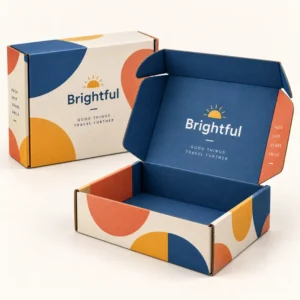
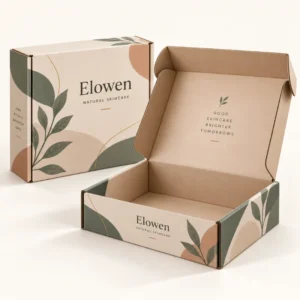
Printed mailing boxes are boxes made for sending products through the post, with print that carries a brand, a logo or a clear message on the outside. They range from flat boxes for books, prints and documents to deeper boxes for clothing, gifts and small parcels, and they are chosen first for protection and second for presentation. A good mailing box keeps the contents still, closes securely, and arrives looking like it came from a business that cares about detail.
What printed mailing boxes are used for
Mailing boxes are used wherever a product needs more protection than an envelope or a postal bag can give. Booksellers use them to stop corners bending, print sellers use them to keep prints flat and clean, and clothing sellers use them to keep garments folded and free from creasing in transit. Gift sellers use them because the box itself becomes part of the gift, especially when the recipient opens a parcel that looks considered rather than improvised. In each case, the job is the same: hold the product in place, resist knocks and stacking, and present the brand without extra outer packaging.
The term mailing box covers several constructions. Some are simple folding boxes that arrive flat and fold up around the product. Others are deeper cartons with a hinged lid that locks shut. A few are designed to fit through a letterbox, which can be useful when a customer is out during delivery. The right construction depends on the weight, fragility and shape of the product, and on whether the parcel will be collected, posted over a counter, or sent in volume through a fulfilment centre.
Flat boxes for documents and prints
Flat mailing boxes suit items that must stay flat: books, magazines, art prints, photographs, certificates and sample packs. The shallow depth keeps the item from moving up and down, while a snug footprint stops it sliding from side to side. For prints and photographs, a clean inner surface matters, because grit or rough board can mark a surface. A tissue wrap or a paper sleeve inside the box can add protection without adding much weight, and it makes opening feel more careful.
Keeping flat items clean in transit
Flat items are vulnerable to bending at the corners and to moisture at the edges. A box that fits closely, with the item centred, reduces bending because the box walls support the edges. If the parcel may be left outside, a paper wrap inside the box can help keep the contents dry for a short time, but a mailing box is not a waterproof container and should not be relied on for long exposure to rain. Pack the item so it cannot shift when the parcel is turned on its side, and check that the lid closes without pressing on the contents.
Deeper boxes for parcels and gifts
Deeper mailing boxes suit clothing, accessories, skincare sets, candles in retail boxes, and gift sets with several items. The extra depth allows for tissue, shredded paper or a fitted insert, and it gives room for a packing note or a small free sample without crushing the main product. When several items share one box, pack the heaviest item at the bottom, separate items that could scratch each other, and fill any remaining space so nothing moves when the parcel is shaken gently.
Materials, sizes and print choices
Corrugated board is the usual material for mailing boxes because it is light, strong for its weight, and widely recyclable. E flute board gives a smooth print surface and suits lighter parcels, while a stronger flute suits heavier or more fragile goods. Kraft board gives a natural look and works well with dark print, while white board gives a bright base for full colour designs. The print method and the board should be chosen together, because the same artwork can look quite different on kraft and on white.
Sizes should be worked out from the product as packed, not from a rough guess. Measure the longest, widest and tallest points, including any inner box, bottle cap or lid that adds height. A box that is a few millimetres too short will not close, while a box that is much too large will need a lot of void fill and will still protect less well. If you post in volume, a consistent box size also helps with storage, labelling and carrier size checks, because every parcel behaves the same way on the packing bench.
Print placement for mailing boxes
The lid is usually the best place for the main brand mark, because it is the first panel a recipient sees. Side panels can carry a short message, a web address or a handling note, but they should not compete with the lid. Inside print is useful for a thank you message, care instructions or a simple pattern, and it is especially effective for gifts, where the recipient may not know the sender. Keep text large enough to read easily, and check the proof for spelling, spacing and alignment before production.
Labels, barcodes and delivery marks
Leave a clear, flat area for the delivery label, because a label placed over print, a fold or a join can be hard to scan and can peel off in transit. If you use barcodes, returns labels or carrier marks, test them on a printed sample before the full run. A plain panel or a lightly printed area works better for labels than a busy pattern. This small detail prevents delays and missed deliveries that have nothing to do with the product itself.
Ordering and packing printed mailing boxes
When ordering, share the internal size you need, the board preference, the print coverage, the quantity, and whether you need inserts or dividers. Corrugated lead time after final artwork approval is 12 to 15 working days, so allow time for proofing and for delivery to your packing area. The printed postal boxes collection is a useful comparison for parcels that need a stronger outer box, and the printed mailer boxes uk collection shows locking lid styles for online orders. You can request a quote, browse the shop, and read the delivery information page for planning.
Packing checks before posting
Before posting a new box style, pack a real order, seal it as you would for a customer, and check the finished parcel. Shake it gently to listen for movement, weigh it, measure it, and confirm that the label sits flat. Open it again to see whether the product has moved or been marked. This test takes a few minutes and can reveal problems with size, insert fit or closure that would otherwise appear only after parcels have been sent.
Frequently asked questions
Are printed mailing boxes suitable for fragile items?
Yes, when the size and board are matched to the item and the contents are held still with an insert or void fill. Very fragile items may also need an inner retail box and extra cushioning inside the mailing box.
Can a mailing box fit through a letterbox?
Some shallow mailing boxes are designed to fit through a letterbox, but the finished parcel thickness, including any label and tape, must be checked. Measure the packed parcel rather than relying on the empty box size alone.
Should I print inside a mailing box?
Inside print is worth considering for gifts and repeat orders, where a welcome message or care note adds value. For plain fulfilment parcels, outside print alone may be enough.
What information do I need to order?
Share the packed product size, the board preference, the print artwork or logo, the quantity, and any insert need. That information allows a clear specification and a useful proof.