
personalised subscription boxes
Showing the single result
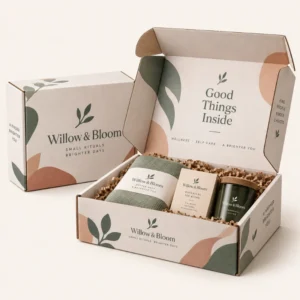
personalised subscription boxes are printed boxes made for repeat deliveries, where the same customer receives a new selection each month, each quarter or each season. They are designed to be opened with anticipation, to hold a changing mix of items safely, and to carry the brand consistently from the first delivery to the fiftieth. For a subscription business, the box is not just packaging, it is part of the product the customer pays to receive again.
Why personalised subscription boxes need a different design
A single order box has one job, to deliver one purchase well. A subscription box has a longer job, to deliver many different selections over time, while keeping the experience fresh and familiar at the same time. Customers expect the outside to look recognisable, so they know what has arrived, and they expect the inside to feel a little different each time, so the delivery does not become routine. That balance is the central design challenge for subscription packaging.
Consistency also affects operations. A subscription business packs in batches, often on the same days each month. A box that assembles quickly, stacks well, and works with a standard insert system will save hours during a packing week. A box that needs fiddly assembly, or that only fits one month selection, will slow the team down and increase errors. Design for the packing table as well as for the customer living room.
Retention is the commercial reason to invest in the box. Subscribers stay when the experience feels worth the ongoing commitment. A well designed box can turn a routine delivery into a small event, with a printed lid message, a themed insert, or a simple reveal sequence as items are lifted out. Those details are remembered, photographed and shared, and they give a subscriber a reason to stay for another cycle.
Designing for changing contents
Most subscription selections change in size, shape and weight from one cycle to the next. A box that is too specific to one selection will fail when the next selection is taller, wider or heavier. Choose a box size that covers your usual range, and use inserts, dividers or tissue to adapt the interior. A flexible insert system is often better than a rigid tray made for a single product set, because it can be adjusted without reordering boxes.
Think in layers. A base layer can hold heavier items, a middle layer can hold the main products, and a top layer can hold a card, a sample or a small gift. Layers create a reveal as the customer unpacks, and they protect lighter items from being crushed by heavier ones. Test the layer order with real selections, not with empty boxes, because weight distribution changes how a box behaves in transit.
Keeping the reveal tidy
A tidy reveal depends on fit. Items should sit snugly enough not to slide, but not so tightly that the customer must pull hard to remove them. Tissue paper, shredded paper or a simple card divider can fill gaps without hiding products. Avoid fill that spills out when the lid opens, because the first impression should be of a curated selection, not of loose packing material.
Print, inserts and the unboxing sequence
Print for subscription boxes works on two levels. Outside print builds recognition on the doorstep and in photographs. Inside print builds the moment of opening. A short message on the lid, a pattern on the base, or a themed illustration for a seasonal edition can all make a delivery feel personal. Seasonal editions are a useful tool, because they let you change the inside print or the insert colour while keeping the outside brand consistent.
Inserts deserve as much thought as the box itself. A printed card can explain the selection, introduce a new product, or tell the story behind a maker. A divider can separate food from non food items, or fragile items from heavier ones. A simple sleeve can hold a booklet or a set of cards together. Keep inserts useful. A card that only says welcome, with no information about the contents, will be discarded. A card that explains how to use a product, or how to care for it, will be kept.
Consider the customer who receives the box every month. They do not need the same welcome message repeated in full each time. A short, changing note, a product guide for that cycle, or a preview of the next theme can feel more personal than a generic message. Small changes in wording, colour or insert design can keep a familiar box feeling fresh without a full redesign.
Choosing board for monthly posting
Subscription boxes are posted repeatedly, often to the same addresses, so board strength and print durability matter. Corrugated board is a common choice because it protects mixed contents and survives handling well. For premium subscriptions, a rigid box or a stronger board may suit the positioning, but it adds weight and storage volume. Weigh the unboxing impact against posting weight and storage space before choosing a premium construction.
Storage for batch packing
Flat packed boxes are easier to store between packing weeks, especially for businesses that hold several months of stock. Store them by size and design, with the current cycle design easiest to reach. Keep inserts and cards in labelled boxes, so a packing team can set up quickly on the first day of a cycle without hunting for the right components.
Planning cycles, quantities and lead times
Subscription planning is cyclical. Work backwards from your dispatch dates, allowing time for artwork, proofing, production, delivery of boxes to your packing location, and packing itself. If a theme changes each cycle, artwork must be finalised earlier than for a fixed design. A calendar that shows artwork deadlines, production windows and dispatch weeks for the next three cycles will prevent a last minute rush.
After final artwork approval, standard lead times are 10 to 14 working days, corrugated lead times are 12 to 15 working days, and rigid or specialist lead times are 13 to 16 working days. Those figures are a planning guide, not a guaranteed delivery date. For a new subscription launch, allow an extra cycle for trials, because the first packing run often reveals issues with fit, insert order or label placement.
Order quantities should reflect subscriber growth, not just current numbers. Holding a small buffer of boxes for new joiners and for replacements is sensible, but holding too many of a themed design can leave you with stock that cannot be used next cycle. A fixed outer design with changing inserts is a practical compromise, because the outer box can be ordered in larger quantities while inserts change each cycle. To plan, see the delivery information page, browse the shop for packaging options, request a quote for your subscription box design, or explore personalised postage boxes for branded posting.
Testing with real subscribers
Before a full cycle, send a trial box to a small group of subscribers or testers and ask specific questions. Was the box easy to open, did anything move in transit, was the insert order clear, and did the box feel special on arrival. Photographs of the box on arrival are more useful than general praise, because they show crushed corners, scuffed print or loose items that words may miss.
Frequently asked questions
What makes a subscription box different from a normal postal box?
A subscription box is designed for repeat deliveries with changing contents. It needs a flexible interior, a consistent outer brand, and an unboxing sequence that stays enjoyable over many cycles.
Should the design change every month?
Not necessarily. A consistent outer design with changing inserts, lid messages or insert colours often works better than a full redesign each month, because it is easier to stock and still feels fresh.
How do inserts help?
Inserts separate items, protect fragile products, explain the selection and create a layered reveal. They also let you adapt one box size to different selections without ordering new boxes.
How long does production take?
As a guide, corrugated production is 12 to 15 working days after final artwork approval. Standard production is 10 to 14 working days, and rigid or specialist production is 13 to 16 working days.
How many boxes should I order for a new subscription?
Base the order on current subscribers plus a buffer for new joiners and replacements, and consider a fixed outer design with changing inserts to avoid holding themed stock you cannot use later.