
personalised postage boxes
Showing the single result
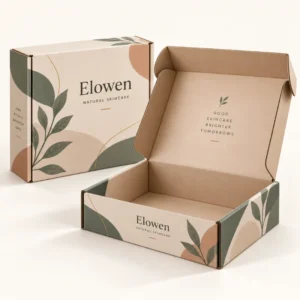
personalised postage boxes turn an ordinary parcel into a clear brand moment before the customer opens it. They are printed with your logo, colours and message, sized for the goods inside, and made from board strong enough for posting through the UK mail network. For a small business, that combination of protection and presentation is often the first physical contact a buyer has with the brand.
Why personalised postage boxes work for posting
Posting is different from handing a product across a counter. The box must survive sorting, stacking, loading and delivery, and it must still look good when it arrives. A box that is too large wastes void fill and can let goods move around in transit. A box that is too small puts pressure on seams and corners. Getting the size right is therefore the first practical decision, and it is also the decision that affects postage banding, because many UK services charge by size and weight as well as by distance.
Print adds a second job. A plain brown box protects goods, but it says nothing about who sent them. A printed box can carry a logo on the outside, a short thank you message inside the lid, handling guidance, and a return address panel in a clear position. Those details help the recipient recognise the sender at a glance, and they help a courier or a neighbour identify the parcel if it is left in a safe place. Print should stay legible at arm’s length, because a parcel is usually read quickly on a doorstep, not studied like a brochure.
For repeat posting, consistency matters. If every order arrives in the same style of box, customers begin to recognise the packaging before they read the label. That recognition builds trust, especially for food, skincare, stationery and gift sellers whose products are bought as presents. A consistent box also makes packing faster in a busy dispatch area, because staff do not need to hunt for a suitable size for each order.
Choosing a size that fits Royal Mail bands
Size bands reward careful measurement. A small parcel, in Royal Mail guidance, must not exceed 45cm in length, 35cm in width and 16cm in depth, with a weight limit of 2kg. A medium parcel must not exceed 61cm in length, 46cm in width and 46cm in depth, with a weight limit of 20kg. A large letter must not exceed 35.3cm in length, 25cm in width and 2.5cm in depth. Those limits explain why many sellers keep a small parcel box and a medium parcel box in stock, rather than trying to force every product into one size.
Measure the product, then add space for cushioning. A snug fit is good, but a tight fit that crushes a corner or forces a lid closed is not. Leave room for tissue, paper void fill or a fitted insert where the product needs it. Then check the finished, packed box against the band you intend to use. A box that looks small when flat can cross into the next band once it is packed and taped, so always measure after packing, not before.
Measuring after packing
Place the packed box on a flat surface and measure length, width and depth at the widest points, including tape and any bulge. Weigh the packed box on a kitchen or parcel scale. Write those figures on your packing guide for that product, so every future order uses the same box and the same amount of fill. That simple record prevents a quiet drift in size that can change postage costs over time.
Materials and print for personalised postage boxes
Most personalised postage boxes are made from corrugated board or strong kraft board. Single wall corrugated board suits light to medium goods such as books, clothing, cosmetics and small homeware. Double wall board suits heavier goods, fragile goods and orders that contain several items. Kraft board gives a natural, uncoated look that suits artisan brands, while white board gives a clean, bright surface that makes colour print stand out.
Print can cover the outside only, the inside only, or both sides. Outside print is the workhorse for brand recognition. Inside print creates the moment of opening, and it is often used for a short message, a pattern, or care instructions. Full colour print suits photographs and detailed artwork, while one colour or two colour print suits bold logos and simple patterns. Whichever route you choose, keep essential information clear. A logo that is too small, or text placed across a fold, will be hard to read and will waste the print area.
Board choice also affects recycling. Corrugated board is widely recyclable in the UK, and many customers now check packaging before they buy again. Keep plastic tape and mixed material void fill to a minimum where you can, and tell customers on the box or on an insert how to recycle the packaging. That note costs almost nothing and it answers a question buyers increasingly ask.
What to put on the outside and inside
On the outside, prioritise the logo, a clear sender name and any handling mark the contents genuinely need, such as an arrow showing which way is up for a liquid or a fragile item. On the inside, prioritise a short welcome, a thank you, and practical help such as how to open the box without damaging the contents. Avoid clutter. A box that tries to say everything often says nothing clearly, because the eye has nowhere to rest.
Artwork checks before approval
Check artwork at full size, not only on a screen at a reduced size. Look for spelling errors, low resolution images, text that sits too close to a cut edge, and colours that look different on kraft board compared with white board. Ask for a proof if one is offered, and check it in daylight. Approving artwork carefully saves reprints and avoids a batch of boxes that cannot be used.
Ordering and lead times
Ordering starts with size, board, print area and quantity. A clear brief helps a supplier quote accurately. State the product dimensions, the packed weight, the number of items per box, whether the box will be posted on its own or inside an outer carton, and whether you need print inside, outside or both. If you sell seasonally, note your peak dates early, so production can be planned around them.
After final artwork approval, standard lead times are 10 to 14 working days, corrugated lead times are 12 to 15 working days, and rigid or specialist lead times are 13 to 16 working days. Those figures are a guide for planning, not a guaranteed delivery date, and they start only after artwork is approved. Build in time for proofing, packing trials and a small buffer before a launch or a seasonal peak.
Before a full run, pack a sample with real products and post it to yourself or to a colleague. Check how it survives handling, how easy it is to open, and whether the contents move. That trial often reveals a need for a slightly larger box, a different insert, or a stronger tape. It is far cheaper to learn that lesson from one box than from a full batch. For help with sizes and planning, see the delivery information page, browse the shop for packaging options, or request a quote for your box design. You can also compare personalised postal boxes for online sellers and check the Royal Mail size and weight guide before you finalise a size.
Packing trials that save reprints
A packing trial should use the exact product, the exact fill and the exact tape you will use in normal dispatch. Seal the box as you would for a customer, label it, and handle it as a parcel would be handled. Open it and inspect the product, the print and the seams. If anything is crushed, scuffed or loose, change one variable at a time until the result is consistent.
Frequently asked questions
What are personalised postage boxes used for?
They are used to post orders, gifts and samples in a box that protects the contents and shows the sender brand. They suit online shops, makers, subscription sellers and small businesses that post regularly.
How do I choose the right size?
Measure the product, add room for cushioning, pack a trial box, then measure and weigh the finished parcel. Compare those figures with the postage band you plan to use, and keep the same box and fill for repeat orders.
Can I print inside the box as well as outside?
Yes, inside print is a common choice for a welcome message, a pattern or care instructions. Outside print is best for brand recognition, while inside print creates the opening moment.
How long does production take after artwork approval?
As a guide, standard production is 10 to 14 working days after final artwork approval, and corrugated production is 12 to 15 working days. Allow extra time for proofing and for packing trials before a launch.
Are corrugated postage boxes recyclable?
Corrugated board is widely recyclable in the UK. Keep mixed materials to a minimum where you can, and add a short recycling note on an insert if your customers ask about disposal.