
personalised postal boxes
Showing all 3 results
-

Custom Postal Boxes
Get a Quote -
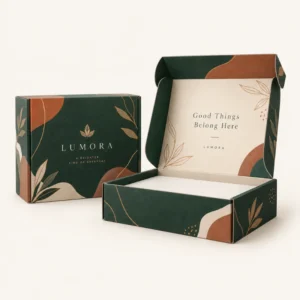
Personalized Mailer Boxes
Get a Quote -
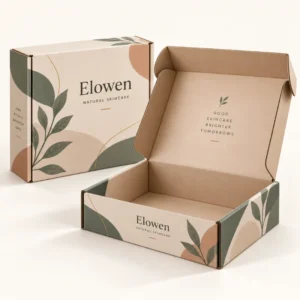
Printed Postal Boxes
Get a Quote
personalised postal boxes are printed boxes made for sending goods through the post, with your branding on the outside and, where you choose it, on the inside as well. They protect an order in transit, help the recipient recognise the sender straight away, and give a small business a professional finish without a separate outer carton. For online sellers, they are often the only part of the brand a customer can touch before opening the order.
Why personalised postal boxes suit online selling
Online selling depends on trust built at a distance. A customer cannot pick up a product before buying, so the arrival experience carries extra weight. A postal box that arrives clean, well sealed and clearly branded reassures the buyer that the order was packed with care. A box that arrives crushed, oversized or anonymous can undo a good product, even if the contents are perfect. That is why sellers who post every day tend to treat packaging as part of the product, not as an afterthought.
Postal boxes also have a practical job in a dispatch workflow. When sizes are standardised, packing becomes faster and more predictable. Staff can reach for the right box without measuring each order, labels sit in the same place, and storage is simpler because flat packed boxes stack neatly. Standard sizes also make it easier to track postage spend, because each product can be matched to a box and to a postage band in advance.
Branding does not need to be loud to be effective. A single colour logo, a simple pattern and a clear sender name can be enough, especially on kraft board where a restrained design looks intentional. The key is consistency. If a customer orders twice and receives two very different boxes, the brand feels less settled. If the box, the insert and the label share the same colours and type style, the whole order feels considered.
Matching the box to the order
Start with the product, not with the box catalogue. List the items you post most often, their dimensions and their fragility. Group them into two or three box sizes where possible, rather than stocking a different box for every product. A book seller, for example, may need a shallow box for single paperbacks, a deeper box for hardbacks and a larger box for multi book orders. A skincare seller may need a small box for single items, a medium box for sets, and a larger box for gift bundles.
Consider weight as well as size. A box that is strong enough for a light garment may not be strong enough for a set of ceramics. Double wall board, dividers and inserts all help, but they add weight and bulk, so test them with real orders. The aim is a box that protects without adding unnecessary size, because size and weight together determine the postage band.
Returns and repeat orders
Think about returns at the design stage. A postal box with a clear reseal area, a returns label panel, or an insert that explains the returns process can reduce customer queries. It also helps the returned product arrive in a condition that can be resold. For repeat customers, a familiar box makes a second order feel like a continuation, not a fresh transaction.
Print, board and finish for personalised postal boxes
Board choice sets the tone. Kraft board suits natural, handmade and eco conscious brands. White board suits bright, modern print and photographic artwork. Corrugated board is the usual choice for posting, because the fluted layer absorbs knocks and stacking pressure. For heavier or fragile goods, a stronger flute or double wall construction is worth testing, especially if parcels travel long distances or pass through several sorting centres.
Print placement should follow the journey of the parcel. The largest, clearest logo belongs on the top or on the side that faces up when the box is carried. Handling guidance belongs where a handler will see it before lifting. Inside print belongs on the lid, where it is revealed on opening. Keep text short on the outside, because a parcel label, tape and handling marks will compete for space. Save longer messages, care instructions and thank you notes for the inside or for an insert.
Finishes can add a tactile quality, but they should serve a purpose. A matte finish reduces glare and can make a box easier to photograph for social media. A gloss finish can make colours look brighter, but it can also show scuffs more easily. For most postal use, a clean print on good board is more effective than a complex finish that is hidden under a label and tape during transit.
Designing for the doorstep
A postal box is often opened in a hallway, a kitchen or an office, not in a studio. Design for that moment. Make the opening easy to find, avoid excessive tape over the opening flap, and keep the first thing inside pleasant to see. A tissue wrap, a printed lid message or a neatly placed insert all signal care. Avoid loose fill that spills out on opening, and avoid a box so full that the customer must force the lid open.
Labels and tape placement
Place the address label on a flat, unprinted area where it will not cover the logo or essential text. Keep tape away from printed messages that the customer should read on opening. If you use branded tape, use it on the seal only, not across the whole box, so the print remains visible and the box still looks tidy on arrival.
Ordering, quantities and lead times
A good quote brief includes product sizes, packed weights, fragility, print areas, board preference and expected monthly volume. It should also note whether boxes will be stored flat, how much storage space is available, and whether you need the same design in more than one size. Those details prevent a design that looks good on screen but is awkward to store or to assemble at speed.
After final artwork approval, standard lead times are 10 to 14 working days, corrugated lead times are 12 to 15 working days, and rigid or specialist lead times are 13 to 16 working days. Use those figures as a planning guide, not as a guaranteed delivery date, and allow time for artwork checks and packing trials. If you run a seasonal promotion, order early enough that a trial batch can be tested before the peak begins.
Test a small batch in real dispatch before committing to a large run. Send orders to friends, colleagues or test addresses, and ask for photographs of the box on arrival. Look for crushed corners, torn print, loose contents and labels that have lifted. Fix those issues first, then scale up. To plan your order, see the delivery information page, browse the shop for packaging options, request a quote for your postal box design, or compare personalised postage boxes for branded posting. Before choosing a size, check the Royal Mail size and weight guide for current size and weight limits.
Storing flat packed boxes
Store flat packed boxes in a dry place, away from damp floors and direct heat. Stack them by size, with the most used size easiest to reach. Keep a small number of assembled boxes ready for urgent orders, but keep the bulk flat to save space. Good storage protects print quality and board strength, especially for kraft board in humid conditions.
Frequently asked questions
What is the difference between a postal box and a mailer box?
In practice the terms overlap. A postal box is a general term for a box made for posting, while a mailer box often refers to a self locking style with a lid that folds in. Choose by structure and size, not by the name alone, and test the style with your products.
How many sizes should an online shop stock?
Most small shops manage well with two or three sizes. Start with your most common order, add a size for single items and a size for larger or multi item orders, and review sales data before adding more.
Will print survive posting?
Print on good board survives normal handling well, especially when labels and tape are placed away from key artwork. Avoid placing essential text where tape will cover it, and test a posted sample before a full run.
How long does production take?
As a guide, corrugated production is 12 to 15 working days after final artwork approval. Standard production is 10 to 14 working days, and rigid or specialist production is 13 to 16 working days.
Can I use the same design across sizes?
Yes, in most cases a logo and colour scheme can be adapted across sizes. Check that text remains legible on the smallest box, and that artwork does not sit across a fold on larger boxes.