
media kit boxes
Showing the single result
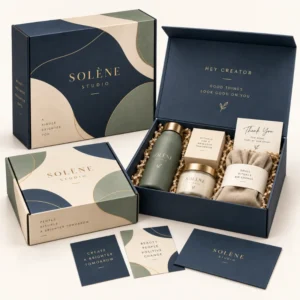
Media kit boxes are presentation boxes made to hold a coordinated set of items for journalists, influencers, buyers, partners or event guests, so the whole story arrives in one organised package. A typical kit might include product samples, a brochure or press release, a small gift and a personal note, each held in place by an insert designed for those exact items. For a launch or a campaign, a well planned media kit box turns a simple delivery into a memorable reveal that recipients are more likely to photograph, share and remember.
Why media kit boxes work for launches and press
A media kit is judged in seconds, often on a desk crowded with other parcels and samples. A box that opens to a tidy, intentional layout immediately signals that the contents matter, while a loose collection of items in a plain parcel can feel like an afterthought, however good the products are. The structure of the box guides the eye, from the first item revealed to the supporting material beneath, so the recipient understands the story in the intended order. That guided reveal is the main reason media kits use a designed box rather than a standard shipping carton.
Media kit boxes also solve a practical problem. Samples, printed material and gifts are often different shapes and weights, and they can damage each other if they move in transit. A fitted insert keeps each item in place, protects delicate surfaces, and prevents a heavy item from sliding onto a fragile one. When the kit arrives intact and well presented, the recipient can use the contents straight away, whether that means trying a sample, photographing it for social media, or writing about it for publication.
Who uses media kit boxes
Brands use media kit boxes for product launches, seasonal collections, trade shows, press previews and influencer seeding. Agencies use them to send campaign material to journalists and creators on behalf of clients. Startups use them to introduce a new product to buyers and early supporters with a professional first impression. In each case, the audience is small and influential, so the quality of the box can matter more than it would for a mass retail order, because each recipient may reach a much larger audience.
Choosing an audience first approach
Start by thinking about who will open the box and where they will open it. A journalist may need clear product facts and high resolution images noted on a card, while an influencer may value a photogenic reveal and a simple call to action. A buyer may need pricing and ordering information in a discreet insert, while an event guest may enjoy a gift led reveal. Designing for the specific recipient, rather than for a generic audience, makes the kit feel personal and increases the chance that it will be used.
Designing media kit boxes around the contents
Design should start with a list of contents, with dimensions and weights for each item. Lay the items out in the order you want them revealed, and consider whether the reveal should be layered, with a top tray lifting to show more beneath, or flat, with everything visible at once. A layered reveal can create drama, while a flat layout can be clearer for a kit with many small items. Test the layout with real products, because an arrangement that looks good on paper can feel cramped or unbalanced in the actual box.
Board and construction should suit both presentation and posting. Rigid board gives a premium, keepsake feel and it suits kits that will be kept on a desk or shelf, while corrugated board gives a lighter, more postal friendly option for larger seeding runs. A magnetic closure, a ribbon pull or a simple lift off lid can each change the opening experience, so choose a closure that matches the tone of the brand and the practical needs of the recipient. The box should open smoothly without tools, and it should close again neatly if the recipient wants to keep it.
Inserts, trays and printed material
Inserts are central to a media kit box. Cardboard inserts are light, recyclable and easy to print, foam inserts give a snug fit for delicate or heavy items, and a combination can work well when a kit mixes fragile samples with printed material. Printed material should be planned as part of the kit, not added as an afterthought, so the brochure, press release or product card fits its slot and matches the box artwork. A personal note, handwritten or printed with a personal greeting, can make a mass seeding feel individual, provided it is accurate for each recipient.
Print and finish for a premium reveal
Print and finish should support the story without overwhelming the contents. A bold exterior can build excitement before opening, while a calmer interior can let the products take centre stage. Matt finishes feel soft and understated, gloss finishes can deepen colour, and foil or embossing can highlight a logo or launch name. Use special finishes sparingly, so the most important element, the product itself, remains the focus when the box is opened.
Planning a media kit run, from prototype to posting
Media kit runs are often smaller than retail runs, but they are more complex, because each box contains several items that must be assembled in the right order. A prototype is essential, even for a small run, because it allows you to test the insert fit, the opening sequence and the protection in transit. Assemble a few complete kits, post one to a colleague as a test, and ask for honest feedback on the opening experience, the clarity of the printed material and any damage in transit. Fixing a problem at prototype stage is far easier than fixing it after a full run is printed.
Assembly planning matters as much as box design. Write a packing sequence with photographs, showing the order for each item, the position of each insert, and where the note and printed material should sit. If kits are going to different recipients with personalised notes or different samples, keep a clear checklist for each variant, and check kits before sealing. A media kit that arrives with the wrong sample or a missing brochure can undermine an otherwise excellent launch, so quality control deserves time in the schedule.
Timing, quantities and reorders
Allow time for design, prototype, production, assembly and posting, and work backwards from the launch or event date. Media kits are often tied to a fixed date, such as a press embargo or an event, so a delay can mean missing the moment entirely. Quantities should be based on a confirmed recipient list plus a small buffer for damaged kits or late additions, rather than a round number guessed in advance. Keep the dieline and specification on record, so a second run for a follow up campaign can match the original.
Ordering media kit boxes on a quote basis
Media kit boxes are supplied on a quote basis, because contents, insert design, board, print and quantity vary widely from one campaign to another. Share a list of contents with dimensions, the recipient type, the launch date and any artwork ideas, and the team can advise on structure and inserts. Standard lead times after final artwork approval are 10 to 14 working days, corrugated options are 12 to 15 working days, and rigid or specialist options are 13 to 16 working days. These are production times after approval, not a guaranteed delivery date, and assembly time should be allowed on top of production. You can request a quote for media kit boxes, read the delivery information page, explore mailing boxes custom for related custom formats, or start from Personalized Mailer Boxes.
Frequently asked questions about media kit boxes
What are media kit boxes used for
They are used to present a coordinated set of samples, printed material and gifts to journalists, influencers, buyers, partners or event guests. The box and insert are designed around the exact contents, so the reveal is tidy and memorable.
What should be included in a media kit box
Include the product samples, a clear product card or press release, and a personal note, plus a small gift only where it supports the story. Keep printed material concise, accurate and easy to find on opening.
Should media kit boxes use rigid or corrugated board
Rigid board suits a premium keepsake kit that will be kept and displayed, while corrugated board suits a lighter postal kit for larger seeding runs. Choose based on the audience, the contents and how the kit will be posted.
How long does production take after artwork approval
Standard lead times after final artwork approval are 10 to 14 working days, corrugated options are 12 to 15 working days, and rigid or specialist options are 13 to 16 working days. Allow additional time for assembly and posting.