
mailing boxes custom
Showing the single result
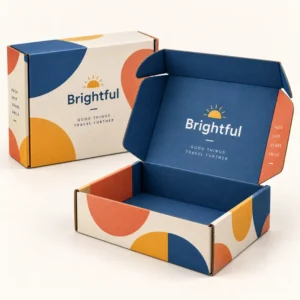
Mailing boxes custom printed for a brand are postal boxes made in chosen sizes, board grades and artwork, so every parcel that leaves the business looks and feels like part of the same range. They are used for regular online orders, subscription deliveries, promotional campaigns and gift sets, where a plain box would miss a chance to present the brand. By designing the box around real products, rather than forcing products into a stock size, a business can improve protection, packing speed and the moment of opening at the same time.
Why mailing boxes custom printed work for growing brands
Growth brings variety, and variety can make packaging messy if each new product gets a different box. A custom range solves this by giving the brand a consistent visual language across sizes, so a small parcel and a larger bundle still look related. Customers notice that consistency, especially when they order more than once, and it helps a brand feel established even when it is still small. Packing staff also benefit, because they learn one system of folds, inserts and labels, rather than a different method for every box that arrives.
Custom print also allows practical information to be built into the box itself. Care instructions, a returns note, a social handle or a simple thank you can be printed inside the lid, where the customer will see them at opening. This can reduce the need for separate leaflets, which saves paper and packing time, and it keeps the message with the product rather than loose in the box. Keep such text short, because a customer will read it quickly, and make sure it remains accurate if the product or process changes.
Designing a custom range that stays flexible
A flexible range usually starts with a core size for the most common order, plus one smaller and one larger size for variations. Each size should share the same artwork system, board family and closure style, so the range reads as one family. If a product later changes size, the range can be extended with a new size in the same style, rather than starting again. Record the specification for each size, including internal dimensions, board grade and print areas, so reorders and extensions match the originals.
Artwork systems for multiple sizes
An artwork system is a set of rules for logo position, colour, type and label area that can be applied to any size in the range. It prevents the logo from sitting in a different place on each box, and it makes proofing faster, because the designer is adapting a known layout rather than inventing a new one each time. Test the system on the smallest and largest boxes first, because a layout that works on a large box can become cramped on a small one, and text that is legible on a small box can look lost on a large one.
Board, print and finish choices for mailing boxes custom orders
Board choice should be tested against the heaviest and most fragile items in the range, not just the average order. A fine flute corrugated board is a popular choice for printed mailing boxes, because it prints well and protects light to medium items. Heavier board or double wall board may be needed for dense products, multi item orders or parcels that will be stacked heavily. Kraft board suits a natural, understated brand, while white board suits bright artwork and detailed photography.
Finish choices can then support the brand without complicating packing. Matt finishes feel soft and premium, gloss finishes deepen colour, and foil or embossing can highlight a logo for a special edition. Use special finishes with restraint across a range, so the everyday boxes remain practical and the special boxes still feel special. Also consider how the finish will handle tape, labels and handling marks, because a beautiful finish that scuffs easily in transit can undermine the impression it was meant to create.
Inserts, dividers and presentation
Inserts turn a custom box from a container into a presentation. A divider can separate products that might scratch each other, a shaped fitment can hold a fragile item in place, and a paper cushion can protect a delicate surface. For multi item orders, an insert also helps the customer understand what is included, because each item has a clear place. Design inserts at the same time as the box, test them with real products, and check that packing remains quick, because an insert that slows packing during a peak can create its own problems.
Keeping packing fast with custom boxes
Fast packing comes from a simple fold, a clear insert position and a label area that is easy to find. Photograph each step for the packing guide, and trial the guide with someone who has not packed the box before. If that person hesitates, the design or the guide needs simplifying. A custom box should make the job easier, not more impressive at the expense of speed.
Campaigns, subscriptions and seasonal versions
Custom mailing boxes are particularly useful for campaigns, because the box can carry a theme for a launch, a collaboration or a seasonal offer without changing the product. A limited edition colour or interior message can make a regular subscription feel fresh, and it can encourage customers to share the unboxing. Keep the structure and size the same for a campaign version where possible, so packing staff do not need to learn a new fold during a busy period, and so stock of the regular box can be used alongside the campaign box.
For subscriptions, consistency over time matters more than novelty in a single month. A recognisable box, a familiar opening sequence and a reliable insert layout help subscribers feel they are part of an ongoing experience. Small changes, such as a new interior message or a seasonal pattern, can refresh the experience without breaking that familiarity. Plan campaign artwork early, because proofing and production need to fit around the regular subscription schedule.
Sustainability in a custom range
Sustainability starts with right sizing, because a box that fits the product uses less board and less void fill. Paper based inserts and void fill, board that can be recycled, and a clear recycling note all help customers dispose of the box responsibly. Be precise about any sustainability claim, and base it on the exact board and finish supplied, not on a general assumption about cardboard. A simple, honest note will be trusted more than a broad claim that does not match the materials in hand.
Ordering mailing boxes custom on a quote basis
Custom mailing boxes are supplied on a quote basis, because size, board, print, finish, inserts and quantity all shape the specification. Share product dimensions, order patterns, artwork ideas and any insert needs, and the team can recommend a range that balances presentation and practicality. Standard lead times after final artwork approval are 10 to 14 working days, corrugated options are 12 to 15 working days, and rigid or specialist options are 13 to 16 working days. These are production times after approval, not a guaranteed delivery date. You can request a quote for mailing boxes custom, read the delivery information page, compare mailing box custom for a single custom design, or explore about us via Personalized Mailer Boxes.
Frequently asked questions about mailing boxes custom
What are mailing boxes custom orders used for
They are used for regular online orders, subscriptions, campaigns and gift sets where a consistent branded box matters. The custom size, print and insert are designed around the actual products being posted.
Can I have different sizes in one custom range
Yes, most brands use two or three sizes sharing the same artwork system, board family and closure style. This keeps the range recognisable while covering single items, pairs and bundles.
Do custom mailing boxes include inserts
Inserts can be included and are best designed with the box, from simple dividers to shaped fitments. Test the combined pack with real products to check protection, presentation and packing speed.
How long does production take after artwork approval
Standard lead times after final artwork approval are 10 to 14 working days, corrugated options are 12 to 15 working days, and rigid or specialist options are 13 to 16 working days. Allow time for proofing and posting.