
mailer box
Showing all 2 results
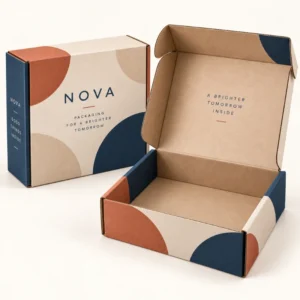
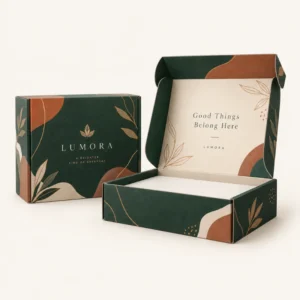
A mailer box is a corrugated cardboard box designed to be posted directly to a customer without an outer shipping carton. It usually folds from a single sheet, locks with tuck flaps or a self sealing strip, and opens with a clean front edge, which makes it both practical for packing and pleasant to open. Mailer boxes are widely used for ecommerce orders, subscription kits, gifts and small business parcels, because they combine protection, presentation and efficient packing in one box.
What a mailer box is and how it works
The defining feature of a mailer box is its self locking structure. Unlike a standard shipping carton, which needs tape on top and bottom, a mailer uses interlocking flaps and dust flaps to close securely. That design gives a neat appearance, speeds packing, and avoids tape marks on the outside. Many mailers also include a tear strip, so a customer can open the box cleanly without scissors or a knife.
Mailer boxes are made from corrugated board, which has a fluted inner layer between two flat liners. That fluted layer gives cushioning and strength while keeping the box light. The board grade and flute type affect print quality, crush resistance and weight, so they should be chosen for the product, not by habit. A light product in a small mailer needs a different specification from a heavy, fragile product in a large mailer.
Mailer box structure explained
Most mailers use a roll end tuck front style. The base folds and locks, the side walls fold up, and the front flap tucks into place. Dust flaps at the sides keep the corners neat and stop small items slipping out. A crash lock base, where the base locks automatically when the box is opened out, adds strength for heavier orders and speeds assembly. Understanding that structure helps when designing artwork, because print must align with panels, folds and the opening edge.
Parts of a mailer box to know
The outer lid is the first panel a customer sees and usually carries the main branding. The inner lid is revealed on opening and can carry a message or pattern. The base holds the product and any insert. Side walls give height and protect edges. Dust flaps keep corners closed. Knowing those parts makes it easier to brief a printer, check a proof and explain a packing layout to staff.
Mailer boxes compared with shipping cartons
A shipping carton is built mainly for transit, stacking and bulk handling. It is usually taped, plain and sized for efficiency rather than presentation. A mailer box is built for direct delivery to a customer, so presentation, easy opening and branding matter as well as protection. Neither is always better. A heavy, bulky order may suit a shipping carton, while a curated order, a gift or a subscription kit usually suits a mailer.
When a mailer box is the better choice
Choose a mailer when the parcel will be opened by the end customer, when branding matters, when packing speed matters, or when the order is a single item or a small set. Choose a shipping carton when the priority is bulk transit, heavy stacking or very large items that exceed sensible mailer sizes. Some businesses use both, with mailers for customer orders and cartons for stock movements.
Sizes, materials and inserts for a mailer box
Mailer box sizes range from small boxes for jewellery, cosmetics and single candles to large boxes for clothing, hampers and multi item sets. The right size is the smallest box that fits the product plus its insert and any tissue or card, with a small margin for packing. An oversized box wastes material, increases parcel volume and allows products to move, while a tight box can damage edges and make packing slow.
Board choice follows product weight and fragility. E flute board gives a smooth print surface and suits lighter mailers. B flute board gives more cushioning and suits heavier or more fragile items. White board gives bright print, kraft board gives a natural look, and laminated board gives sharp print for detailed artwork. Recycled board options are available, and material choice should be described plainly rather than overstated.
Inserts, dividers and packing layout
Inserts turn a good mailer into a reliable one. A shaped card insert holds a product centred and stops it moving. Dividers keep multiple items apart, so glass, ceramics and bottles do not touch. A base pad protects heavy items. Tissue adds a neat finish and a layer of protection for delicate surfaces. The best insert is usually the simplest one that stops movement, because complex inserts can slow packing and confuse customers on opening.
Packing a mailer box well
Pack in a consistent order: insert first, product second, card or note third, tissue last if used. Check that the lid closes without force and that the box sits square. If a product moves when the closed box is gently shaken, the insert or size needs adjustment. A short packing guide with a photo of a correctly packed box helps new staff pack consistently.
Printing, branding and ordering a mailer box
Print transforms a functional mailer into a branded parcel. Outside print builds recognition on arrival, while inside print creates a reveal on opening. Full colour print suits photography and illustration, while one or two colour print suits bold, minimal designs. Matte lamination resists scuffs, foil highlights a logo, and spot UV lifts a chosen detail. Keep artwork clear around folds and leave room for a shipping label, so branding is not covered in transit.
Ordering starts with a brief: product sizes, typical order contents, brand colours, print areas, finish preferences and packing volume. A proof should be checked for panel alignment, text size and colour, then tested with real products. After final artwork approval, standard lead times are 10 to 14 working days, corrugated 12 to 15 working days, and rigid or specialist boxes 13 to 16 working days. These are typical lead times, not a guaranteed delivery date.
To specify a mailer for your products, use the request a quote page. Related collections include the luxury mailer boxes collection, the luxury mailer box design collection, the mail box custom collection and the shop page.
Frequently asked questions
What is a mailer box?
A mailer box is a corrugated box designed to be posted directly to a customer without an outer carton. It locks with tuck flaps or a sealing strip, opens neatly, and can be printed inside and outside for branding.
Do mailer boxes need tape?
Most mailers lock without tape, using tuck flaps or a self sealing strip. Tape may be added for very heavy parcels, but it is not usually required for standard ecommerce orders.
What size mailer box do I need?
Choose the smallest box that fits your packed product, insert and any tissue or card, with a small margin for packing. Measure the product in millimetres, including lids and wrapping, and test the fit with a sample.
Can mailer boxes be printed inside and outside?
Yes, inside and outside print are both common. Outside print builds recognition, while inside print creates a reveal and can carry a message, pattern or care advice.
Are mailer boxes recyclable?
Corrugated mailer boxes and card inserts are widely recyclable when they use single material board and card. Avoid mixed material padding where a card insert works, and describe material facts plainly.