
mailer box stickers
Showing the single result
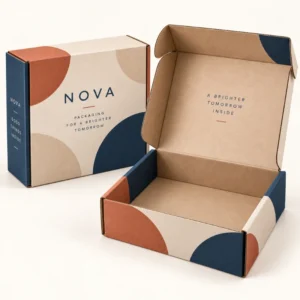
Mailer box stickers are printed adhesive labels used to seal, brand or personalise a postal box, and they offer one of the simplest ways to lift plain packaging. A seal sticker can close a flap, a brand sticker can carry a logo, and a message sticker can thank the customer or give a care note. Used well, stickers add personality without the commitment of a fully printed box.
Mailer box stickers explained
Stickers sit between plain packaging and fully printed packaging. They let a business test a design, run a seasonal message or add branding to a standard box, often at a lower quantity than printed boxes require. They also work alongside printed boxes, where a sticker seal can add a finishing detail that a printed design alone cannot give. The key is to choose the right sticker for the job, because a sticker meant for branding may not seal a flap, and a sticker meant for sealing may not carry fine print well.
Most mailer box stickers are printed on paper, vinyl or a clear film. Paper stickers give a natural, matte feel and suit kraft boxes and artisan brands. Vinyl stickers resist moisture and handling better, which suits parcels that may face rain or rough sorting. Clear film stickers give a clean look on coloured boxes, because the box colour shows through around the design. The surface of the box matters too, because adhesive grips differently on uncoated kraft, coated white board and laminated surfaces.
Seal stickers that close the box
A seal sticker bridges the flap and the body of the box, holding the closure shut and showing whether the box has been opened. Round seals are common, because they fit neatly across a flap edge and are easy to apply by hand. Rectangular seals suit wider flaps or a design that needs more text. A seal should be strong enough to stay in place in transit, yet easy enough for the customer to peel without tearing the box.
Choosing seal size and adhesive strength
Seal size should suit the flap width and the weight of the contents. A small seal may lift on a heavy parcel, while a very large seal can dominate the box and feel wasteful. Test the seal on the actual box board, because adhesive that grips kraft well may behave differently on a laminated surface. If the parcel will be stored in a cold warehouse or posted in wet weather, ask about an adhesive and material that suit those conditions.
Brand stickers and message stickers
Brand stickers carry a logo, a short slogan or a simple illustration, and they can be placed on the top, side or inside lid of a box. Message stickers carry a thank you note, a handling note, a social media prompt or a short care instruction. Message stickers work best when they say one thing clearly. A sticker crowded with text will be ignored, while a single clear message will be read and remembered.
Thank you stickers and the unboxing moment
Thank you stickers are often placed where the customer sees them on opening, such as on tissue paper, on an inner flap or on a card inside the box. A warm, short message feels personal when it is paired with neat packing. Avoid overusing thank you stickers on every surface, because repetition dilutes the effect. One well placed sticker usually has more impact than several competing messages.
Materials, finishes and shapes
Paper stickers are easy to write on, which suits handwritten notes or batch codes, but they can mark if they get wet. Vinyl stickers resist water and scuffing, which suits parcels sent over longer distances or stored in variable conditions. Kraft stickers give a natural look that matches kraft boxes, while white stickers give strong contrast for colourful designs. Clear stickers suit a minimal look, but fine white text on clear film can be hard to read, so test the design on the actual box colour.
Finishes change both appearance and durability. A matte finish gives a soft, understated look and suits paper stickers. A gloss finish gives stronger colour and suits bold designs. Foil can highlight a logo or a single word, but it is best used sparingly, because a large foil area can look busy on a small sticker. Die cut shapes let a sticker follow the outline of a logo or illustration, which can look more considered than a standard circle or rectangle.
Shapes and sizes that suit mailer boxes
Common sticker sizes for mailer boxes range from small seals of around 40 mm across to larger brand stickers of around 80 mm or more. Small stickers suit seals and discreet branding. Larger stickers suit a logo that needs to be read at a glance or a message that needs space. Always test the sticker at real size on the box, because a design that looks balanced on screen can feel cramped or oversized once printed and applied.
Die cut stickers for logos and illustrations
Die cut stickers are cut to the shape of the artwork, rather than to a standard circle or rectangle. That shape can make a logo stand out on a plain box, because the box colour forms the background around the design. Die cut stickers need clean artwork with clear edges, because ragged artwork will show in the cut line. Keep fine details away from the edge, so the cut does not clip an important part of the design.
Placement, delivery labels and practical checks
Placement matters as much as design. Never place a sticker over a delivery label, a barcode or a carrier marking, because that can delay delivery or cause a parcel to be returned. Keep a clear area for the address label, and place brand or message stickers elsewhere on the box. If the box is small, prioritise the delivery label and use a smaller sticker or an inside placement for branding.
Apply stickers to a clean, dry surface, and press them firmly across the whole area, especially at the edges. A sticker applied over dust, moisture or a crease will lift more readily. For high volume packing, consider stickers supplied on rolls or sheets that suit your packing routine. Rolls suit fast, repeated application, while sheets suit hand packing where each sticker is placed with care.
Combining stickers with other packaging details
Stickers work well with tissue paper, a printed sleeve, a card insert or a printed box, provided each element has a clear role. Use the sticker for the seal or for a single message, and let the box or sleeve carry the main brand design. When several elements compete for attention, the parcel can feel cluttered. When each element has one job, the parcel feels considered and professional.
Stickers and recycling
Paper stickers are usually easier to recycle with paper and card than vinyl stickers, although the adhesive and finish also matter. If recycling is important to your brand, ask about paper stickers with a compatible adhesive, and avoid plastic lamination where possible. Tell customers how to recycle the parcel only if you are confident about the guidance for the exact materials used, rather than making a general claim that may not hold for every finish.
To discuss sticker designs and box combinations, use the get a quote page, browse the shop page, or explore the mailer boxes collection and the mailer box sleeves collection.
Frequently asked questions
Can a sticker seal replace tape on a mailer box?
A sticker seal can hold a tuck flap shut on light to medium parcels, but heavier parcels may still need tape for security. Test the seal with the actual product and box before relying on it alone.
Will stickers stick to kraft boxes?
Yes, most stickers stick well to kraft board, although the adhesive and material should be matched to the surface. Test on the exact box board you plan to use, especially if the board is coated or laminated.
Can I put a sticker over the delivery label?
No. Keep delivery labels, barcodes and carrier markings clear at all times. Place brand and message stickers elsewhere on the box, or inside the lid.
Are paper stickers better than vinyl stickers?
Paper stickers suit a natural look and are usually simpler to recycle, while vinyl stickers resist moisture and handling better. The better choice depends on the box surface, the journey and your sustainability priorities.