
mailer box sleeves
Showing the single result
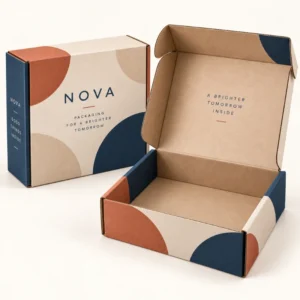
Mailer box sleeves are printed paper wraps that slide around a closed box, giving a plain or standard box a branded outer layer without printing the box itself. They suit seasonal campaigns, limited editions, gift sets and brands that want to refresh their packaging quickly. Because the sleeve is separate from the box, you can change the artwork, message or colour scheme while keeping the same core box in stock.
Mailer box sleeves explained
A sleeve wraps around the outside of a box and stays in place by friction and fit, sometimes with a small seal or sticker at the join. A full sleeve covers most of the box faces, while a narrower sleeve, often called a belly band, covers only a strip across the middle. Both forms turn the box into a presentation piece, but they serve different purposes. A full sleeve gives space for a complete design. A belly band gives a focused message and leaves much of the box visible.
Sleeves are printed on paper or card that is sturdy enough to hold its shape, yet flexible enough to slide on and off without tearing. Heavier card gives a more premium feel and holds creases crisply. Lighter paper suits short runs and simple messages. The right weight depends on the box size, the sleeve width and how the parcel will be handled, because a sleeve that is too light can slip or crease, while a sleeve that is too stiff can be hard to fit.
Belly bands for a focused message
A belly band is a narrow printed strip that wraps around the centre of a closed box. It works well for a logo, a short seasonal greeting, a product name or a simple pattern. Because it uses less material than a full sleeve, it can be a practical choice for short campaigns and for sets where several items are bundled together under one band.
Sizing a belly band so it stays in place
Measure the girth of the closed box, meaning the distance around the box in the direction the band will travel. Add a small overlap for the join, and choose a band height that suits the box face. A band that is roughly one third of the face height usually looks balanced, leaving box visible above and below. Test the band on the actual box, because a band that fits loosely will slide, and a band that fits tightly can crease at the corners.
Full sleeves for a complete design
A full sleeve covers the main faces of the box and gives room for a larger design, product information, care notes or a story about the brand. It can transform a plain kraft box into a gift ready parcel, which suits gift sets, subscription launches and special editions. Full sleeves also help when the same box is used for several products, because the sleeve can carry the details that differ between them.
Open ends and easy removal
Most sleeves are open at two ends, so the customer slides the sleeve off to reveal the box beneath. That reveal can be part of the unboxing experience, especially when the box underneath carries a contrasting colour or a simple logo. Keep the sleeve fit snug but not tight, so removal feels smooth rather than forced. A thumb notch or a small pull tab can help on larger sleeves, but it should be positioned where it does not weaken the printed design.
Designing sleeves that work in the post
A sleeve must survive the same journey as the box, so design for handling as well as appearance. Avoid placing essential information only on the sleeve, because a sleeve can shift or, in rare cases, come off in transit. Keep the delivery label on the box itself, not on the sleeve, so the parcel remains deliverable even if the sleeve moves. Place branding and messages on the sleeve, and keep delivery details on the box.
Colour and finish choices affect how a sleeve looks after handling. Matte finishes give a calm, premium feel and hide light scuffs well. Gloss finishes give stronger colour contrast but can show marks more readily. Foil can highlight a logo or a short headline, but it works best as an accent rather than as a large area, because large foil areas can crease visibly at the folds.
Artwork layout for sleeves
Design a sleeve as a flat wrap, not as a single front panel. The design must work across the front, the spine, the back and the folds between them. Keep important text away from fold lines, where it can distort or crack. Check the design on a flat template first, then on a folded sample, because a layout that looks balanced flat can feel uneven once it wraps around a box.
Seasonal and limited edition sleeves
Seasonal sleeves are one of the strongest uses of this format. A core box can stay the same all year, while sleeves carry Christmas artwork, a spring collection, a product launch or a collaboration. That approach reduces waste from leftover seasonal boxes, because only the sleeve changes. Plan the sleeve quantity separately from the box quantity, and order sleeves in the run length that matches the campaign, not the full year.
Choosing between a sleeve and a printed box
A printed box suits a permanent brand design that will be used across many orders. A sleeve suits a temporary design, a test of new artwork or a product range that shares one box. Sleeves also suit small businesses that want branded packaging without committing to a large printed box run. The decision usually comes down to how long the design will be used, how many boxes it will cover and how often the artwork will change.
Cost and storage also matter. Sleeves ship flat and take little storage space, which helps small workspaces. Printed boxes also ship flat, but they carry the design permanently, so a design change means new boxes. If your brand artwork changes often, sleeves give flexibility. If your artwork is stable, a printed box may give a cleaner result and fewer packing steps.
Packing with sleeves
Slide the sleeve onto the closed box after packing, and check that it sits square across the faces. A sleeve that is twisted or off centre will look careless, even if the print quality is excellent. For gift sets, add tissue or a card inside the box first, then apply the sleeve last, so the sleeve remains the first branded layer the customer sees.
Sustainability and recycling notes
Paper sleeves can usually be recycled with paper and card, provided any foil, laminate or adhesive used is compatible with local recycling guidance. If sustainability is central to your brand, ask about uncoated paper, water based inks and a sleeve design that avoids plastic lamination. Keep the sleeve and box materials compatible where possible, so the customer can recycle the whole parcel without separating complex layers.
To discuss sleeve artwork and sizing, use the get a quote page, browse the shop page, or explore the mailer boxes collection and the mailer box printing collection.
Frequently asked questions
What is the difference between a sleeve and a belly band?
A belly band is a narrow strip around the centre of a box, while a full sleeve covers most of the box faces. Belly bands suit a short message or logo. Full sleeves suit a complete design or detailed product information.
Should the delivery label go on the sleeve or the box?
Put the delivery label on the box itself, not on the sleeve. That way the parcel remains deliverable even if the sleeve shifts or comes off during handling.
Can I change a sleeve design without changing my boxes?
Yes, that is a key benefit of sleeves. You can keep the same core box in stock and change only the sleeve artwork for seasonal campaigns, limited editions or new product launches.
Are paper sleeves recyclable?
Paper sleeves can usually be recycled with paper and card, depending on the finish and adhesive used. Uncoated paper with water based inks is usually the simplest option for recycling.