
large letter postage boxes
Showing the single result
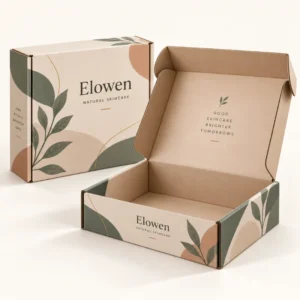
Large letter postage boxes are shallow postal cartons made for businesses that regularly post flat items, from documents and catalogues to slim accessories and folded garments. They hold a flat profile through handling and stacking, which helps large letter postage boxes stay within Royal Mail Large Letter limits of 353mm by 250mm by 25mm and 750g for standard posting. For high volume senders, choosing a reliable box style, in the right sizes, turns a daily packing task into a consistent routine with fewer reclassified parcels and fewer damaged items.
Why large letter postage boxes suit regular posting
Regular posting rewards consistency. When every parcel uses the same box style, staff learn one folding method, one sealing method and one label position, which reduces packing time and errors. A rigid large letter box also gives a predictable result, because its depth is fixed at manufacture rather than depending on how tightly a mailer is filled on a given day. That predictability matters when hundreds of parcels are packed each week, because even a small number of bulging parcels can create extra handling, customer queries and unexpected postage adjustments.
Large letter boxes also protect the presentation of flat items. Documents arrive without creases from a soft envelope, prints arrive without corner damage, and thin books arrive without warped covers. The flat outer face gives a clean area for a label and, where print is used, for branding. For businesses that sell on marketplaces or by mail order, that clean arrival is part of customer service, because the condition of the packaging is the first thing the customer sees before they open the order.
Styles used for large letter posting
Two styles dominate large letter posting. A cross style box folds around the contents from a flat cross shape and seals quickly, which suits fast packing lines where speed matters. A tuck style box has a lid that folds over and locks with tabs, which gives a neater opening experience and suits printed boxes where presentation is important. Both styles can be made from single wall corrugated board or sturdy paperboard, and both should close flat without forcing. The best style for a business depends on packing speed, the value of the contents, and whether the recipient is expected to reseal the box for a return.
Choosing a style for your packing line
Test both styles with your actual items and your actual packing staff, not only with sample products. Time the assembly, check how the sealed box feels in the hand, and look at how it stacks with other parcels. A style that is fast for one person may be awkward for another, and a style that looks neat empty may bow when it holds a heavier catalogue. Choose the style that gives a flat, firm parcel most consistently across your team, because consistency across staff is what protects postage classification over time.
Sizes for large letter postage boxes
Size choice starts with the items you post most often. A full size box close to the Large Letter limit suits A4 documents, large catalogues and flat garments, while a C5 size suits A5 documents, smaller books and compact accessories, and a C6 size suits A6 items, cards and small flat accessories. Stocking two or three sizes usually covers a business better than stocking one size for everything, because an oversized box for a small item wastes board and can allow movement inside, while an undersized box forces items to bend or bulge. Keep a record of which size is used for which product, so new staff do not need to guess.
Remember that the limits apply to the finished parcel, so internal box sizes must leave room for contents, any protective sleeve, tape and label without exceeding 25mm in depth. A box with a 20mm internal depth, for example, leaves a small margin for a thin sleeve and tape, while still giving enough room for the contents to lie flat. If an item plus its sleeve is already close to 25mm, it may be safer to move that product to a small parcel format rather than risk reclassification on every posting. That decision should be made once, at product setup, rather than at the packing bench for each order.
Materials and print quality
Most large letter postage boxes are made from corrugated board or paperboard, both of which are widely recyclable in the UK when clean and dry. Corrugated board gives good crush resistance for its weight, which helps when parcels are stacked. Paperboard gives a smoother surface for print, which suits branded boxes where colour and detail matter. White board gives a clean, premium look, while kraft board gives a natural look that suits artisan and eco conscious brands. The material should be chosen for the journey as well as the look, because a box that looks good but crushes easily will not protect documents or prints in a busy sorting system.
Print that survives posting
Print on a large letter box should be bold enough to read after handling, and placed where a label will not cover it. A logo on the main face, away from the label area, works well, as does a short message on the inside lid. Avoid small text that becomes unreadable if the box is scuffed, and avoid placing essential guidance over a fold where it can crack. Proofs should be checked on the actual board grade, because colours and sharpness can differ between white board and kraft board.
Packing large letter postage boxes at volume
Volume packing benefits from a clear bench layout. Keep boxes flat in size order, keep tape and labels within reach, and keep a simple size guide at the bench so staff can check depth quickly. Pack items flat, with the largest item at the bottom, and avoid adding thick free gifts or bulky inserts that change the parcel profile. Seal each box the same way, place the label flat on the largest face, and stack sealed parcels flat rather than on edge, so they do not bow before collection. A short daily check, weighing and measuring a sample of sealed parcels, can catch a packing drift before it affects many orders.
For businesses that post the same products repeatedly, a packing guide for each product is valuable. That guide can state the box size, the protective sleeve if any, the sealing method and the label position, with a photograph of a correctly packed parcel. New staff can follow the guide without asking, and experienced staff can spot a mistake quickly. Over time, that guide becomes part of quality control, alongside checks for damaged stock, incorrect addresses and missing items.
Returns and customer experience
A large letter box that opens cleanly and can be resealed is useful for returns, especially for documents, prints and accessories that a customer may need to send back. Include a returns label or clear returns guidance inside the lid, and remind the customer to keep the box and any sleeve until they are happy with the order. For high value flat items, a box that can be reused for a return also reduces the chance that the customer will repack the item in an unsuitable envelope. That protects the item on its way back and makes the return process feel straightforward rather than stressful.
What to include inside the box
Inside a large letter box, include only what the customer needs and what fits flat. A packing note, an invoice, care instructions or a returns card can all fit without changing the parcel profile, provided they are flat and placed neatly. Avoid thick catalogues or bulky samples unless they were planned as part of the parcel size, because an unplanned extra can push a large letter into the next category. Plan the full contents of each product parcel in advance, and test the sealed parcel with everything included.
To take the next step, you can shop all packaging, request a quote for bulk large letter boxes, read our delivery information, learn more on the about our company page, return to the Personalized Mailer Boxes homepage, or view a single large letter postage box style for comparison. You can also read Royal Mail guidance on Large Letter sizes before finalising a size.
Frequently asked questions
What sizes of large letter postage boxes are available?
Common sizes follow C4, C5 and C6 paper sizes, with full size boxes close to the Large Letter limit and smaller boxes for compact flat items. Choose the size that fits your product flat, with a small margin for a sleeve, tape and label.
How do I keep large letter postage boxes within the depth limit?
Pack items flat, avoid bulky extras, and measure the sealed parcel at its thickest point. If the parcel needs force to pass a size check, it is too thick and should be repacked or sent as a small parcel.
Are large letter postage boxes recyclable?
Clean, dry corrugated and paperboard boxes are widely recyclable in the UK through paper and board recycling. Remove any non paper inserts and flatten the box, following local guidance.
Can large letter postage boxes be printed?
Yes, large letter boxes can be printed with a logo, brand colours and guidance on the main face or inside lid. Keep the label area clear, and check proofs on the actual board grade.
What is the weight limit for large letter postage boxes?
For standard Large Letter posting, the finished parcel must weigh no more than 750g. Weigh the sealed parcel with its label attached, because that is the weight that will be assessed.