
influencer packaging
Showing the single result
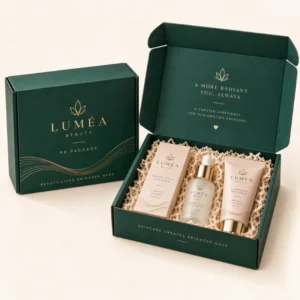
Influencer packaging is the branded packaging used when a product is sent to a creator, whether for a launch, a trial, a gift or an ambassador send. It covers the box, the insert, the tissue, the card and the print that together shape the opening moment. Good influencer packaging protects the product, presents the brand clearly and makes it easy for a creator to understand, try and share what they received.
What influencer packaging includes
At its simplest, influencer packaging is a printed box that fits the product well. At its fullest, it is a coordinated set: a mailer or rigid box, a fitted insert, tissue in a brand colour, a personal note, a product card and a closing detail such as a sticker seal or a belly band. Each element should have a purpose. The box protects and presents, the insert positions, the tissue softens the reveal, the note personalises, and the card informs. Elements without a purpose add bulk and cost without improving the experience.
Packaging choices should follow the product and the audience. A skincare brand may need a clean, calm box with clear usage steps. A food brand may need protection for jars, allergen information and a serving suggestion. A fashion brand may need tissue wrapping, a size card and a returns note. A homeware brand may need a strong board and a fitted insert for fragile items. In each case, the packaging should feel like an extension of the product, not a generic container with a logo added late.
Box styles used for creator sends
Mailer boxes are the workhorse of influencer packaging. They are made from corrugated board, supplied flat, printed inside and out, and posted without an extra outer carton in many campaigns. Rigid boxes offer a firmer, more premium feel, with a lift off lid or magnetic close that suits high value products and keepsake sends. Folding gift boxes sit between those options, giving a rigid feel when assembled while storing flat before packing.
Other formats suit specific products. A tube can suit posters, prints or rolled apparel, while a drawer box can suit a set of miniatures. A pillow style pack can suit a single small item, such as a sample or a piece of jewellery, when a full box would feel excessive. Choose the smallest format that protects the product and presents it well, rather than the largest format available.
Materials and finishes in brief
Corrugated board is strong, lightweight and widely recyclable, which makes it a practical base for most creator sends. Rigid board, made from thick greyboard wrapped in printed paper, gives a premium weight and a clean edge. Kraft board gives a natural look and suits brands with an artisanal or environmentally conscious story. White board gives brighter print colour and suits bold photography and illustration. Finishes such as matt laminate, gloss laminate, foil and spot gloss can add tactility or highlight a logo, but they work best when used with restraint.
Inserts, tissue and cards
An insert is often the difference between a tidy reveal and a jumbled box. Board inserts with cut outs hold products in a fixed layout, which helps filming and protects items in transit. Pulp inserts suit fragile or irregular shapes and can be moulded to a product. Foam style inserts offer high protection for very delicate items, but a board alternative should be considered first for recyclability and for a consistent paper look.
Tissue paper adds a soft layer between the lid and the product, and it can hide a protective layer without looking untidy. A printed tissue in a brand colour or pattern adds a second brand moment, while plain tissue in a complementary colour keeps attention on the product. Product cards should be short, legible and useful, with the product name, key facts, usage steps and social handles in one place. A card that is too long will not be read, on camera or off camera.
Seals, bands and closing details
A sticker seal can close a mailer neatly and carry a short message or a logo. A belly band wrapped around a rigid box can carry a campaign name and create a second reveal when removed. A ribbon closure can suit a gift style box, but it should be easy to untie and should not tangle on camera. Closing details should be easy to open with one hand, as creators often film while opening. Test the closing detail on a sample before a full run, and check that it does not damage print when removed.
Designing influencer packaging that photographs well
Design for the camera as well as for the shelf. Bold colour, clear contrast and a simple layout photograph more reliably than fine detail and many competing messages. Leave space around the product so it stands out, and avoid placing important text where a hand, a lid or an insert will cover it during opening. Test the design on a phone camera in daylight and in indoor light, and view the footage at the size audiences will see it, not just at full resolution.
Consider the background of a creator’s home or studio. A box colour that clashes with common backgrounds can distract from the product, while a neutral or brand consistent colour lets the product lead. If the product itself is brightly coloured, a calm box can frame it well. If the product is neutral, a bolder box can add energy. That relationship between box and product, rather than either alone, determines how the send looks on screen.
Colour, typography and logo placement
Logo placement should be clear but not dominant. A logo centred on the lid, placed on a corner, or repeated as a subtle pattern can each work, depending on the brand style. Typography should be legible at the size used on screen, with product names and key messages larger than supporting text. Avoid script type for essential information, as it can blur on video. Keep the number of type styles low, so the box looks coherent rather than crowded.
Colour proofing is essential, because screen colour and print colour differ. Approve a printed proof, view it in different lighting, and compare it with existing brand packaging. If the influencer packaging should sit beside retail packaging in content, the colours should relate clearly, even if the box design is different. Inconsistent colour across a campaign can make a brand look less established than it is.
Artwork preparation for a smooth production run
Supply artwork at the correct size for the chosen box, with bleed where requested, and with text converted to outlines or supplied in an editable format as the printer requires. Check spelling, social handles, web addresses and product names before approval, and confirm that any claim on the box can be supported. A printed error is difficult to correct after production, so a second pair of eyes on artwork is a simple safeguard. Keep a copy of approved artwork and the box specification for reorders.
Choosing influencer packaging for your brand
Start with the product, the send list and the budget in terms of value, not just appearance. A small list of high value creators may justify a rigid box, while a wide seeding list may suit a printed mailer with a strong interior. A seasonal campaign may suit a limited design that can be reused with a new card, while an ongoing programme may suit a stable design that builds recognition over time. Match the packaging investment to the campaign role, and avoid spending on finishes that do not improve protection, clarity or the opening moment.
Sustainability should be part of that choice. Recyclable board, paper tissue and paper based inserts are practical options for most sends, and a reusable box can extend the life of the packaging beyond filming. State material facts simply on a card if relevant, without making broad claims that cannot be supported. Creators and audiences respond to honest, specific information more than to vague environmental language.
Ordering, proofing and packing checklist
Order in good time, working backwards from the date creators should receive their boxes. Allow time for artwork approval, proofing, production, packing and postal transit. Standard boxes are typically produced in 10 to 14 working days after final artwork approval, corrugated boxes in 12 to 15 working days and rigid or specialist boxes in 13 to 16 working days. These are typical production times, not a promised delivery date.
Proof a physical sample, pack it exactly as creators will receive it, film the opening and check print, fit, closure and insert stability. Pack in batches by tier or product set, photograph one finished box as the reference, and check a random sample from each batch before dispatch. Keep spares for replacements, and record each send so the team can answer questions about contents without opening a creator parcel.
Browse structures and finishes in the shop all packaging range, and request a tailored specification through the get a quote page. Related formats include influencer box, influencer boxes and influencer mailers. Learn more about the company on the about us page, and check timing on the delivery information page.
Common mistakes to avoid
Avoid a box that is too large for the product, an insert that hides the hero item, a card with too much text, and a closing detail that is hard to open on camera. Avoid sending a product without usage guidance, a shade or size without a clear label, and a note with a wrong name. Each of those mistakes is small on its own, but together they can turn a thoughtful send into a confusing one. A sample check before dispatch catches most of them.
Shipping influencer packaging
Shipping is the moment that decides whether influencer packaging succeeds, since the creator experience starts with the parcel at the door. Place the presentation box, its inserts and any gifts inside an outer shipping carton with cushioning that holds everything still, seal the outer carton cleanly, and label it so the creator name and address are clear. A box that arrives pristine gives the creator a clean unboxing to film, while a box that arrives crushed makes the retail quality of the presentation irrelevant, because the first thing on camera is damage.
Frequently Asked Questions
What is influencer packaging?
Influencer packaging is branded packaging sent to creators for launches, trials, gifts and ambassador sends. It includes the box, insert, tissue, note and product card that together create the opening experience.
Which box style is best for influencer packaging?
A printed mailer suits most postal sends, a rigid box suits premium and keepsake sends, and a folding gift box suits a premium feel with flat storage. Choose based on product weight, fragility, list size and campaign tone.
What materials are commonly used?
Corrugated board, rigid board, kraft board and white board are commonly used, with board inserts, tissue paper and printed cards completing the set. Finishes such as matt laminate and foil can add a premium detail when used sparingly.
How long does production usually take?
Standard boxes are typically produced in 10 to 14 working days after final artwork approval, corrugated boxes in 12 to 15 working days and rigid or specialist boxes in 13 to 16 working days. These are typical production times, not a promised delivery date.
Can I get a quote for influencer packaging?
Yes. Share the product sizes, box style, quantity and artwork, and request a quote for packaging matched to your brand and creator list.