
ecommerce packaging manufacturers
Showing the single result
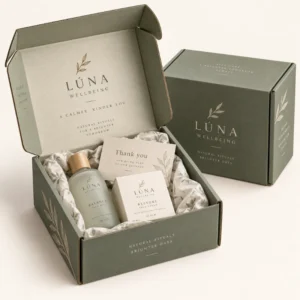
ecommerce packaging manufacturers design and produce boxes that carry online orders safely from a packing bench to a customer doorstep, printed with the brand that sold the goods inside. A good manufacturer does more than cut board to size, because the maker also advises on strength, closure, print and fit, and checks artwork before production begins. For UK online sellers, choosing the right manufacturer can reduce damage, improve the opening experience and keep repeat orders looking consistent.
What ecommerce packaging manufacturers actually do
A manufacturer turns a product brief into a finished box. That brief usually covers product size and weight, fragility, order combinations, branding, quantity and delivery expectations. The maker then recommends a structure, such as a self locking mailer, a tuck top mailer or a regular slotted shipping box, and a board grade that suits the journey through sorting and courier handling. Print is planned at the same stage, so logos, colours, product information and any inside lid message sit in the right place and leave room for a delivery label.
Production quality depends on details that are easy to overlook. Board thickness, crease accuracy, glue or tape lines, print registration and colour consistency all affect how a box folds, closes and looks. A maker who checks samples and proofs before a full run can catch problems early, such as artwork that sits too close to a fold or text that becomes hard to read at the printed size. That checking stage protects both the brand and the customer, because a box that fails in transit creates returns, replacements and disappointed buyers.
Choosing a manufacturer for your order profile
Start with what you ship most often. A seller of light clothing has different needs from a seller of candles, ceramics, cosmetics or electronics. Light, soft goods may suit a slim mailer with a clean closure, while heavier or fragile goods need stronger corrugated board and possibly an insert or divider. If your catalogue is varied, ask how the manufacturer would handle two or three core sizes rather than forcing every order into a single box. A close fit reduces filler, speeds up packing and usually presents the order better.
Questions to ask before you commit
Ask about board options, print methods, finishes, proofing and lead times, and ask what happens if a proof needs revision. Ask how colour is matched across repeat orders, and whether inside print is available as well as outside print. Ask how boxes are supplied, flat packed or pre assembled, because that choice affects storage space and packing speed. Clear answers at this stage are a useful sign of a maker who understands online selling, not just box production.
Materials and structures used by manufacturers
Corrugated board is the workhorse for online dispatch, because the fluted layer gives cushioning and stacking strength while keeping weight relatively low. Kraft board gives a natural, uncoated look that suits many independent brands, while white board gives a bright surface for detailed artwork and photography. Rigid board suits premium presentation and gift style orders, where the box itself is part of the product experience. Folding card suits lighter retail style packs that sit inside a stronger outer box for delivery.
Flute choice also matters. A finer flute gives a smoother print surface and a neater finish for mailers, while a coarser flute gives more cushioning for heavier shipping boxes. Single wall board suits most single orders, while double wall board suits heavier, fragile or stacked loads. The right choice balances protection, parcel size, storage and the impression the customer gets on opening. Over specifying board for every order adds bulk, while under specifying board risks damage.
Print, finishes and the opening experience
Print turns a protective box into a brand asset. A simple logo and brand colour can be enough for everyday dispatch, while full colour artwork, inside print and a short message can create a memorable opening for subscription orders, gifts and launches. Finishes such as matte or gloss lamination, foil and embossing can lift a premium range, but they should suit the product and the audience rather than being added for effect alone. Always leave a clear area for the delivery label, so branding never hides essential delivery information.
From artwork approval to delivery with ecommerce packaging manufacturers
Most custom made packaging follows a clear sequence. You share product details, sizes and artwork ideas, the manufacturer prepares a design and proof, you approve the proof or request changes, and production begins after final artwork approval. Keeping artwork in a print ready format, with fonts and images checked, reduces delays. If you are launching a new product, allow time for a physical sample where that option is available, because a sample shows fold, fit and colour in a way that a screen proof cannot.
Lead times after final artwork approval give a useful planning guide. Standard boxes usually take 10 to 14 working days, corrugated boxes usually take 12 to 15 working days, and rigid or specialist boxes usually take 13 to 16 working days. These are production lead times, not a guaranteed delivery date, so allow extra time for proofing, artwork revisions and busy trading periods. Holding a small buffer stock of your most used size can prevent a stockout during a sale or a seasonal peak.
Scaling up without losing consistency
Consistency matters as order volume grows. Customers notice if a later batch looks paler, folds differently or closes less securely. A manufacturer who keeps your artwork, board specification and print settings on file makes repeat orders simpler and more reliable. If you plan to grow, discuss future quantities early, so the maker can advise on the most efficient structure and print method for larger runs without changing the look your customers recognise.
Storage, packing speed and returns
Flat packed mailers save warehouse space and arrive ready to fold, which helps small teams pack quickly. Self locking designs reduce tape use and assembly time, while a resealable closure can help customers return an item without needing a new box. If returns are common in your sector, consider a design that opens cleanly, reseals securely and carries a short returns instruction inside the lid. That small detail can reduce customer service queries and keep returned stock in saleable condition.
Ordering from Personalized Mailer Boxes
To start a project, share your best selling products, typical order combinations and the impression you want the parcel to give. You can explore related options through ecommerce packaging solutions and ecommerce packaging supplies, browse the range in the shop, and read delivery details on the delivery information page. When you are ready, send your sizes and artwork ideas through the get a quote page.
Frequently asked questions about ecommerce packaging manufacturers
What does an ecommerce packaging manufacturer do?
A manufacturer designs and produces boxes for online orders, advising on board, structure, print and closure, checking artwork and producing the finished boxes for dispatch.
Which board is best for online orders?
Corrugated board suits most online orders because it is strong, relatively light and prints well. Kraft board, white board and rigid board may suit particular brands, products or premium deliveries.
Should I choose a mailer box or a shipping box?
Mailer boxes suit single orders and presentation led deliveries, while shipping boxes suit heavier, bulkier or multi item orders. Many sellers use both, with a mailer for the customer facing parcel and a shipping box for bulk or heavy loads.
How long does production take after artwork approval?
Standard boxes usually take 10 to 14 working days after final artwork approval, corrugated boxes 12 to 15 working days, and rigid or specialist boxes 13 to 16 working days. Allow extra time for proofing and peak periods.
Can a manufacturer print inside and outside the box?
Yes. Many brands print branding on the outside and a short message, care guidance or returns note on the inside, where it is seen when the box is opened.