
eco friendly postage boxes
Showing the single result
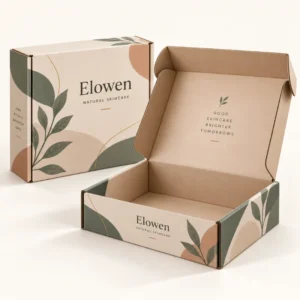
eco friendly postage boxes are postal boxes made from recyclable corrugated board, chosen so an order can travel through the postal system and then be recycled with paper and card. They suit books, cosmetics, small gifts, folded clothing and other everyday items that need more protection than an envelope can give. When the packed size and weight are checked before posting, they offer a practical balance of protection, presentation and responsible disposal.
How eco friendly postage boxes work in the post
A postage box has a different job from a gift box. It must survive sorting machinery, stacking in cages and vans, and handling at several stages, often without the sender present to explain what is inside. Corrugated board helps because the fluted layer cushions light knocks while keeping the parcel light. A well scored box folds cleanly, a secure flap stays closed under tape, and strong corners resist crushing when other parcels are stacked on top. Those practical qualities matter as much as the material choice, because a damaged parcel usually leads to a replacement parcel and extra waste.
The packed parcel, not the empty box, decides the postal format. Measure length, width and depth after packing, weigh the finished parcel, and compare both against the current postal limits before printing labels. A box that looks small when empty can move into a larger format once padding and a label are added, especially if the lid bulges. Keeping the box snug, sealing it neatly and placing the label flat on a clean face all help scanning and handling go smoothly.
Choosing board strength for postal handling
Single wall corrugated board suits light and medium items such as books, stationery and small gift sets. Double wall board gives more protection for heavier goods, for items that could be damaged by pressure, or for parcels that will travel a long distance. The choice is not only about weight. A fragile item in a light box with good void fill can travel well, while a heavy item in a strong box with empty space can still move and cause damage. Pack the item centrally, fill gaps with paper void fill, and test the packed parcel by turning it gently to check for movement.
Sealing a postal box for a safe journey
Seal the centre seam and the ends with good quality paper tape, and tape the base as well as the top for heavier parcels. Paper tape keeps the parcel in one material family and gives a clear tamper evident seal. Avoid overfilling the box, because an overfilled box is more likely to split at the corners, and avoid reusing a damaged box, because a creased corner or torn flap will not regain its original strength. A parcel that feels solid in the hand is far more likely to arrive looking as it did when it left.
Keeping the parcel plastic free where possible
Paper tissue, shredded paper and corrugated fitments can protect most everyday items without plastic filler. A card divider can separate two items in one box, and a paper wrap can protect a surface that might scuff. Liquids and very fragile goods are the main exceptions, where a sealed inner bag or a shaped protective insert may still be the safest choice. The aim is to reduce plastic where a paper alternative performs just as well, not to remove protection and risk damage.
Sizes and formats for eco friendly postage boxes
Postage boxes come in a wide range of sizes, from slim large letter formats for flat items to deeper small parcel formats for gift sets and multi item orders. Flat items such as prints, certificates and slim books often suit a shallow mailer style box, while bulkier items need depth as well as length and width. Always check internal size, not only external size, because board thickness and inserts reduce the usable space inside. A short sample test with the real product will show whether the internal depth is enough for the lid to close without pressure.
For regular senders, a small set of standard sizes can simplify packing and storage. Packing teams learn exactly how each product fits, labels sit in a consistent place, and stock control becomes easier. For occasional senders, one versatile size that fits the most common order, with paper void fill for smaller items, may be more practical than holding many sizes. Either way, the packed dimensions should be recorded for each product, so the right box is chosen without guesswork on a busy packing day.
What to check before you post
Check the item, the box and the label as three separate steps. First, wrap fragile goods separately and place heavier items at the bottom. Second, fill gaps, seal the box and shake it gently to check for movement. Third, place the label flat on a clean face, away from folds and printed patterning, and weigh and measure the finished parcel. That short routine catches most common problems, from a label placed across a fold to a parcel that has grown beyond the intended format.
A simple packing routine for repeat orders
Keep packing materials close to the packing bench, keep a tape dispenser and a set of scales nearby, and keep a sample packed parcel for each main product as a visual reference. New packers can compare their work with the sample, which keeps quality consistent and reduces the chance of an oversized or underfilled parcel leaving the premises. Over time, that consistency also reduces returns and replacements, which is good for customers and for waste reduction.
Ordering eco friendly postage boxes on a quote basis
Printed postage boxes let a business keep size, board and branding consistent across orders, so customers recognise a parcel before they open it. Before ordering, confirm the internal size you need, the board grade, the print colours and the quantity. For corrugated boxes, allow 12 to 15 working days after final artwork approval, and treat that period as production time rather than a guaranteed delivery date. Plan artwork approval into your schedule, and allow time for delivery to your packing location.
For a mailer style format, see the eco friendly mailer boxes collection, and for a single item eco format, see the eco mailer box collection. You can browse the shop, learn more on the about Personalized Mailer Boxes page, and request a quote when your sizes are ready. For current limits, check the Royal Mail size and weight guide, and for packaging producer duties, see the GOV.UK guidance on extended producer responsibility for packaging. Delivery planning is covered on the delivery information page.
Frequently asked questions
Are eco friendly postage boxes recyclable after delivery?
Yes, when they are made from unlaminated corrugated board and packed with paper materials, the customer can flatten the box and place it in paper and card recycling where that collection is available. Remove any non paper items first and sort them separately.
What size postage box should I choose?
Choose the smallest box that fits the wrapped item plus a thin layer of protection and still closes cleanly. Measure the wrapped item, check internal size, and test a packed sample before ordering a large quantity.
Can I print my logo on a postage box?
Yes, printed board is available on a quote basis. Keep the label area clear, keep barcodes free of patterning, and share artwork early so print areas can be checked before production.
How do I keep a postage box strong in transit?
Use the right board grade for the weight, fill gaps with paper void fill, seal top and base for heavier parcels, and avoid overfilling or reusing a damaged box. A solid, well sealed parcel handles stacking and sorting far better than a soft or bulging one.