
eco friendly mailer boxes
Showing the single result
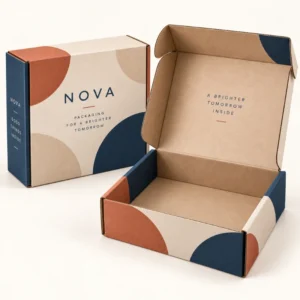
eco friendly mailer boxes are corrugated mailer boxes chosen for a lower environmental impact, usually through recyclable board, a simple single material construction and plastic free packing materials. They protect an order through sorting and delivery while giving the customer a parcel that can be flattened and placed in paper and card recycling after use. For a brand, that combination matters because the box is both a shipping container and a visible statement about how the business thinks about waste.
What makes eco friendly mailer boxes a greener choice
A mailer box earns its greener reputation from its materials and from how easy it is to dispose of responsibly, not from a single word printed on the outside. Unlaminated kraft board and corrugated board made with recycled content are common starting points, because they can be recycled through widely available paper and card collections. Keeping the construction simple also helps. A box that uses one main material, with paper tape and paper void fill rather than plastic film, tape and filler, is easier for a customer to sort at home and easier for a recycling system to process.
Print and finish choices matter in the same way. A clean printed design on uncoated or lightly finished board can look confident without adding a plastic laminate that complicates recycling. If a brand wants a premium finish, it is worth asking at the quotation stage how that finish affects recyclability, so the final specification matches the claim made on the pack. Honest wording on the box helps too. A short note that tells the customer to flatten the box and recycle it with paper and card is more useful than a vague green claim, and it avoids overstating what the packaging can do.
Board, flute and strength for everyday orders
Most eco friendly mailer boxes use corrugated board, where a fluted layer sits between flat liners to give strength without much weight. E flute gives a slim, neat profile that suits cosmetics, stationery, small gifts and folded apparel, while B flute gives a little more cushioning for heavier or more fragile goods. The right flute depends on the product weight, the number of items in the box and how far the parcel will travel. A box that is too light for its contents will crush at the corners, while a box that is far heavier than needed wastes material and storage space.
Matching board weight to the product inside
Start with the packed weight and the fragility of the product, then test a sample with the real items inside. Place the heaviest item at the bottom, fill any gaps with paper void fill so nothing slides, and close the box without forcing the lid. A sample test often shows whether a lighter board will do the job or whether a stronger grade is needed for repeat posting. That test also protects the brand, because a damaged delivery creates a replacement parcel and extra waste, which cancels out much of the benefit of choosing a greener box.
Plastic free packing inside the mailer
The inside of the box deserves the same attention as the board. Paper tissue, shredded paper and corrugated inserts can protect items without plastic, and a card insert with a cut out can hold a jar, bottle or gift set in the centre of the box. Paper tape gives a secure seal and keeps the whole parcel in one material family, which makes recycling simpler for the customer. Avoid mixing materials where a paper alternative works just as well, and keep any plastic to items that genuinely need it, such as a sealed inner bag for a liquid product.
Choosing eco friendly mailer boxes for your brand
Size is the first practical decision. Measure the product after it has been wrapped, add a small allowance for protection, and choose the smallest box that still closes cleanly. An oversized box needs more void fill, takes more space in a delivery vehicle and can allow the contents to move in transit. A snug box packs faster, looks tidier on opening and uses less material across a whole order run. For brands with several products, a small range of sizes usually works better than one large box used for everything.
Print should be planned around the unboxing moment and the delivery label. Keep the main brand mark and a short message where they will be seen first, leave a clean area for the label and barcode, and avoid print over fold lines where ink can crack. Kraft board gives a warm, natural tone and colours printed on it will look softer than the same artwork on white board, so check a proof in daylight before approving a full run. White board gives brighter colour and sharper contrast, which suits detailed artwork and pale designs.
Designing artwork that reads as sustainable
A sustainable look does not need to mean a plain box. A restrained colour palette, clear typography and one strong brand mark often read as more considered than a crowded surface. Inside print can carry a short thank you message, care guidance or a simple recycling note, which adds value at the moment the customer opens the parcel. Keep that inside message short and legible, so it feels like guidance rather than advertising, and keep essential product information on the outside where it can be found quickly.
Testing the design before a full run
Ask for a proof and, where possible, a physical sample in the chosen board. Check the colour on kraft or white board, check that small text stays readable, and check that the label area stays clear once the box is folded. Pack a real order in the sample, seal it with the tape you plan to use, and open it as a customer would. That short exercise often reveals a fold, a print position or a size issue that is easy to fix at sample stage and costly to fix after production.
Ordering eco friendly mailer boxes on a quote basis
Custom mailer boxes are made to order, so sharing clear details at the quotation stage saves revisions. Send the internal size you need, the product weight, the board preference, the print colours and the quantity, and note whether the box will be used for single items or for gift sets. For corrugated boxes, allow 12 to 15 working days after final artwork approval, and treat that period as production time rather than a guaranteed delivery date. Allow extra time for artwork approval and for delivery to your packing location, especially during a seasonal peak.
For a single item format, see the eco mailer box collection, and for a wider mailer range, see the eco mailer boxes collection. If your orders go out as postal parcels, the eco friendly postage boxes collection may be a closer match. You can browse the shop, learn more on the about Personalized Mailer Boxes page, and request a quote when your sizes are ready. For posting limits, check the Royal Mail small parcel guide, and for packaging producer duties, see the GOV.UK guidance on extended producer responsibility for packaging. Delivery planning is covered on the delivery information page.
Frequently asked questions
Are eco friendly mailer boxes as strong as standard mailer boxes?
Yes, when the board grade and flute are matched to the product. A corrugated eco friendly mailer box can protect everyday orders well, but a heavy or fragile product may need a stronger flute or a shaped insert. Test a sample with the real product before ordering a full run.
Can eco friendly mailer boxes be printed with a logo?
Yes, printed board is available on a quote basis. Keep the label area clear, check colour on the chosen board, and ask how any finish affects recyclability so the printed claim on the box stays accurate.
What should customers do with the box after delivery?
Remove any non paper items, flatten the box and place it in paper and card recycling where that collection is available. Paper tape and paper void fill can usually go with the box, while any plastic inner bag should be sorted separately.
Do eco friendly mailer boxes suit subscription orders?
Yes, they suit repeat orders well because a consistent size and board help packing teams work quickly and help customers recognise the parcel. A snug size also reduces void fill across many orders, which keeps material use lower over time.