
custom subscription boxes
Showing the single result
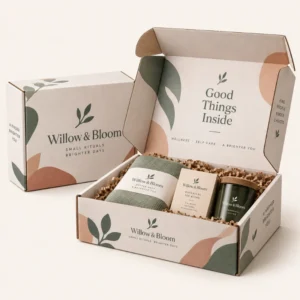
Custom subscription boxes are boxes made to order for a repeat delivery service, with the size, structure, print and internal layout chosen for the products inside. They allow a brand to send the same recognisable box every cycle, whether the contents are beauty products, snacks, books, coffee, crafts or pet treats. Because the box is part of the service itself, it needs to protect the contents, open easily and feel like a small event when it arrives.
Custom subscription boxes for every kind of club
Subscription clubs vary widely, and the box should reflect what members are actually paying for. A beauty club may need small compartments for bottles and tubes, plus space for a card explaining each item. A food club needs a structure that keeps packets upright and prevents crumbs, sauces or loose items from moving. A book club needs a snug, flat shape that stops a book from sliding and bending at the corners. Starting from the real contents, rather than from a standard box shape, is what makes a custom box worth ordering.
Members also judge a subscription by how it feels over time. The first box creates excitement, but the fifth or tenth box needs to feel just as considered. That does not mean every box must be identical. A consistent outer design with a changing inner message, a seasonal colour accent or a different insert layout can keep the experience fresh while still feeling familiar. Brands that plan these variations in advance avoid last minute compromises and keep their packing process simple.
Designing around what members receive
The most useful design question is simple: what will be inside this box on a typical month, and what is the largest or most delicate item likely to appear? Answering that question shapes the internal dimensions, the choice of board and the need for dividers or trays. It also shapes the opening experience. Items placed in a clear order, with the hero product on top and smaller items tucked safely below, look more generous than the same items packed loosely. A printed inner lid can guide the member through the contents without needing a separate booklet for every delivery.
How internal layout changes the unboxing
Internal layout controls the order in which a member discovers the contents. A tray that lifts out, a divider that separates fragile items, or a simple tissue wrap can slow the reveal just enough to make it feel deliberate. At the same time, the layout must be practical for the packing team. If assembly takes too long or requires fiddly steps, errors increase and dispatch slows down. Testing the layout with real products and with the people who will pack it is an important step before committing to a full run.
Print styles that suit a subscription brand
Print style should match the personality of the club. A playful club may suit bright, full colour artwork across the whole box, while a premium club may suit a restrained design with a single foil detail or a textured finish. Photography, illustration and pattern all work well on a subscription box, provided the artwork remains clear at the size it will be printed. Small text should be checked carefully, because detail that looks fine on screen can become hard to read once printed on board.
Choosing between bold and restrained artwork
Bold artwork is easy to recognise in photographs and on social media, which matters for clubs that rely on members sharing their boxes. Restrained artwork can feel more luxurious and may suit a higher value offer, where the member expects quiet quality rather than bright colour. There is no single right answer. The test is whether the design still looks like the brand when seen at arm’s length, in a photograph and on a doorstep, not just when viewed close up on a screen.
Materials, strength and sustainability choices
Most custom subscription boxes are made from corrugated board or sturdy paperboard, chosen for the balance between protection, print quality and weight. Corrugated board is well suited to postal delivery, because the fluted layer absorbs knocks and helps the box keep its shape when stacked. Paperboard gives a smoother, more refined finish for lighter contents and for boxes that will be kept or displayed. Kraft board, with its natural brown appearance, suits brands that want an honest, artisan feel, while white board provides a bright base for detailed colour work.
Sustainability is a genuine consideration for subscribers, many of whom will notice whether a box can be recycled and whether it contains unnecessary plastic. Paper based boxes, paper dividers and paper tape all help a brand to present a coherent approach, but claims should be based on the final materials, coatings and inserts used, not on a general assumption. If a coating or lamination is needed for durability, it is worth asking how it affects recyclability, so the brand can describe its packaging honestly on the box and on its website.
Sizing a box for postal delivery
Postal sizing deserves attention early, because a box that is just over a size threshold can change handling and cost in ways that are not obvious from the design alone. Measuring the packed box, including any outer protection, gives a clearer picture than measuring the empty board. It is also worth considering how the box will be stored by the member. A box that folds flat for recycling, or that can be reused for storage, will be appreciated more than a bulky shape that is awkward to dispose of.
Why a snug fit protects contents better
A snug fit limits movement, and movement is one of the main causes of damage in transit. When items can slide, they collide with each other and with the box walls, which can dent corners, crack lids or spill contents. A box that fits well, with dividers or tissue filling the remaining gaps, keeps each item in its intended place. This is especially important for glass, ceramics and liquids, where a single broken item can spoil the whole delivery.
From first idea to a repeatable box
Turning an idea into a repeatable subscription box usually follows a clear sequence. First, confirm the products, sizes and quantities. Next, agree the box style, board and print finish. Then check the artwork proof and, if needed, a sample packed with real products. Only after those steps should a full run be produced. This sequence may feel slow at first, but it prevents the far slower problem of receiving a large quantity of boxes that do not fit, do not print as expected or are difficult to pack.
Once the design is settled, repeat orders become much simpler, because the specification can be reused. Keeping a record of dimensions, board, print colours and insert details means the next run can match the last one without redesigning from scratch. If a seasonal variation is planned, note which parts of the specification change and which stay the same. After final artwork approval, standard lead times are 10 to 14 working days, while corrugated options are 12 to 15 working days. These are guides for production, not a guaranteed delivery date, and the timing for a specific order will be confirmed with the quote.
What to include in a brief
A strong brief includes the internal size needed, the list of products, the expected monthly quantity, the board and finish preferred, and whether inserts, tissue or a printed inner lid are wanted. It should also say whether the box will be posted on its own or inside a protective outer, because that affects the board strength required. Photographs of the products, with dimensions for the largest item, are more useful than a general description. You can request a quote for custom subscription boxes when that information is ready, and you can also read delivery information for timing guidance.
Checking a sample before a full run
A sample packed with real products is the best check available. It shows whether items fit, whether the lid closes cleanly, whether inserts hold their shape and whether the print looks right on the chosen board. It also gives the packing team a chance to practise assembly and to spot any steps that slow them down. Any changes found at sample stage are far easier to fix than changes found after a full production run. For related packaging, see custom subscription box packaging, or browse the wider shop for printed packaging and learn more on the about Personalized Mailer Boxes page.
Frequently asked questions
What makes a box a subscription box rather than a normal postal box?
A subscription box is designed for a repeat service, with branding, internal layout and opening experience planned for members who will receive it regularly, rather than for a single one off delivery.
Can custom subscription boxes be used for food products?
Yes, provided the structure, board and any inserts are suitable for the specific food items and their packaging. Individual food products should already be sealed, and the box should keep them upright and protected during delivery.
How do I choose between kraft and white board?
Kraft board suits a natural, artisan look, while white board suits bright, detailed artwork. The choice should reflect the brand style and the print colours, and it is worth seeing both options on a sample if the decision is close.
Will repeat boxes look the same each month?
Repeat boxes made to the same specification should look consistent, while seasonal artwork changes can be planned as deliberate variations. Keeping a record of board, colours and finishes helps to maintain that consistency.
How long does production take after artwork approval?
Standard lead times after final artwork approval are 10 to 14 working days, while corrugated options are 12 to 15 working days. Confirmed timing will be given with the quote for a specific order.