
custom subscription box packaging
Showing the single result
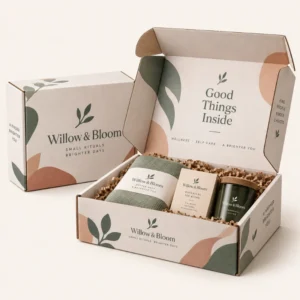
Custom subscription box packaging is printed packaging made to hold a recurring set of products, protect them in transit and give every delivery the same polished opening experience. It is designed around the exact contents of a single box, so items stay in place, arrive in good condition and look intentional when the lid is lifted. For brands that send boxes every month or every quarter, it turns a routine delivery into a moment customers look forward to.
Custom subscription box packaging that fits a recurring offer
A subscription offer changes over time, even when the box size stays the same. One month may contain a tall bottle and a flat booklet, while the next contains several small items that need separate compartments. Good packaging planning starts with the largest and the most fragile items in the range, then builds a structure that can cope with variation without becoming oversized. When the internal layout is right, packing is faster, damage is less likely and the customer sees a tidy arrangement rather than loose items shifting around.
Consistency matters as much as the first impression. Customers who subscribe expect the box they receive in month six to feel like the box they received in month one. Using the same board, print specification and internal layout for repeat runs helps to keep colour, fit and finish steady. If a seasonal design is planned, it is worth deciding early which elements will change and which will stay fixed, so the brand remains recognisable even when the artwork changes.
Choosing a structure for repeat shipping
Many subscription brands use a mailer style box with a tuck in lid and locking side panels, because it opens cleanly, needs no extra tape in most cases and can be printed inside and out. A rigid style box suits a premium gift subscription or a keepsake collection, while a lighter carton may suit a small, low value set that is posted in a protective outer. The right choice depends on product weight, fragility, postal handling and how much of the experience should come from the box itself.
When a mailer style works best
A mailer style works best when the box must do two jobs at once: protect the contents on the way to the customer and present them well on opening. Double thickness side walls add crush resistance, while a snug internal fit reduces movement. Card dividers, paperboard trays and tissue wrapping can separate items without adding bulky plastic, and a printed inner lid can carry a welcome message, usage guidance or a note about the contents of that month.
Print and finish choices that stay consistent
Print choices should reflect how the box will be seen. A bold outer print helps a brand stand out on a doorstep and in photographs, while a quieter outer with a detailed inner print can feel more premium and more personal. Full colour printing allows photographs, illustrations and detailed patterns, while a limited colour design can look sharp and deliberate if the artwork is strong. Matte lamination softens glare and fingerprints, gloss lamination adds shine and colour depth, and foil or embossing can highlight a logo or a single detail without overwhelming the design.
Keeping colour and artwork steady across runs
Colour drift is a common frustration in repeat packaging, especially when a brand colour is central to recognition. Supplying artwork in the same format each time, confirming the print specification before production and checking a proof against the previous run all help to reduce variation. It is also useful to keep a record of board type, lamination and ink specification, so a new order can be matched to the last one even if several months have passed.
Materials and sizes for subscription packaging
Corrugated board is a practical choice for most subscription boxes because it combines strength with relatively light weight. E flute corrugated board gives a smooth print surface and good protection for typical subscription contents, while a heavier flute suits larger or heavier sets. Kraft board offers a natural, uncoated look that suits artisan, food and eco focused brands, and white board gives a clean base for bright, detailed artwork. The board choice should be tested with real products, not judged from a sample alone, because weight distribution and sharp edges can change how a box performs.
Size is one of the most useful ways to control both cost and customer experience. A box that is only slightly larger than its contents needs less void fill, looks more considered and is easier to store for the customer. Measuring the longest, widest and tallest items, then allowing a small margin for inserts and wrapping, gives a sensible starting point. For a range that varies, it can be worth designing around a standard internal tray or divider system, so different product combinations fit the same outer box.
Board grades and protection levels
Board grade should be matched to the heaviest likely load and the roughest likely handling, not to the average order. A box that survives a gentle delivery may still fail if it is stacked, dropped or exposed to damp conditions. Heavier contents, glass containers and items with sharp corners all call for stronger board or additional internal protection. A short transit test with packed samples, including a drop and a stacking check, will reveal weaknesses far better than a visual inspection alone.
Matching board to product weight
Light items such as sachets, small cosmetics and stationery can work well in a lighter board, provided the box is not oversized. Medium weight sets that include jars, bottles or books benefit from a sturdier flute and well placed dividers. Heavy sets may need double wall board or a separate protective outer for posting, especially if the printed box is intended as a keepsake. When in doubt, choose the stronger option for the outer and keep the printed box as the presentation layer inside.
Ordering and artwork checklist
Ordering custom subscription box packaging is straightforward when the brief is complete. Start with internal dimensions, product list, quantity, board preference and print requirements, then add notes about inserts, finishes and any seasonal artwork changes. A clear brief reduces back and forth, helps the quote reflect the real specification and makes it easier to compare options. If the subscription is still growing, it is worth discussing whether a single box size can serve several product combinations, rather than creating a new size for every variation.
Artwork should be supplied at print quality with fonts outlined or embedded and images at sufficient resolution for the box size. Bleed, safe areas and fold lines matter, because text placed too close to a fold can be lost or distorted. Checking the proof carefully, including the inside print, the lid message and any small legal or care text, is the last chance to catch errors before production. Once final artwork is approved, standard lead times are 10 to 14 working days, while corrugated options are 12 to 15 working days. These are production guides after approval, not a guaranteed delivery date, and the exact timing will be confirmed with the quote.
What to send with a quote request
A useful quote request includes the internal box size, the products to be packed, the expected quantity, the board and print finish preferred, and whether inserts are needed. Photographs or dimensions of the largest items help far more than a general description. If you already have artwork, send it with the request so the print area and colour requirements can be assessed. If artwork is still in progress, a simple sketch of the layout and a note about the brand colours will still allow a meaningful discussion. You can request a quote for subscription packaging once those details are ready.
Proof checks before production
Before approving a proof, check spelling, product names, web addresses and any instructions that will appear on the box. Confirm that the logo is sharp, that colours look as intended and that no important text sits across a fold or a cut line. If an insert is involved, check that each compartment matches the item it is meant to hold. A few minutes spent on the proof can prevent a full run of boxes that need to be reprinted or, worse, sent out with an error. For background on the company, see about Personalized Mailer Boxes, and for timing and delivery details, see delivery information. Related ranges include custom subscription boxes and the wider shop for printed packaging.
Frequently asked questions
What is custom subscription box packaging used for?
It is used to pack, protect and present a recurring set of products, such as beauty items, food, books, stationery or craft supplies, in a branded box that arrives ready to open and enjoy.
Can one box size work for different monthly contents?
Yes, in many cases a single outer size can work if the internal layout uses dividers, trays or tissue to adapt to different combinations. The key is to design around the largest and most fragile items, then use inserts to fill smaller gaps.
Should subscription boxes be printed inside as well as outside?
Inside printing is worth considering because it is the first thing the customer sees on opening. A welcome message, a contents guide or a simple pattern can make the unboxing feel complete without adding a separate leaflet.
How long does production take after artwork approval?
Standard lead times after final artwork approval are 10 to 14 working days, while corrugated options are 12 to 15 working days. The confirmed timing for a specific order will be given with the quote.
What information is needed for a quote?
Internal dimensions, the products to be packed, quantity, board preference, print finish and any insert requirements will allow an accurate quote. Artwork or a layout sketch helps to confirm the print area and colour needs.