
custom size mailing boxes
Showing the single result
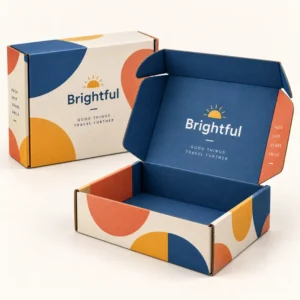
custom size mailing boxes are boxes made to the size of the item being posted, so that a book, a document set, a gift or a single product travels in a parcel that is neither oversized nor cramped. They are the practical choice for sellers who post individual items every day, because a box that fits the item reduces filler, keeps postage volume down and lowers the chance of damage from sliding inside an oversized carton. A well sized mailing box also looks professional on arrival, with a flat surface for a label and a clean closure that opens without tearing.
What are custom size mailing boxes
Mailing boxes are usually shallower and lighter than general shipping cartons, because they are designed for items that are posted rather than freighted in bulk. They can be made from corrugated board for protection, or from lighter board for flat items that need mainly a rigid cover and a clean surface. The key feature is the size: the box is specified around the item, not around a stock dimension that leaves empty space at the ends or forces the item to bend to fit.
Typical uses include books, magazines, printed documents, certificates, photographs, folded garments, small gift sets and single retail products. For each of these, the risk is different. A book needs protection at the corners. A document set needs to stay flat and clean. A folded garment needs to stay folded and free from creasing. A gift needs to arrive looking as if it was packed with care. A custom size allows the box, the closure and any internal protection to be chosen for that specific risk.
Slim mailing boxes for flat items
Slim mailing boxes suit items that are flat but need more protection than an envelope can offer. A book, a calendar, a set of prints or a document folder can be held flat, with a small amount of tissue or paper wrap to prevent scuffing. The depth must be enough for the item plus its wrap, but not so deep that the item can move from side to side. A slim box that fits closely also helps with postal formats, because a finished parcel that stays within a particular format avoids moving into a larger format unnecessarily.
Keeping flat items flat in transit
Flat items are damaged mainly by bending and by corner impacts. A board that is rigid enough to resist bending, combined with a close fit that prevents sliding, gives the best protection. Tape the closure fully, so that the box cannot flex open at the ends, and place the label on the largest flat face, where it will not be folded over an edge. If the item is valuable or irreplaceable, such as original artwork or a signed document, consider a slightly stronger board and a protective sleeve inside the box, rather than relying on the outer box alone.
Mailing boxes for single products
For a single product, the mailing box is often the only box the customer sees, so it should open cleanly and present the product well. A box with a folding lid works well here, because it opens without cutting tape across the front and can carry print on the outside. A box with taped flaps works well for heavier single items, because the tape adds strength to the closure. Either way, the internal size should hold the product with its protective wrap, without forcing the closure or leaving a large empty space.
Protection for corners and edges
Corners take the first impact when a parcel is dropped, so they deserve attention in a mailing box design. A close fit that keeps the product away from the corners, a small amount of paper fill at each end, or a fitted card insert that holds the product centred will all reduce corner damage. For books, a wrap that covers the corners before the book goes into the box is a simple and effective step. For ceramics or glass in a mailing box, a divider or a foam pad is usually needed in addition to a close fit, because a single impact can break a fragile item even if the box itself survives.
Choosing size, board and print for mailing
Size comes first, because it decides the postal format, the amount of filler and the board needed. Measure the item as packed, including any sleeve, wrap or tissue, and note the finished parcel weight. Then choose a board that gives enough rigidity for the item and the journey, without adding unnecessary weight. Kraft board suits a natural look and simple print, while white board suits detailed artwork and bright colour. Both can be recycled through normal household recycling in the UK when they are not combined with coatings that prevent recycling, so check the finish if recyclability matters to your customers.
Print on a mailing box can be simple and still effective. A logo and a return message on the outside help a customer recognise the parcel and know where to return it if needed. A short message inside the lid can turn a routine posting into a warmer experience, especially for gifts and for first orders. Keep print clear of the label area and clear of folds, so that the design survives assembly and labelling without being hidden or broken.
Postal formats and finished parcel size
Postal formats are based on the finished parcel, not on the empty box. That means the box size, the wrap, the filler and the label all count. A box that is designed to sit just inside a format can move into a larger format if extra filler is added at packing, or if the item bulges the box beyond its intended depth. To avoid that, test pack the finished parcel, measure it as it will be posted, and weigh it, before approving a full run. The Royal Mail size and weight guide sets out the current limits for letter, large letter, small parcel and medium parcel formats, and it is worth checking the finished parcel against those limits.
Labelling a mailing box clearly
A clear label area on a flat face, free from folds, tape seams and busy print, helps the parcel move through sorting without delay. Place the address label where it can be read without turning the parcel, and avoid placing it over a seam that could split. If a returns label or message is printed on the box, keep it separate from the delivery label area, so that the two are not confused during handling.
Ordering custom size mailing boxes
When requesting a quote, include the item size as packed, the finished parcel weight if known, the quantity, and whether you need print inside, outside or both. Mention whether items will travel alone or with additional items, and whether the box must fit a particular postal format. That information allows a supplier to recommend a size and board that meet the postal format without compromising protection.
Standard lead times after final artwork approval are 10 to 14 working days, corrugated 12 to 15 working days, and rigid or specialist 13 to 16 working days. These are production lead times, not a guaranteed delivery date. For a first order, allow time for proofing and a test pack with the real item, so that any sizing issue is found before a full batch is produced.
You can request a tailored quote, browse the full shop range, and read delivery information for planning. Related options include custom size mailer boxes and custom size boxes for shipping, and the Personalized Mailer Boxes home page gives an overview of the range.
Packing checklist for mailing boxes
Before sealing a mailing box, check that the item sits flat or centred, that corners are protected, that tissue or filler fills any remaining movement without bulging the box, and that the closure sits flat. Then weigh and measure the finished parcel if the postal format matters for that order. A short checklist at the packing bench, based on a test pack, helps every parcel leave in the same condition, even when different staff are packing.
When a mailing box needs an outer parcel
Most mailing boxes are designed to travel alone, but an outer parcel is sensible for very fragile items, for high value gifts, or for items that will be posted internationally and handled more times. In those cases, the mailing box becomes the presentation box inside a stronger outer carton, with filler between the two. This adds cost and packing time, so it is best reserved for orders where the extra protection clearly protects the product or the presentation.
Frequently asked questions about custom size mailing boxes
What is the difference between a mailing box and a mailer box?
A mailing box is a broad term for a box made for posting, often shallower and lighter than a general shipping carton. A mailer box is a specific type of mailing box with a folding lid, designed for presentation as well as posting. Many mailing boxes are mailers, but not every mailing box uses a folding lid.
Can a mailing box fit through a letterbox?
Some slim mailing boxes can, if the finished parcel stays within the relevant postal format for letterbox delivery. Check the finished size and depth after packing, because tissue, filler and bulging can push a parcel beyond a letterbox friendly depth.
What board should I choose for posting books?
Choose a board rigid enough to resist bending and to protect corners, with a close fit that prevents sliding. A protective wrap for the book corners, plus a small amount of paper fill at the ends, gives good protection for most book postings.
How long does production take after artwork approval?
Standard production is 10 to 14 working days after final artwork approval, corrugated is 12 to 15 working days, and rigid or specialist is 13 to 16 working days. These are production lead times, not a guaranteed delivery date.
What should I include in a quote request for mailing boxes?
Include the item size as packed, the finished parcel weight if known, the quantity, the print requirement, and any postal format the box must fit. Mention whether items travel alone or with other items, so the size can be checked correctly.