
custom postage boxes
Showing the single result
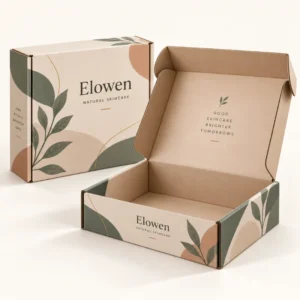
Custom postage boxes are printed boxes made to carry an order safely through the postal system while showing your brand at every stage of the journey. They combine a protective corrugated structure with print on the outside, and often on the inside, so the parcel itself becomes part of the customer experience. A well chosen box also helps you post with confidence, because the size, closure and board strength are matched to what is inside.
What are custom postage boxes
At their simplest, custom postage boxes are boxes that are printed and sized for your products rather than bought as plain stock. The print can be a logo, a pattern, a message, a handling note or a full colour design that covers the outer panels. Inside print is useful too, because it turns the moment of opening into a second brand moment, with a welcome message, care instructions or a simple thank you that feels considered rather than added as an afterthought.
The structure matters just as much as the artwork. Most postage boxes use corrugated board, which has a fluted layer between flat liners to give strength without excess weight. Single wall board suits light and medium items such as clothing, books, stationery and cosmetics. Double wall board suits heavier or more fragile goods, because the extra flute layer adds crush resistance and helps the box hold its shape when parcels are stacked. Choosing board strength from the product weight and the journey, rather than from habit, reduces damage and returns.
Mailer style boxes and postal boxes compared
Mailer style boxes usually have a self locking lid and a clean front panel, which makes them attractive for subscription packs and online orders. Postal boxes in a more traditional format often use flaps that are taped shut, which can suit heavier items and high volume packing lines. Both formats can be printed, and both can be supplied flat so they take up less storage space before assembly. The right choice depends on how fast your team packs, whether the recipient needs to reseal the box for a return, and how much of the design you want visible on arrival.
Closures that suit different packing needs
A peel and seal strip speeds packing and gives a neat, tamper evident closure for lighter parcels. Tape sealed flaps give a firm hold for heavier goods and for boxes that will travel through sorting machinery. A tuck in lid works well when the box is also the presentation, because it opens cleanly and can be closed again without tape. If returns are common, a second seal or a resealable feature is worth discussing at the quote stage, so customers can send an item back in the same box without hunting for new packaging.
Print options for postage boxes
Print can be kept simple, with a single colour logo and a web address, or it can be a full colour design across the outside panels. Bold shapes and strong contrast tend to read well on kraft board, while white board gives brighter colour and a cleaner look for detailed artwork. Inside print needs a different kind of thinking, because the design is seen at close range when the box is opened. Short text, a clear layout and a restrained colour palette usually work better inside than a busy pattern that competes with the product.
Artwork checks before production
Good artwork starts with the correct size and a clear idea of which panels will be printed. Logos should be supplied in a high resolution format, text should be checked for spelling, and small details should be tested at real size, because a detail that looks fine on screen can disappear on board. Colour should be checked against a proof where possible, especially on kraft, where the natural brown tone can soften lighter colours. Approving final artwork carefully avoids reprints and keeps the project on schedule.
Choosing the right size for custom postage boxes
Size is one of the most practical decisions in postage packaging. A box that is too large needs extra void fill, costs more to post and can let the product move around in transit. A box that is too tight can crush the product, strain the closure or make packing slow and frustrating. Measure the product, add protection such as tissue, a sleeve or a paper insert, then measure again once the item is packed as it will travel. That packed measurement, not the product alone, is the figure to use when you choose a box size.
Postal size bands also shape the decision. In the UK, a small parcel has a maximum size of 450mm by 350mm by 160mm and a maximum weight of 2kg for many Royal Mail services, while a large letter is limited to 353mm by 250mm by 25mm. Staying inside a band where possible helps you plan postage more predictably and avoids a parcel being reclassified because a flap bulges or a filler adds thickness. Always measure the finished parcel, including tape and any outer label, before you settle on a size.
Protection inside the box
Protection does not have to mean plastic. Paper void fill, corrugated dividers, card inserts and tissue can hold a product in place and cushion it against knocks. A snug insert is often better than loose fill, because it stops movement and presents the product neatly on opening. For fragile items, consider a divider that separates pieces, a sleeve that stops surface marks, and a base layer that absorbs a drop. Test a packed box by shaking it gently and by dropping it from a low height onto a soft surface in a controlled test, then check for movement and marks before you approve the design.
When to add a second layer of protection
A second layer is worth considering for glass, ceramics, electronics and any item with a painted or coated surface. A paper wrap, a corrugated sleeve or a fitted card tray can prevent items rubbing together in a multi item order. For single fragile items, a well fitted insert plus a small amount of paper cushioning is often enough, and it keeps the unboxing tidy. Overpacking, by contrast, can make a parcel look wasteful and can push it into a larger size band, so aim for protection that is purposeful rather than excessive.
Uses for custom postage boxes across UK businesses
Online retailers use custom postage boxes for everyday orders, subscription deliveries and seasonal campaigns. A consistent box design helps customers recognise a parcel before they read the label, and it makes social media unboxing content look coherent across many different customers. Small businesses benefit too, because a printed box can carry the same professional impression as a large brand, even when order volumes are modest. Charities, clubs and community sellers use printed postage boxes for fundraising packs, membership parcels and event merchandise, where a clear identity helps the parcel feel like a gift rather than a delivery.
Postage boxes also work for business to business sending, such as samples, spare parts, printed materials and product kits. In those cases, the outside print can be restrained, with a logo and a handling note, while the inside carries product information, assembly guidance or a contact card. That balance keeps the parcel professional for a trade recipient while still showing brand care. For any use, keep essential information easy to find, such as a returns note or a care instruction, rather than hiding it inside a busy design.
Sustainability and recycling
Corrugated board is widely recyclable in the UK, and many boards include recycled content. Choosing a paper based design, avoiding unnecessary plastic tape where a paper tape or a seal strip will do, and printing with a design that does not need a plastic laminate all help a customer recycle the box easily after delivery. Clear recycling guidance on the inside flap can help too, but keep it short and factual. If you want to make a sustainability claim, base it on the actual board and finish you choose, and ask for the specification at quote stage so the claim matches the finished box.
Storage and handling in your workspace
Flat packed boxes store neatly and stack well, which matters in a small packing area. Keep boxes dry, away from direct heat and off a damp floor, and rotate stock so older boxes are used first. A simple packing station with a tape dispenser, labels, tissue and inserts close at hand will speed assembly and reduce errors. Train new packers on the closure method for your chosen box, because a correctly sealed box protects the product and presents the brand far better than a box that is taped in a hurry.
Ordering custom postage boxes with a quote
Ordering starts with a brief: product sizes, typical order mix, board preference, print areas, quantity and any deadline. A quote can then be based on the real specification rather than a guess, which makes comparison fair and avoids surprises later. Standard lead times after final artwork approval are 10 to 14 working days, while corrugated boxes are 12 to 15 working days. Those times are planning guidance after approval, not a guaranteed delivery date, so allow extra time for artwork changes, proofing and busy seasonal periods.
Before you commit, request a sample or a proof where available and check it with the actual product inside. Look at print colour, closure strength, ease of assembly and how the product sits when the box is opened. Share the sample with the person who packs orders every day, because they will spot a practical issue faster than anyone else. Once you are happy, approve the artwork in writing and keep a copy of the approved specification for reorders, so the next run matches the first.
For help with sizes and postal bands, see the Royal Mail UK parcel and letter services guide. To explore related packaging, browse custom postal boxes and custom postal boxes UK. When you are ready to discuss your design, use get a quote for custom packaging.
Frequently asked questions about custom postage boxes
What is the difference between a postage box and a mailer box
A postage box is a general term for a box made for posting, while a mailer box usually refers to a self locking style with a clean presentation lid. Both can be printed and both can be made from corrugated board. The best format depends on your product, packing speed and how you want the parcel to look on opening.
Can custom postage boxes be printed inside and outside
Yes, many designs use outside print for brand recognition and inside print for a welcome message or care information. Inside print is seen at close range, so keep the layout clear and the text short for the best effect.
How do I choose a postage box size
Measure the product with its protection in place, then choose the smallest box that holds it snugly without crushing it. Check the packed size against the postal band you plan to use, and test a packed sample before you order in volume.
Are custom postage boxes recyclable
Corrugated board is widely recyclable in the UK. A paper based design without unnecessary plastic finishes is usually the easiest for a customer to recycle, and you can add a short recycling note inside the box if you wish.
How long do custom postage boxes take after artwork approval
Standard lead times after final artwork approval are 10 to 14 working days, while corrugated boxes are 12 to 15 working days. Allow extra time for proofing, artwork changes and seasonal demand, and confirm timing at quote stage for your specific order.