
custom packaging boxes
Showing all 3 results
-
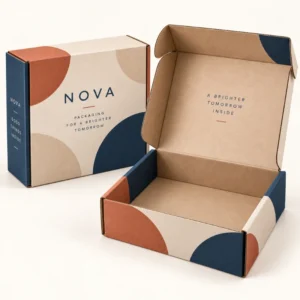
Custom Mailer Boxes UK
Get a Quote -

Custom Postal Boxes
Get a Quote -
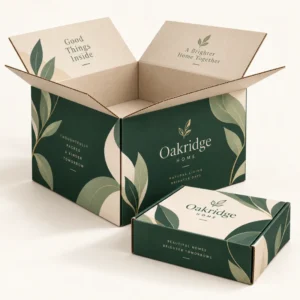
Custom Shipping Boxes
Get a Quote
Boxes made to your size, structure, board, print and finish are custom packaging boxes, rather than standard boxes that force your product to fit an existing shape. They cover everything from a simple dispatch carton to a premium retail box, and the right choice depends on whether the box must sell the product, protect it in transit, or do both. For brands that want a consistent look across retail shelves and online orders, custom boxes give control over every visible and structural detail.
Types of custom packaging boxes
The broad range can be confusing, because the same product can be packed in several different box types. A mailer box suits posting and unboxing, with a lid style opening and a printed outside. A shipping carton suits warehouse handling and stacking, with a taped closure and a focus on strength. A folding carton suits retail shelves, with a light, crisp board and sharp print for shelf appeal. A rigid box suits premium gifts and high value goods, with a thick, structured board that holds its shape and feels substantial in the hand.
Many brands use more than one type together. A folding carton can present a cosmetic product on a shelf, inside a corrugated mailer that protects it in transit. A rigid gift box can hold a set, inside a plain outer carton for delivery. Choosing the combination, rather than a single box for every job, often gives the best result, because each box does the job it is best suited to do.
Mailer boxes and shipping cartons compared
Mailer boxes prioritise presentation and opening experience. They usually have a locking tab or tuck closure, a printed lid and a clean inside. Shipping cartons prioritise stacking strength and tape sealing, and they are often plain or simply printed. If the customer will see the box, a mailer usually wins. If the box will be handled mainly by warehouse staff and couriers, a shipping carton may be more efficient. If both apply, a printed mailer made from corrugated board can serve both purposes.
When a folding carton is the right choice
A folding carton is right when print quality and shelf presence matter most, and the product is light and not fragile in transit on its own. Cosmetics, confectionery, small electronics accessories and stationery sets all suit folding cartons. The board is thinner than corrugated board, so the box folds crisply and prints sharply, but it needs an outer mailer or carton for posting. A folding carton with a window can show the product, but the window material and its recyclability should be considered as part of the specification.
Rigid boxes and premium presentation
Rigid boxes suit gifts, jewellery, premium food sets and high value collections, where the box is kept and reused by the customer. The thick board gives a firm, luxurious feel, and it can be covered in printed paper, textured material or a simple matte finish. Rigid boxes are heavier and bulkier to store than folding cartons, because they do not fold flat in the same way, so storage and posting costs should be checked before choosing this style. For a premium launch or a limited edition, that extra presence is often worth it.
Choosing between rigid and corrugated for gifts
A corrugated mailer with a premium finish can present a gift well and protect it in transit, while a rigid box presents a gift best when it is handed over in person or kept as a keepsake. If the gift will be posted, consider a rigid box inside a protective outer mailer, so the premium box arrives unmarked. If the gift will be sold in a shop, a rigid box alone may be enough, provided it is protected on the shelf and in a carrier bag.
Materials, print and finishes for custom packaging boxes
Board choice should follow the job. Corrugated board protects in transit. Solid folding board prints sharply for retail. Kraft board gives a natural, understated look. White board gives bright, accurate colour. Rigid board gives structure and weight for premium goods. Recycled board options are available across several types, and the final recyclability depends on the board, inks, lamination and any window or insert material used. Ask about the full specification if recyclability is a brand priority, rather than assuming a single material choice guarantees it.
Print choice should follow the artwork. Full colour print suits photography, illustration and complex designs. Single colour print suits bold logos and text based designs, and it gives steady results across repeat runs. Spot colour matching suits brands with an exact brand colour that must stay consistent. Finishes such as matte lamination, gloss lamination, foil, embossing and spot gloss should be used to support the design, not to compete with it. One or two finishes usually give a cleaner result than a combination of many.
Sizes, inserts and practical design
Size should be based on the product plus any insert, tray or protective wrap, with a small clearance for easy packing and removal. An insert keeps products apart, stops movement and presents a set in a planned layout. Card inserts suit light sets and retail cartons. Foam inserts suit fragile or high value goods that need precise support. Paper pulp inserts suit eco focused brands and moulded shapes. Test the insert with the real product, because an insert that looks right on paper can be too tight or too loose in practice.
Design details that prevent problems
Keep essential text away from folds and cut edges, keep small text large enough to read, and keep barcodes on a flat, unprinted area where they can scan reliably. Check that the box closes flat when filled, because a bulging lid looks unprofessional and can break a seal in transit. Check that the box opens without tearing the print or the product, because a frustrating opening spoils an otherwise good design. A sample run through the real packing and opening routine will reveal most of these issues early.
Ordering custom packaging boxes
Start by defining the job of the box, then the product size and weight, then the quantity and the budget for the specification. Share artwork early, so print and finish options can be confirmed before production. Standard lead time after final artwork approval is 10 to 14 working days, corrugated orders are 12 to 15 working days, and rigid or specialist orders are 13 to 16 working days. These are planning guides, not a guaranteed delivery date, so allow time for proofs and any changes.
To compare related ranges, browse custom mailing boxes and custom mailer boxes with logo, or visit shop all packaging. For a tailored specification, use request a quote and share the box type, size, quantity and artwork. Learn more about the business on about Personalized Mailer Boxes.
Frequently asked questions
What is the difference between a mailer box and a folding carton?
A mailer box is usually a corrugated, lid style box for posting and unboxing, while a folding carton is a light, crisp board box for retail shelf presentation. Many brands use a folding carton inside a mailer, so the product looks good on a shelf and arrives safely by post.
How do I choose a board for custom packaging boxes?
Choose corrugated board for transit protection, folding board for retail print quality, kraft for a natural look, white for bright colour, and rigid board for premium structure. The product weight, fragility and sales channel should guide the choice.
Can custom packaging boxes be used for both retail and online sales?
Yes, if the specification suits both. A printed corrugated mailer can work for online orders and in store presentation, while a folding carton may need an outer mailer for posting. Test the box in both settings before ordering in volume.
Do I need an insert?
An insert helps when products move, need separation or should be presented in a set layout. It is especially useful for multi item sets, fragile goods and premium gifts. Test the insert with the real products first.
What should I check about packaging responsibilities?
Businesses that supply or import packaging may have obligations under UK packaging rules. The GOV.UK extended producer responsibility for packaging guidance explains who must comply and what large and small producers must do.