
custom mailing box
Showing the single result
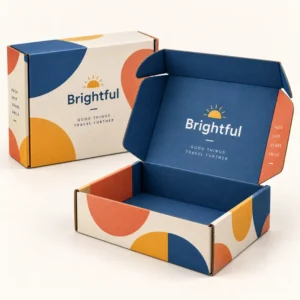
A custom mailing box is a postal box made to the size, board and print you specify, rather than a standard box you must fill to fit. It protects a single product or a small set through sorting, stacking and delivery, while presenting your brand on arrival. For sellers who post the same product repeatedly, a box made for that product saves filler, reduces damage and gives every order the same tidy finish.
What a custom mailing box should do
The first job of any mailing box is protection. It must resist crushing from above, knocks at the corners and pressure from tape, labels and neighbouring parcels. The second job is fit. A snug box stops the product sliding and hitting the walls, which is a common cause of damage even when the board itself is strong. The third job is presentation, because the customer judges the seller from the parcel before judging the product inside it.
A custom size helps all three jobs at once. When the box fits, you need less void fill, the parcel weighs less in practical terms, and the packing routine becomes faster because staff are not cutting filler or folding extra board. Consistency also helps with courier labels, because a uniform box size makes label placement and stacking more predictable in a busy packing area.
Measuring for a single product
Measure the product at its longest, widest and tallest points, including any lid, handle or protruding part. Then add the thickness of any protective wrap or insert, and a small clearance so the product can be placed and removed without force. If the product is soft, such as clothing, it can be folded to a planned size and the box can be made to that folded size. If the product is rigid, such as a framed print or a bottle, the internal size matters more than the external size, so confirm which measurement the specification uses.
Common measuring mistakes
One frequent mistake is measuring the product alone and forgetting the insert, which then makes the box too shallow. Another is choosing a box based on a similar product, rather than the actual product, which leads to a lid that bulges or a base that strains. A third mistake is ignoring the label area, because a label placed over a fold or a printed panel can peel or scan poorly. Test a sample with the real product, the real insert and a real label before committing to a full run.
Choosing board and flute
Corrugated board is the usual choice for posted goods because the fluted layer absorbs impact and spreads stacking load. E flute is slim and neat, and it suits books, stationery, cosmetics and other light to medium goods. B flute is thicker and suits heavier goods, glass, ceramics and electronics that need more cushioning. Single wall board suits most postal use, while double wall board suits heavy, fragile or high value goods that will face longer transit or repeated handling.
When kraft or white board is better
Kraft board gives a natural look and suits handmade, eco focused and artisan brands. White board gives brighter print and suits detailed artwork, pastel colours and premium retail style mailers. Both can be used as the outer liner on corrugated board, so the choice is about appearance as much as strength. If the product is fragile, choose the flute first, then choose the liner colour that best presents your print.
Styles of custom mailing box
A mailer style box with a locking tab is popular because it assembles without tape on the main seal and opens cleanly for the customer. It suits clothing, subscription sets, gift sets and flat goods. A regular slotted shipping box suits heavier goods and warehouse packing, because it closes with tape and stacks well. A book wrap style mailer suits flat, rigid goods such as books and framed prints, because it wraps tightly and reduces movement. A telescopic style suits goods of varying height within a range, because the lid depth can adjust.
Closure and opening experience deserve attention. A box that needs a knife and force to open can frustrate a customer and damage the product inside. A tear strip or a clear pull tab gives a clean opening, but it must be tested so it does not open in transit. A box with a printed message inside the lid turns opening into a welcome moment, which is useful for gifts and first orders.
Print options for a single box design
Print can be as simple as a logo on the lid or as complete as a full outside and inside design. Outside print identifies the sender and builds brand recognition. Inside print can carry a thank you message, care instructions, a returns note or a code for a repeat order. Keep inside text short, because the customer reads it while unpacking, not while studying a leaflet. If you sell through a marketplace, inside print is also a safe place for brand details that the outer label may not show.
Finishes that suit postal use
Matte lamination resists glare and gives a modern feel. Gloss lamination resists scuffs and makes colour look richer. Uncoated board gives a tactile, natural feel and suits minimal designs. Foil and embossing suit premium editions, but they should be used sparingly on a postal box, because the box will be handled, stacked and labelled. The finish should survive transit looking intentional, not worn.
Ordering and lead time
Start with the product, the quantity you expect to post each month, and the storage space you have for flat packed boxes. Flat packed mailers store well, but a very large run of a single size can still fill a shelf quickly. A smaller first run lets you test the size, the print and the packing routine before you commit to a larger repeat order. Repeat orders are simpler when the specification is recorded, including board, flute, internal size, print areas and finish.
Standard lead time after final artwork approval is 10 to 14 working days, and corrugated orders are 12 to 15 working days. These are planning guides, not a guaranteed delivery date, so order ahead of a launch or a seasonal peak. To compare related options, browse custom mailing boxes and custom mailer boxes with logo, or visit shop all packaging. For a tailored specification, use request a quote and share the product size, weight and quantity.
Frequently asked questions
What size custom mailing box do I need?
Measure the product plus its insert and wrap, then add a small clearance. The internal size should hold the product snugly without force. A sample test with the real product is the most reliable check.
Is corrugated board necessary for a mailing box?
For most posted goods, yes, because corrugated board cushions impact and stacking pressure better than solid board alone. Light, flat goods in a rigid wrap may suit solid board, but fragile or heavy goods should use corrugated board.
Can a custom mailing box be printed inside and outside?
Yes, both surfaces can be printed. Outside print builds brand recognition, while inside print suits a welcome message, care notes or a repeat order code. Keep inside text short and readable.
How many boxes should I order first?
Order enough to cover your expected posting volume plus a small buffer, while leaving storage room for flat packed stock. A modest first run is wise if the size or design is untested, because a repeat order can follow the proven specification.
Will a custom mailing box fit Royal Mail parcel sizes?
It can, if the finished parcel size and weight are checked against the service you plan to use. Check the Royal Mail size and weight guide before finalising dimensions, because a few millimetres can change the parcel category.