
custom candle mailer boxes
Showing all 2 results
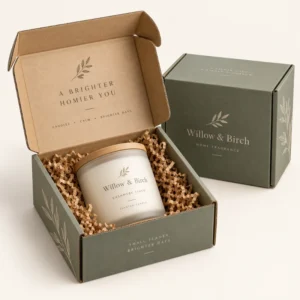
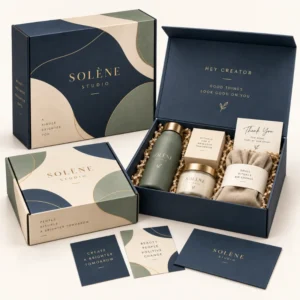
Custom candle mailer boxes are the outer box that carries a candle from your packing bench to a customer doorstep without breakage, dented labels or a crushed lid. In custom candle mailer boxes, corrugated strength, a close fit and a locking closure stop a heavy glass jar sliding, tipping or knocking against the box wall during sorting and transit. A well chosen mailer also looks like your brand the moment it is opened, which turns a routine delivery into a moment customers remember.
Why custom candle mailer boxes protect candles in transit
Candles are awkward to post. Glass jars are heavy for their size, wax can chip if a pillar knocks against a hard surface, and tins can dent if they move freely inside a loose box. A mailer built for candles solves those problems at the design stage, by matching internal size to the vessel, adding an insert that holds the candle centrally, and using board strong enough to survive stacking. That protection is not only about avoiding breakage, it also protects your reputation, because a damaged candle usually means a replacement, a refund conversation and a customer who may not order again.
Mailer boxes differ from retail gift boxes because they must do two jobs at once: survive the postal journey and present the product well on arrival. A self locking tray with a tuck lid is popular for this reason, because it closes securely without tape, opens cleanly and can be printed inside and outside. For heavier orders, a double wall board or a mailer paired with an inner retail box gives extra crush resistance, while still keeping the outer parcel compact. Compare formats with custom candle packaging boxes and custom cardboard mailer boxes to see how board choice and structure change protection and print.
Board strength and flute choice
Corrugated board is the usual choice for mailers because the fluted layer absorbs knocks and spreads load across the box. A finer flute gives a smoother print surface and a lighter parcel, which suits single jar orders and printed designs with fine detail. A thicker flute gives more cushioning and stacking strength, which suits heavier jars, multi candle orders and parcels that may sit under other parcels in a van. Single wall board is enough for many single candle orders, while double wall board is worth considering for large pillars, stoneware vessels or orders where several heavy jars travel together.
Matching board to candle weight
Weigh a packed candle, not just the empty vessel, because wax, glass, lid and insert add up quickly. A small tin may travel safely in a light mailer, while a large glass jar with a wooden lid needs a stronger board and a firmer insert. If you are unsure, pack a sample, seal it and drop it gently from bench height onto a firm surface, then check for movement, label scuffing and lid damage. That simple test often reveals whether you need a thicker board, a tighter insert or extra void fill around the inner box.
Inserts, dividers and void fill
An insert is the single most effective protection inside a candle mailer. A die cut card insert with a circular cut out holds a jar in the centre, a cross divider separates a pair of candles, and a foam insert cradles a vessel with an unusual shape. Void fill has a different job: it fills the space between an inner retail box and the outer mailer, so the inner box cannot shift. Crinkle paper, corrugated shred and paper void fill all work well, and they keep the parcel recyclable in a way that loose plastic fill does not. Avoid overfilling, because a box packed too tightly can burst at the seams, while a box packed too loosely lets the candle build momentum before it hits a wall.
Packing a single jar, step by step in words
Place the insert in the base, seat the jar so it sits level, close any inner retail box if you use one, then place that box centrally in the mailer with void fill around all sides. Close the mailer lid, check that the lid sits flat without bulging, and seal any tape seam firmly. Finally, weigh and measure the sealed parcel, because size and weight decide how it travels, and the Royal Mail guidance on packaging and sending heavy items explains why strong tape, separation between items and a final weight check matter for heavy parcels.
Print and branding on a mailer that still posts well
Print on the outside of a mailer is seen by couriers, neighbours and the customer, so it should be bold enough to be recognised and simple enough to survive handling. A logo, a brand colour and a short line of text usually work better than a dense pattern that can look scuffed after transit. Inside print is where you can be more playful, with a thank you message, a scent story, care guidance or a pattern that appears only when the lid lifts. That inside moment matters, because it is the first thing the customer sees after the journey, and it can turn a functional parcel into a brand experience.
Kraft board gives a natural, honest look and suits soy, handmade and eco focused candle ranges. White board gives cleaner colour reproduction and suits bright, modern and luxury ranges. Full colour print works well for illustrated and photographic designs, while one or two spot colours can look refined on kraft and keep artwork costs simpler for smaller ranges. Whichever route you choose, keep delivery labels in mind: leave a clear, unprinted area or a light panel where a label can sit without covering your logo or scent name.
Sizes for single candles, pairs and sets
Size the mailer to the candle, not to a generic parcel size. A mailer that is too large wastes board, increases postage size and lets the candle move, while a mailer that is too small forces the lid, stresses the seams and risks damage to labels. For pairs and sets, a wider mailer with dividers is usually better than two separate parcels, because it reduces handling, keeps the set together and gives a stronger unboxing moment. For subscription orders, a consistent mailer size simplifies packing, stock and postage planning, even when the scent inside changes each month.
Planning for seasonal peaks
Festive periods, gift seasons and promotional launches increase both order volume and handling pressure, so mailers need to be easy to assemble under time pressure. A mailer that folds quickly, locks without tape and stacks neatly when flat will save packing time and reduce errors when a small team is fulfilling many orders. Order stock before the peak, test the new size with real candles, and brief anyone who packs orders on insert placement and void fill, because consistency across packers is what keeps breakage low.
Ordering, lead times and sustainability
A good quote request for mailers includes vessel size and weight, number of candles per parcel, preferred board and flute, insert type, print coverage inside and outside, and the artwork you have ready. If you sell both single candles and sets, say so, because one mailer size may serve singles while a second size serves sets, and ordering both together can simplify production. Standard lead times after final artwork approval are 10 to 14 working days, with corrugated options at 12 to 15 working days and rigid or specialist options at 13 to 16 working days. Use those figures for planning, not as a guaranteed delivery date, and allow extra time around peak seasons.
Sustainability in a mailer is practical, not just a claim. Corrugated board is widely recyclable, paper void fill can be recycled with the box, and a right sized mailer uses less board and less fill than an oversized parcel. If your brand places packaging on the UK market, the GOV.UK guidance on extended producer responsibility for packaging is a useful starting point for understanding producer duties. You can also request a quote with your candle dimensions, and check the delivery information page while you plan launch dates.
Common packing mistakes to avoid
The most common mistake is a mailer that is too large for the candle, followed by a missing insert and a lid that is taped shut but still bulges. Another frequent error is placing two glass jars together without a divider, so they knock during transit even inside a strong outer box. A third error is reusing a worn box that looks sound but has weakened corners, which is a particular risk for heavy candles. New, right sized mailers with a tested insert avoid all three problems, and they cost far less in time and replacements than a damaged delivery.
Testing before a full run
Before you commit to a full run, pack a sample mailer with the real candle, seal it as you would for a customer, and carry it, stack a second parcel on top and open it after a short journey around your workspace. Check the jar, the label, the lid and the insert, and ask whether the opening still feels like a gift. If anything moves, scuffs or feels loose, adjust the insert or board before production, not after customers report damage.
Frequently asked questions
What is the difference between a candle mailer box and a candle gift box?
A mailer box is built for transit, with corrugated strength, a locking closure and an insert that holds the candle centrally through sorting and delivery. A gift box is built mainly for presentation, with a lid, sleeve or window that creates a ceremony on opening, and it may travel inside a mailer for posting.
Do I need an insert for a candle mailer?
For glass jars and for sets, yes, because an insert stops the candle moving and hitting the box wall. For a single light tin in a very close fitting mailer, an insert may be optional, but a sample test is the best way to confirm.
Which board is best for heavy glass candles?
Corrugated board with a suitable flute and, for heavier or multi jar orders, double wall board gives the best balance of cushioning and stacking strength. Weigh the packed candle and test a sample before choosing the lightest board.
Can I print inside and outside a candle mailer?
Yes. Outside print builds recognition during delivery, while inside print creates a reveal on opening. Keep a clear area for the delivery label so it does not cover your logo or key text.
How long do custom candle mailer boxes take after artwork approval?
Standard lead times after final artwork approval are 10 to 14 working days, with corrugated options at 12 to 15 working days. Allow extra time for proofing, samples and seasonal peaks, and treat those figures as planning guidance rather than a guaranteed date.